Follow Us on Google
•Importers: We need investors, not invaders
•Experts: Foreigners exploiting FG’s fiscal laxity
Local businesses are groaning and folding. Traders and importers are in the streets with placards protesting what appears to be an unchecked influx of foreign nationals in businesses traditionally dominated by Nigerians.
Fingers point to the federal government’s fiscal laxity which grants business access to many foreigners without considering the economic consequences and national security implications.
From freight forwarding, construction, trading, mining to agriculture, manufacturing, trawling, bonded terminal operations and other related businesses, the invasion is brutal and total.
Freight forwarders, who contribute to Customs revenue generation, say their profession is now dominated by foreigners and causing the economy to bleed over N130 billion annually.
Nigerian manufacturers and traders argue that the activities of some foreign operators are making it increasingly difficult for Nigerian entrepreneurs to remain competitive, with many businesses forced to shut down, throwing many workers into the already saturated job market.
They explained that many of the foreign operators do not make meaningful long-term investments in Nigeria, but instead come into the country to rent premises, sell their goods, repatriate their earnings and leave.
They, therefore, cautioned the government against being carried away by the rhetoric of ‘foreign investment’ without considering its actual impact on local businesses, job creation, security and the wider economy.
According to the stakeholders, foreign investors, particularly from China, India and others have expanded their presence across several sectors of the Nigerian economy.
For many years, Nigerian traders travelled abroad, particularly to Asian countries, especially China, to import large quantities of goods.
These traders, including prominent merchants from the South East, the northern regions and major commercial centres such as Lagos, established extensive distribution networks across the country, playing a vital role as intermediaries between foreign manufacturers and Nigerian consumers.
That arrangement is now fractured as these foreigners are now becoming the manufacturers, importers, wholesalers, retailers who sell directly to the final consumers at a cheaper rate.
Consequently, local retailers with the same products find it difficult to sell, resulting in monumental financial and job losses.
Daily Sun learnt that these foreigners, especially the Chinese, are now having warehouses and shops across the country to stock their goods and sell as retailers, totally controlling the entire value chain from production to final distribution.
Despite the fact that the local market in Nigeria employs over 80 per cent of Nigerians and pays them minimum wages, these foreigners hardly employ Nigerians and in a situation they manage to employ, they pay them peanuts, according to local traders.
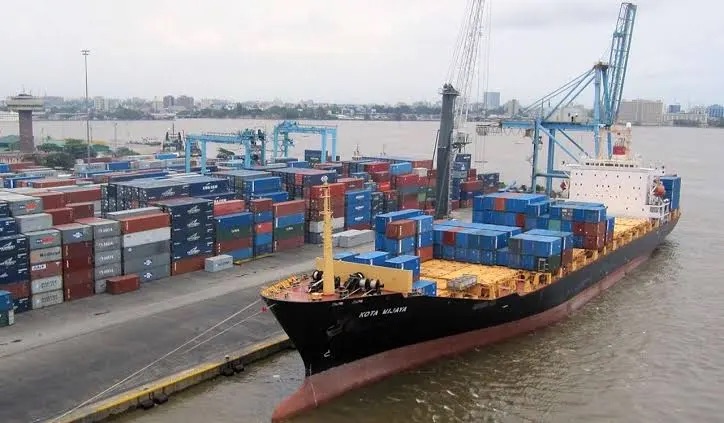
Stakeholders who spoke to Daily Sun revealed that the purpose of the free zone under the law is to bring cargo into the free zone, add value to it, then export it as a finished product, but foreigners are allegedly bringing in finished products into the free zone and selling them in Nigerian markets, totally evading duty.
The activities of foreigners are already driving local traders out of business, as the Chinese are gradually taking over the local markets across the country.
Just last week, traders in Lagos Trade Fair market protested the activities of Chinese retailers in local markets, accusing them of selling directly to consumers and putting increasing pressure on indigenous businesses and livelihoods.
The protesters particularly objected to Chinese wholesalers allegedly operating as retailers by taking their goods directly to the final consumers.
According to the traders, the practice is disrupting the conventional distribution chain, under which manufacturers and wholesalers supply distributors and retailers before products eventually reach consumers.
They argued that Chinese retailers have an advantage because they can offer goods to consumers at prices close to wholesale rates, making it difficult for local retailers to compete.
The traders also expressed concern that the practice is eclipsing the role of local middlemen who depend on purchasing products from wholesalers before reselling them to consumers.
Nigeria is not the first African market to confront this Chinese mystery.
In February 2023, more than 1,000 Kenyan traders protested in Nairobi after China Square, a Chinese-owned retail outlet, attracted customers with prices traders said were roughly 50 per cent below what they could offer. Reuters reported that everyday goods, such as curtains, were selling at about half the price of comparable products offered by local traders.
However, William Ruto, Kenya’s president, made that distinction on September 2, 2026, ordering enforcement against foreigners operating in small-scale businesses.
He said foreign investment should create jobs and expand production rather than compete with Kenyans in small retail businesses, amid concerns about Chinese traders.
Daily Sun learnt that Chinese are now going as far as into the farms across the country to source agricultural produce for export, such as cashew nuts, sesame seeds, cocoa, palm kernel, shea butter and many more.
But for fiscal laxity, these are businesses strictly reserved for local exporters.
Farmers now prefer selling to them rather than to local buyers.
Trade expert and Managing Director of Mikky Excellency Nigeria Limited, Alhaji Abdulazeez Mukaila, said neither the Chinese operators nor the government should be entirely blamed for the situation.
He said the bigger problem was inadequate advocacy to make the government understand that granting permits to foreign nationals in the name of attracting investment could undermine local traders, businesses and the wider interests of Nigerians.
“So, we need to let the government know the impact because there is no government that will allow their security architecture to be breached, in which Chinese and Indians are breaching our security architecture. And that is why you are seeing a lot of ammunition everywhere. You can see the boldness of bringing in ammunition in the last 60 days or thereabout.
“Tin Can Command of Customs has captured two containers loaded with ammunition. You can see the boldness. NDLEA is arresting people in the forest doing methamphetamine on an industrial scale. This goes to show that by giving foreigners access to secure the environment, the government is paying dearly and the citizens are paying as well,” he said.
He said the time is ripe for the government and the Nigerian Customs Service management team to realise that granting a permit to Chinese as a freight forwarder is dangerous, security-wise and economically.
“We are not afraid of competition. There is no freight forwarder in Nigeria that is afraid of competition because we travel globally and see how it operates. But in Nigeria, our government is not doing enough to checkmate the influx of foreigners whose interest is not to add value but to take everything out of Nigeria on a platter of gold and even compromise the system.
“This is where it gets very, very scary because they are compromising anybody who is around port environments. And it takes a lot of goodwill and integrity to stay afloat, not to be compromised. They are ready to do anything to get out of our ports. They now do door-to-door, as you have said. They even dictate duty to charge from abroad, not minding that the Nigeria Customs has the final say.
He noted that the foreigners had become so confident that they could dictate the amount of duty they would pay, disregarding the valuation procedures and protocols prescribed by the Nigeria Customs Service.
“So, it is time the government wakes up and is very strict on this so that the economy and security will be better for it. The Kenya method can be replicated here. In my years of practice, there is no way I can have access to make a declaration in Cotonou as a clearing agent. I must go through the citizens of Cotonou here.
“And the Chinese are in Cotonou. They can’t try what they are doing here over there. They cannot. So, I want to encourage you to continue to keep this question on the front burner until it gets to those that have the power to take the visions. That’s all we need to keep doing: advocacy. We, as a freight forwarder association, too, have not been doing much by way of advocacy; we’ve not put this on the front burner. We are not doing much.
“So, Chinese, Indians, we are just mentioning Chinese because of their boldness. Indians are very meticulous in the way they operate. The Chinese are just free-for-all. That’s why we think it is only Chinese. Indians are inclusive. They manufacture their tramadol and ship it down and clear it here by themselves.
“All the ammunition coming through Turkey, they are all licensed to operate in Nigeria. It’s very scary. Let’s keep the discussion going until we get to the authorities. We cannot continue to allow illegal mergers and acquisitions that the Chinese are doing in Nigeria,” he explained.
According to him, when they do the mergers and acquisitions, they operate all over the free zones, including the Lagos free zone, Lekki free zone and the one in Ogun State. They have taken over free trade zones and the markets.
He added that the established rule is for investors to bring raw materials or other inputs into the free zone, add value to them and subsequently export the finished products. However, he said some foreigners now bring already finished goods into the free zone and eventually sell them in the Nigerian market, defeating the purpose of the scheme.
“They bring it in as a free zone raw material. Most times, these are finished products. And then they find a way to bring it into the Nigerian market to sell it while they evade duty, bringing it in as a duty-free item. So we need to have the government understand what is going on,” he said.
However, an importer, Emmanuel Amaife, said that every responsible government protects its citizens and the economy as well.
“While we need investors, we don’t need invaders. We need genuine investors, investors who will invest in a certain critical aspect of the economy.
“For example, just like what you said, these ones are not investors. They are trying to take the retail aspect of business from the ordinary Nigerians, which is dangerous,” he said.
He warned that if the government continues to overlook the situation under the guise of encouraging investment, it could eventually push many Nigerian businesses out of the market. He said the consequences would go beyond economic losses, potentially creating serious security challenges as livelihoods are threatened.
He, therefore, urged the National Assembly to urgently review and amend the relevant laws to strengthen safeguards for local businesses, stressing that early legislative action would be in the interest of the economy and national security.
“In places like Ghana, even some parts of Asia, you don’t do that. There are stages. There are certain businesses you, as a foreigner, cannot delve into. If you are an investor, you have to invest in the large-scale aspects of the business and leave the distribution and the retailing aspect of it to local citizens.
“You see, Chinese, like you said, most of them are in the free trade zones. I don’t know how they do it, but I’m not sure that they follow due process. They are from free trade zones. How is it easy for them to manufacture some of these things in free trade zones in Nigeria, but it’s not easy for Nigerians to manufacture? Something is wrong somewhere.
“If you are looking for manufacturers, Nigerians are more than capable of manufacturing anything. But then your government has to create an enabling environment. “You have to support the businessmen and women who are ready to do these things. But instead, you are indirectly supporting foreigners. There is no amount of love that you think you are showing to the foreigners that will save your country in the long run,” he bemoaned.
He warned that if the government continues to overlook the situation under the guise of encouraging investment, it could eventually push many Nigerian businesses out of the market. He said the consequences would go beyond economic losses, potentially creating serious security challenges as livelihoods are threatened.
“Therefore, if we allow these foreigners to invade it in that manner, what it means is that it will throw away all of the businessmen out of jobs, and that is dangerous. Most of our youth who are graduates, many of them are doing one business or the other, or working in one business establishment or the other. So, when you allow these foreigners to jeopardize this business, what do you expect from these young ones? So we are not saying that foreigners should not operate in Nigeria, but there should be a limit.
“You don’t come into the street, you own a shop in the street competing with me; that is a local businessman. How do you want the system to survive? And many of them are not adding value to the economy. They are not adding value to the economy at all. They are not even employing our people. Where they employ our people, they pay them peanuts. They have zero worker wages.
“So I am saying that it is something that needs to be, serious attention needs to be paid to it. They should amend the relevant acts that should limit what any foreigner should do with regard to our local businesses. In Ghana, for example, I think they have laws that limit foreigners from delving into certain businesses.
Where you have to do it, you have to employ a certain number of locals. And not just employing them; there is a benchmark for what you pay them. These foreigners can employ Nigerians and pay them N10,000, N15,000, N20,000. For what? Whereas we, the local businessmen, pay, you know, minimum wage, even more than minimum wage to our workers, you know, among other benefits.
He urged the Federal Government, through the National Assembly, to constitute a strong and broad-based committee, with representatives of major markets and business groups across the country, to critically examine the situation and recommend practical measures to address the challenges.
Also commenting, Muda Yusuf, the chief executive officer of the Centre for the Promotion of Private Enterprise (CPPE), said that the retail end of the economy, particularly in the open markets, should be left exclusively for the nationals of the country.
“Foreigners coming into our marketplaces, taking stores and competing with our retailers is unacceptable. That is unfair competition because our retailers and distributors are actually distributors to many of these Chinese manufacturers and in the value chain, there has to be division of labour.
“We have to define the roles of those who are foreigners and those who are nationals. Just like our multinationals, they don’t produce and at the same time go to the open markets to open retail stores. That is not fair.
“That is completely emasculating those who are indigenous people in the distributive trade sector. And the distributive trade sector is one of the largest employers of labour. I think second only to agriculture. It is also a major contributor to our GDP,” he said.
President, Shippers Association of Lagos State (SALS), Rev. Nicodemus Odolo, said that foreigners, especially, cannot be blamed for taking over the businesses, but the nation’s laws allow them.
“In the business world, what people do for their prosperity, you have to pick up the laws of those countries where you are interested in. The law guiding or surrounding the businesses. What are the policies concerning the business you want to do in that country?
“The reason they study is to look at the law. Every law has its own loophole. When they discover the loophole, they step into it, and they make good use of it for their benefit and the benefit of their country. So, it is we, Nigerians, that need to be smart to make laws to protect Nigerians in all these businesses.
“In developed countries, we are copying the developed countries. Why don’t we copy it completely or in totality, of what they were doing? China, as big as they are, you can see corruption in their country is punishable by death if you are caught. But in Nigeria here, you will pay a fine if you do this and that,” he said.
He said Chinese business operators are aware of the severe penalties for corruption in their country, but argued that when they perceive opportunities to advance their interests through corrupt practices or by exploiting weaknesses in another country’s system, they may take advantage of such loopholes. He added that a country perceived as having weak institutions or widespread corruption could become more vulnerable to such practices.
“And they find that loophole in your system because you are corrupt, and they will use those corrupt tendencies to benefit themselves. If they are caught, you can sentence them; they wouldn’t mind. But in their own country, it is a death sentence,” he explained.
According to him, China encourages its citizens to seek opportunities in countries with weaker regulatory systems, with their earnings from abroad remitted home and accumulated over time.
He said many return home after years of doing business overseas with substantial wealth, contributing to China’s rapid economic growth and increasing its financial capacity to lend to other countries.
“See their smartness. They say, okay, you want us to lend you money to build bridges. The construction should be given to a Chinese construction company. And you can’t pay back; we paid the contractor. We did everything.
“So we man the bridges to collect tolls so that we can recoup our money. This is what they are doing. This is their smartness. Not only hard work we are talking about.
“You need to be smart with your hard work. So, to cut a long story short, Nigeria doesn’t know who they are. And it’s like they don’t know what they want. Until Nigeria discovers the benefits of its population. The population of China is higher than Nigeria’s. And they discover Nigeria is a populated country, the most populated black nation. And that is why Nigeria becomes a dump site for everything.
“In China, in their development, they made a law. Every family must have a business. You must produce something. Every family in China. That’s why they mass produce things and look for countries to drop them. Now Nigeria has no law to restrain the foreigners,” he said.
He added that foreigners who exported goods to Nigeria, to Nigerian importers and wholesalers, will still come to Nigeria to become retailers.
“Nigeria is bleeding. So, we should look at our laws and policies to do this right. Freight forwarding should be for Nigerians. There are businesses that are indigenous for indigenous people. Freight forwarding, trucking, all those things, they have gone.
“They have developed their own country. If we are importing from them, we import what we cannot produce locally. And they cannot come here to open a shop to sell the same thing we are importing from them.
“There was a protest at the trade fair about how what the locals are importing, a Chinese person has come to Nigeria to sell it in retail, not even wholesale. So, those wholesalers could not sell. They have this problem in Kenya. When I was in Kenya in 2022-2023, the citizens protested. The government had to revise the policy and the laws.
“Nigeria should do likewise. Yes, the law may not be perfect. There are loopholes. When the loopholes are discovered, make amendments to the law,” he added.