Follow Us on Google
By Patrick Daniels
There is something refreshing about a government that understands that giving a young person a certificate is only half the job. The other half is creating the opportunity for that certificate to become a livelihood.
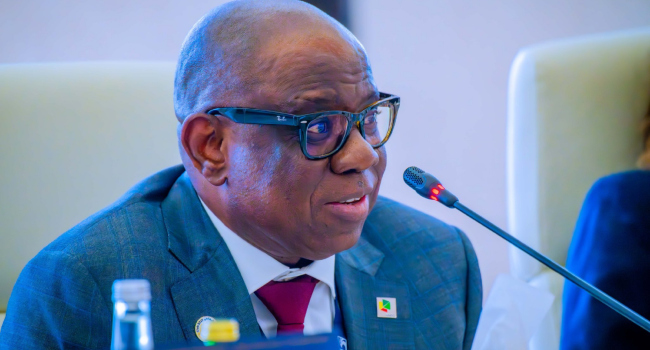
That is what makes Kaduna State Governor Uba Sani’s latest intervention for graduates of the Kaduna State Institute of Vocational Training and Skills Development particularly significant.
At the institute’s maiden graduation ceremony, Sani approved N810m for the 4,050 graduates. Thi translates to each beneficiary getting N200,000 to help them move from the classroom and workshop into the real life. The money is intended for work tools, initial working capital, professional registration or even transportation for those seeking employment.
At first glance, N200,000 may not appear transformational in today’s Nigeria. But the real significance of the intervention is not necessarily the size of the individual grant. It is the thinking behind it. For too long, vocational and skills-acquisition programmes in the country have trained thousands of people, handed them certificates and declared victory. But the graduates return home, often without the equipment, capital, connections or market access required to put their new skills to work. Well, Kaduna State government under Sani appears to be challenging that model.
The 4,050 beneficiaries were trained across 14 trades, including electrical installation, welding and fabrication, aluminium fabrication, computer hardware repairs and maintenance, catering and hospitality, refrigeration and air conditioning, fashion and garment making, carpentry and joinery, painting and decoration, tiling, plumbing, solar installation and automotive mechatronics. Their training also included literacy, numeracy, entrepreneurship and soft skills, while successful participants obtained National Skills Qualification Level II.
This is particularly relevant to Nigeria’s economic reality. The country needs electricians who can wire buildings properly, plumbers who can install reliable water systems, mechanics who understand modern vehicles, technicians who can install solar systems, welders who can meet industrial standards and young entrepreneurs who can build viable businesses around their trades. As it is, the the future of work will increasingly reward competence rather than certificates alone.
Hence, Kaduna’s approach to connecting vocational education to the practical needs of the economy is noteworthy. And the institute’s partnership with the National Board for Technical Education (NBTE) means that training is based on National Occupational Standards and graduates can obtain nationally recognised skills qualifications. That is how vocational education should work, similar to the apprenticeship scheme that operates across Germany.
There is also a bigger economic argument here. The governor’s decision to administer the fund through the Kaduna State Enterprise Development Agency is important. So too is the administration’s plan to engage companies and industries to provide direct employment, apprenticeships, internships, mentorship and subcontracting opportunities for the graduates. A digital platform is also being developed to connect graduates with employers and track their employment outcomes. This is the part that deserves particular attention. If implemented properly, Kaduna will have something many government empowerment schemes lack, which is a feedback loop.
Governor Sani himself has set the appropriate benchmark. He said the success of the programme should not be measured merely by the number of people enrolled or graduated, but by the number of graduates employed, businesses created, incomes improved, contracts secured and communities transformed. That is precisely the kind of thinking Nigeria needs in public policy.
Too many government programmes are designed around activities rather than outcomes. Officials announce how many people were trained, how many classrooms were built or how many beneficiaries received grants. But the citizen ultimately wants answers to a more basic question. Did my life improve? Kaduna’s vocational initiative is therefore worth watching because it appears to be built around that question.
The vocational sills training intervention also fits into a broader pattern in the Sani administration. The governor has consistently presented human capital development as a central component of his development strategy. In the state’s 2026 budget, education received 25 percent of the allocation, while infrastructure and rural transformation also received 25 percent. Health received 15 percent and agriculture and food security 11.65 percent. That combination matters.
Development works when these pieces connect. This is why the governor’s investment in vocational education should not be viewed in isolation from his broader programme. And the direction is noteworthy. The vocational institute itself is perhaps one of the clearest examples of the philosophy. The institute which operates from three campuses — Rigachikun, Soba and Samaru Kataf — is tuition-free, with particular attention to women, persons with disabilities and young people from underserved communities. The decision to spread the institute across three locations reflects an understanding that opportunity must travel to people, rather than expecting everyone to travel to opportunity.
There is another reason the programme deserves commendation. Nigeria’s insecurity crisis is often discussed primarily in terms of policing, military operations and intelligence. Those are obviously necessary. But sustainable security also requires giving young people something meaningful to do with their time, energy and talent.
The next challenge is scale and sustainability. N200,000 can help someone start, but it cannot by itself guarantee a successful enterprise. The real test will be what happens six months, one year and three years after graduation. If the state can demonstrate that thousands of beneficiaries moved from training to employment, enterprise and higher incomes, it would provide a compelling case for other Nigerian states to replicate the model.
There is also an opportunity to take the programme into the digital economy. Some of the trades already being taught — solar installation, automotive mechatronics and computer hardware, for example which sit at the intersection of traditional craftsmanship and modern technology.
But even as Kaduna looks towards the future, there is no need to romanticise university education at the expense of vocational competence. And there should be no hierarchy of dignity between intellectual and technical work. That is perhaps the deeper message in what Sani is doing.
The N810m is not just a grant. It is a statement about the dignity of work. It says that a young Nigerian who chooses to become a welder, plumber, tailor, electrician, mechanic or solar technician is not settling for less. With the right training, tools, standards, finance and market access, that person can become an entrepreneur, employer and contributor to economic growth.
Governor Sani’s most important achievement may not ultimately be the number of people who graduate from the vocational institute. It may be the number of people who, after graduation, no longer need to ask government for help because they have acquired the capacity to create value for themselves and others. That is the real meaning of empowerment.
And if Kaduna succeeds in turning 4,050 certificates into 4,050 productive livelihoods and, eventually, thousands more jobs created by those graduates, then the N810m will prove to be much more than money spent. It will be an investment in people. And there is hardly a more valuable investment any government can make. Kudos to Sani.