Follow Us on Google
• Challenges ex-VP to explain cost, legal basis of proposal
From Romanus Ugwu, Abuja
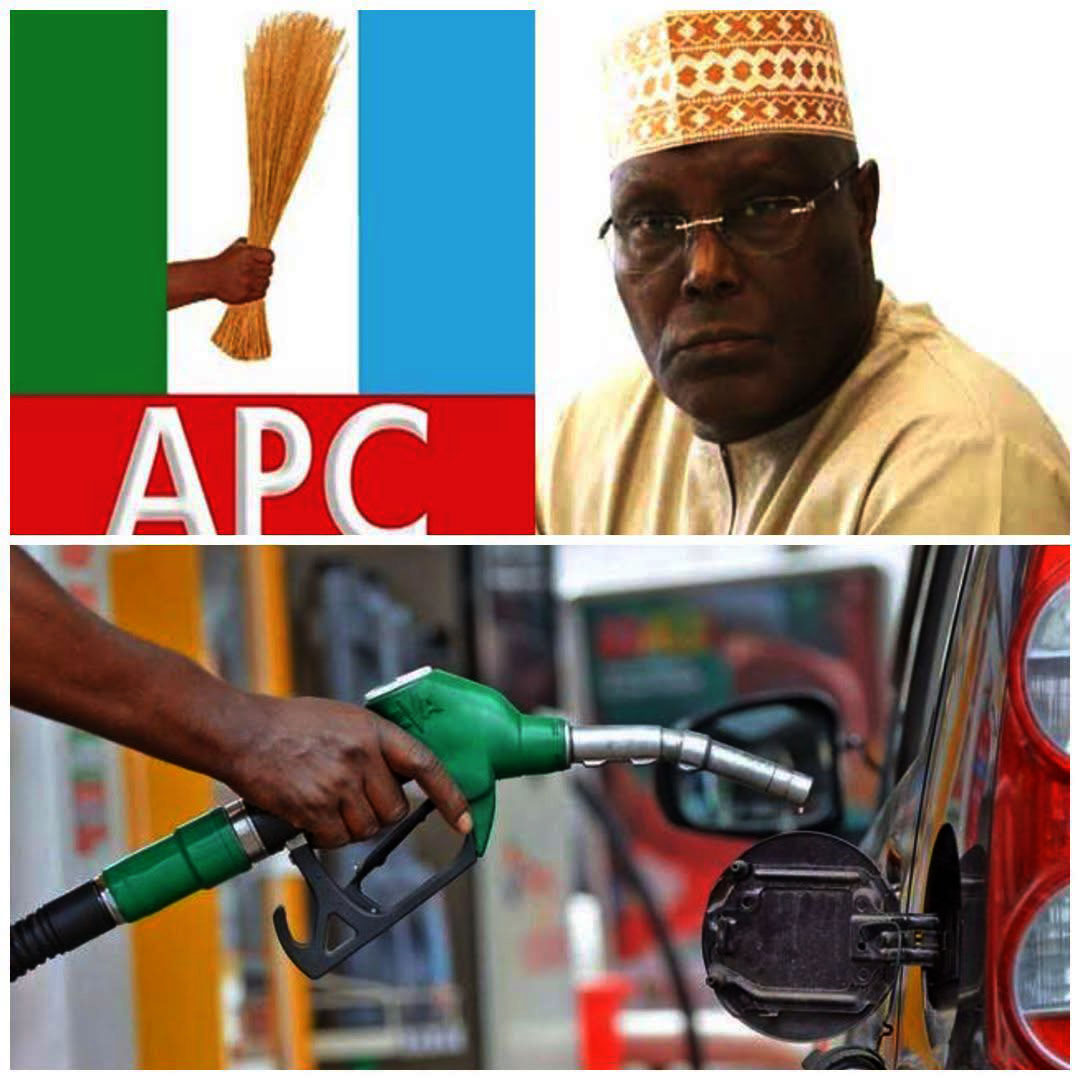
The All Progressives Congress Presidential Campaign Council (APC PCC) has admitted that rising petrol prices are hurting Nigerian families, but rejected the production subsidy proposed by African Democratic Congress (ADC) presidential candidate, Atiku Abubakar, as the solution to the mounting pressure.
The council assured Nigerians that the President Bola Tinubu administration would continue to pursue measures to ease the burden, saying petrol sold for about N830 per litre before the Middle East crisis pushed crude oil prices above $100 per barrel.
“The APC-PCC acknowledges the pressure that higher petrol prices place on Nigerian families. The Tinubu administration will continue to implement policies to support our people,” its spokesperson, Dele Alake, said in a statement.
“A de-escalation of the crisis could help reduce crude oil prices and, consequently, the pump prices of petrol and diesel, not just in Nigeria, but worldwide.”
The PCC said the Nigerian Midstream and Downstream Petroleum Regulatory Authority (NMDPRA) was working with the Federal Competition and Consumer Protection Commission (FCCPC) against alleged price gouging and with the Nigeria Customs Service to check diversion of petroleum products across the borders. It also pointed to the administration’s compressed natural gas and electric mass-transit programmes as part of efforts to provide cheaper transportation alternatives.
According to the council, more than 120,000 vehicles have been converted to CNG under the government programme, with thousands of additional conversions undertaken privately.
It said the Federal Government was working with state governments to extend the programme nationwide and recalled Tinubu’s assurance that more Nigerians should begin to see measurable reductions in transportation costs from October 1.
But even as it acknowledged the hardship caused by higher fuel prices, the APC PCC rejected Atiku’s proposed “production subsidy” for locally refined petrol, challenging him to explain how it would guarantee cheaper prices at filling stations.
Atiku has proposed government support for domestic refining as a means of reducing the cost of petrol and diesel, arguing that the intervention would differ from the previous subsidy regime built around imported petroleum products.
The APC PCC, however, said the proposal raised legal, fiscal and practical questions that Atiku needed to answer. “Atiku should therefore explain whether a refinery receiving his proposed subsidy would be required to sell petrol at a prescribed price,” Alake said.
“If the answer is yes, he should identify the legal framework under which the government would impose that price condition and explain how it would operate consistently with the Petroleum Industry Act.
Other News
“If the answer is no, he should explain how public support to refiners would guarantee lower prices at filling stations. Without an enforceable mechanism, refiners could receive the benefit while consumers continued to pay market prices.”
The council cited Section 205(1) of the Petroleum Industry Act 2021, which provides for wholesale and retail prices of petroleum products to be determined under unrestricted free-market conditions.
It also challenged Atiku to disclose how much his proposal would cost and where the money would come from.
The PCC claimed the intervention could cost between N17 trillion and N21 trillion annually, depending on the discount offered, volume covered and whether the support applied to the entire barrel or only petrol sold domestically.
It did not provide a detailed calculation in the statement establishing the estimates.
“Nigerians deserve to know: the proposed subsidy rate; the annual spending ceiling; the volume of crude or petrol to be covered; the source of funding; the mechanism guaranteeing lower pump prices; the safeguards against diversion, smuggling and fraudulent claims; and whether amendments to the Petroleum Industry Act would be required,” Alake said.
The council also questioned how Atiku’s latest proposal aligned with his previous support for downstream deregulation and removal of petrol subsidy.
It recalled that the former vice president had advocated subsidy removal during the 2023 election campaign and asked him to explain how the proposed production subsidy would avoid the alleged abuse, smuggling and fiscal losses associated with the previous system.
The APC PCC said the government would remain committed to a deregulated downstream market while pursuing alternative measures to reduce transportation costs.
It maintained that any intervention in the petroleum sector should be lawful, transparent, properly costed and capable of producing measurable benefits for consumers.
“Atiku should provide Nigerians with a detailed policy document and an independent legal and fiscal analysis of his proposal,” Alake said.
“Until he does so, his production-subsidy plan remains an uncosted promise without a clearly identified legal or operational framework.”