Follow Us on Google
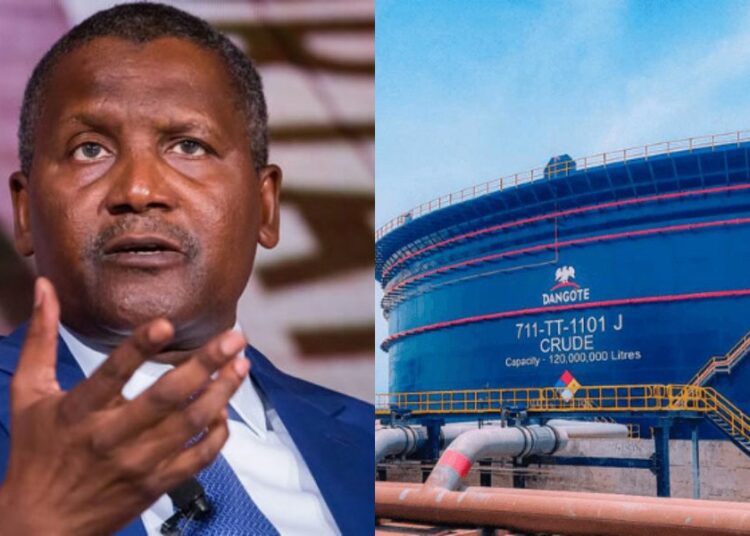
The Dangote Petroleum Refinery and Petrochemicals FZE has assured investors that its share sale is backed by a refinery that is already operating and making profits, stressing that shareholders will enjoy significant value appreciation and attractive returns over the long term.
Its Vice President, Mr. Edwin Devakumar, stated this at a media interaction and facility visit of the refinery and petrochemical complex at the weekend.
“The Dangote Refinery is one of the most significant industrial investments ever undertaken on the African continent. It addresses a critical gap in the energy sector while creating substantial economic value. Those investing in the refinery’s ongoing IPO are investing in a business with strong fundamentals, enormous growth potential, and a proven capacity to generate sustainable returns,” Mr. Devakumar said.
According to him: “The objective is not merely to raise capital. It is to democratise ownership of a strategic national asset and allow millions of Nigerians and global investors to participate in the value being created by the refinery. We believe this is an opportunity for investors to become partners in Africa’s industrial transformation story,”
Addressing concerns about the timing of the IPO amid elevated international crude prices, Devakumar said fluctuations in crude prices would not necessarily translate into a corresponding deterioration in the refinery’s profitability because product prices generally move with crude costs.
He explained that while exceptional geopolitical disruptions could temporarily improve refining margins because of product shortages, the company’s investment decision was based on longer-term profitability rather than temporary market conditions.
“When we made the investment of $20 billion, we made our own calculation, how much is going to be my profit and how much is going to be my return. So we are on target as far as that is concerned,” he said.
Devakumar’s central message to prospective shareholders was that the Dangote Refinery IPO should be viewed against the company’s operating track record, profitability, export potential and continuing expansion, rather than simply the prevailing crude oil price.
He urged investors to examine the company’s financial performance and dividend history before making their investment decisions.
Devakumar said the decision to take the refinery to the capital market after commissioning and several months of operations was deliberate, stressing that the company’s philosophy was to complete major projects, commence operations and demonstrate profitability before inviting the public to invest.
His comments come amid growing investor interest in the Dangote Refinery following its entry into the capital market and the company’s plans to expand its refining capacity, with the expanded facility expected to significantly increase production and export volumes.
On concerns over the sustainability of returns to shareholders, Devakumar said investors would have the opportunity to assess the refinery’s operating performance before committing their funds.
“You as an individual, before putting your money, you can always do your own evaluation,” he said.
He, however, expressed confidence that the refinery would deliver significant value appreciation for shareholders, pointing to the company’s profitability and the scale of its operations.
According to him, Dangote Industries deliberately avoided the approach adopted by many companies that raise equity to finance projects that are yet to commence commercial operations.
Other News
“Our philosophy is: accomplish the project, bring it to operations, start declaring your profit and then go public,” he said.
“What we are achieving is that none of the shareholders is taking any risk. The shareholder is buying a company which is already running profitably.”
Devakumar said the refinery had already operated for about six months before the public offering, giving potential investors an opportunity to assess its performance.
He said the company’s decision to move relatively quickly into the market was also driven by its desire to broaden ownership of the refinery and allow ordinary Nigerians to participate in its future growth.
“We are also in a hurry to ensure that a lot of people become the co-owners of this company,” he said.
Devakumar also offered a major reassurance on dividend prospects, saying the refinery’s substantial export earnings could provide the foreign exchange needed to support dollar-denominated dividends.
He said about half of the refinery’s current production was already being exported, while the additional capacity under development would be largely export-oriented because domestic demand for petrol, diesel and aviation fuel would not be sufficient to absorb the refinery’s entire output in the short term.
“My president assured that we can give in foreign exchange because most of our products are being exported.
“When the new refinery comes, practically everything will have to be an export. So foreign exchange generation is going to be huge. That is why he was able to give assurance that, yes, we will be paying in dollars”, he said.
He explained that the sustainability of dividends would ultimately depend on the refinery’s profitability, investment requirements and the proportion of earnings distributed to shareholders.
Beyond the IPO, Devakumar disclosed that the refinery’s ongoing expansion had reached an advanced stage, with basic engineering completed, detailed engineering nearing completion and virtually all major equipment already ordered.
He noted that the company was targeting completion in about two years, although it could potentially deliver the project earlier.
The expansion is expected to almost double the refinery’s workforce, while the wider transport and logistics ecosystem could create thousands of additional jobs as product volumes increase.
Devakumar said the expansion would benefit from infrastructure already developed for the existing refinery, including port and other supporting facilities, thereby reducing the cost of the additional investment.
He added that the company was also seeking to reduce engineering costs because much of the new development would replicate existing facilities.