Follow Us on Google
•States’ domestic liabilities swell to N4.59trn as Lagos, Delta lead
By Uche Usim
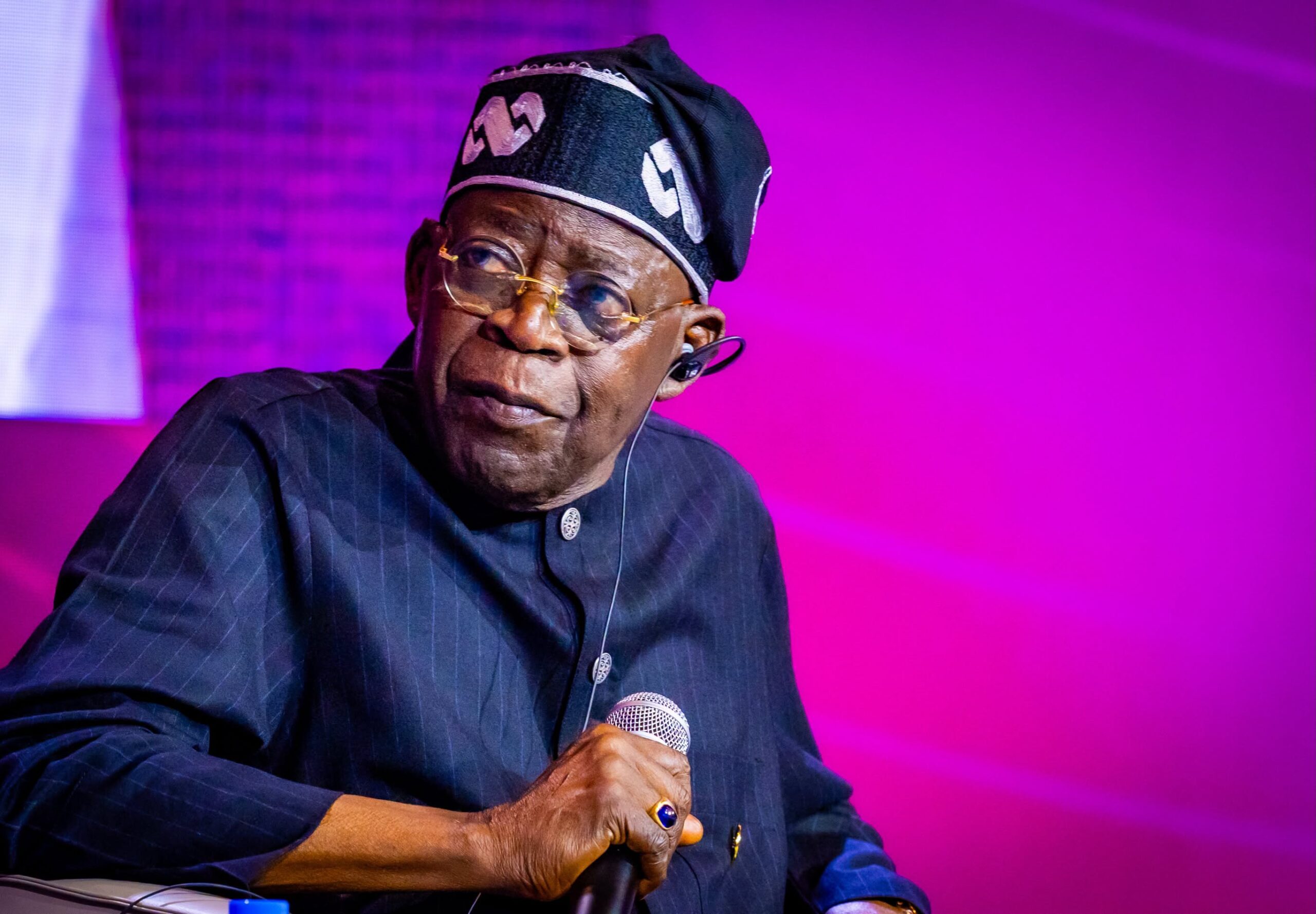
Nigeria’s external debt stock has risen by about $11.4 billion since President Bola Tinubu assumed office in 2023.
Analysis shows that it swelled from about $43.1 billion to $54.5 billion as of June 2026.
The increase accentuates the federal government’s preference for foreign borrowing to finance economic reforms, budget deficits and development programmes.
The debt rise has been driven largely by increased borrowing from multilateral lenders, particularly the World Bank, as well as Eurobond issuances and syndicated financing.
Nigeria’s debt to the World Bank rose from about $15.4 billion to $20.7 billion during the period. Major World Bank financing approved under the Tinubu administration included $2.25 billion for economic reforms in June 2024, $1.57 billion for the HOPE and SPIN programmes in September 2024, and $1.08 billion for education and resilience programmes in March 2025.
The federal government is also seeking a fresh $1.25 billion World Bank loan to support access to finance, digital services and electricity, while backing reforms in tax, trade and agriculture.
Nigeria returned to the international capital market in December 2024 with a $2.2 billion Eurobond, comprising $700 million due in 2031 and $1.5 billion due in 2034.
It followed this with another $2.35 billion Eurobond in November 2025, taking the total raised through the two issuances to $4.55 billion.
The country also secured a $1.8 billion syndicated loan from First Abu Dhabi Bank, while a $5 billion derivatives financing arrangement was agreed in 2026, of which $1.5 billion had been drawn by June.
However, the federal government has defended the financing arrangement, saying no oil revenues or strategic national assets were pledged as collateral.
However, the International Monetary Fund has raised concerns about the complexity and transparency of derivatives-based financing, while Fitch has also flagged liquidity and creditor-recovery risks.
Meanwhile, Nigeria’s domestic debt has also increased from about N59.1 trillion to N91.5 trillion during the period.
The latest Debt Management Office figures show that Nigeria’s total public debt stood at N166.79 trillion as of June 30, 2026, comprising N91.59 trillion in domestic debt and N75.20 trillion in external debt.
The federal government accounted for the bulk of the debt, with its total obligations standing at about N152.77 trillion, while states and the Federal Capital Territory accounted for approximately N14.01 trillion.
The government has continued to argue that borrowing is necessary to finance infrastructure and support economic reforms, even as rising debt and debt-servicing costs remain major issues for the country’s finances.
Meanwhile, Nigeria’s 36 states and the Federal Capital Territory (FCT) increased their domestic debt to N4.59 trillion as of June 2026 (second quarter) up from N4.52 trillion recorded in March (first quarter).
The latest figures from the Debt Management Office (DMO) showed that subnational domestic debt rose by 1.49 per cent in the second quarter of 2026.
The increase was, however, slower than the 3.74 per cent quarter-on-quarter growth recorded between December 2025 and March 2026.
Lagos State remained the largest debtor, with domestic debt of N1.20 trillion, representing 26.03 per cent of the total debt owed by the states and FCT.
Delta State ranked second with N369.30 billion, while the FCT followed with N358.79 billion.
Rivers State came fourth with N354.64 billion, followed by Edo with N214.93 billion.
Other states among the 10 largest debtors were Ogun, with N189.05 billion; Bauchi, N157.35 billion; Niger, N140 billion; Cross River, N130.01 billion; and Benue, N112.32 billion.
The 10 states and the FCT accounted for N3.22 trillion, or more than 70 per cent of the total subnational domestic debt stock.
The data also showed significant differences in the debt positions of individual states during the quarter.
Delta recorded one of the sharpest increases, with its debt rising by 72.69 per cent from N213.85 billion in March to N369.30 billion in June.
Edo’s debt also jumped by 24.69 per cent quarter-on-quarter to N214.93 billion.
In contrast, the FCT reduced its debt by 7.97 per cent from N389.88 billion to N358.79 billion, while Ogun’s debt fell by 5.83 per cent to N189.05 billion.
Rivers, Cross River and Benue also recorded declines during the quarter.
On a year-on-year basis, total domestic debt rose by N627.35 billion, or 15.83 per cent, from N3.96 trillion in June 2025.
The top 10 debtors accounted for N731.05 billion of the increase, while debt outside the group declined by about N103.69 billion.
Lagos, despite remaining the largest debtor, recorded a marginal 0.81 per cent decline in the second quarter. Its debt was nevertheless 14.78 per cent higher than the N1.04 trillion recorded a year earlier.
The latest figures highlight the growing reliance of several state governments on domestic borrowing to finance infrastructure and other government programmes, while some states are reducing their debt through repayments and tighter borrowing.
Analysts have continued to stress the need for states to ensure that borrowed funds are channelled into projects capable of improving economic activity and generating enough revenue to support debt repayment.