 Follow Us on Google

By Enyeribe Ejiogu and Flourish Oparah
In less than six weeks, the December 31, 2026, deadline given by the Lagos State government requiring everyone residing in the state to sign up for health insurance policy will expire. Despite the fact that Governor Babajide Sanwo-Olu has issued the reaffirmation, awareness about health insurance is still very low – particularly as the over 98 per cent of the populace struggle to eat in the face of the hardship in the country.
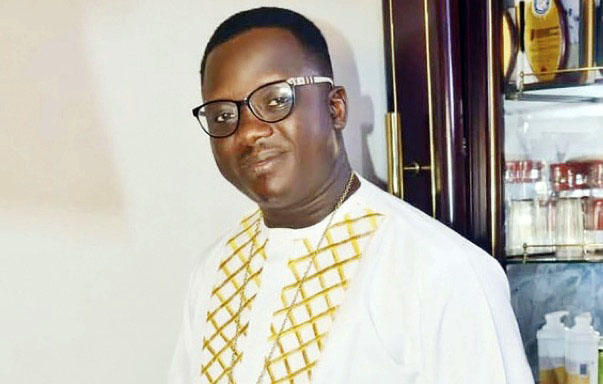
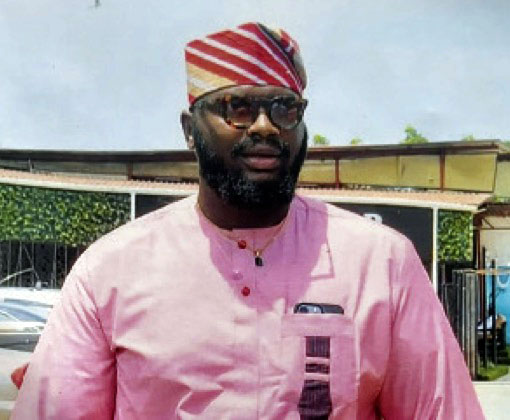
In this interview, Dr Ademola Osokoya, a medical practitioner working with AIICO Multishield Limited – a health management organization (HMO), who trained at the University of Lagos and has been engaged in health insurance “evangelism,” parts the curtain, to give us a peek at the issues and challenges, and proffers a solution on the way forward.
Tell us a bit about AIICO Multishield Limited.
AIICO Multishield is a company started in 1994 by some doctors. Then at a point the company was re-financed with AIICO Insurance getting involved in the ownership. When it was established with a business model or concept in which a group of hospitals came together to offer subsidised health service to patients that patronized the hospitals. They also provided healthcare coverage to the patients when they travelled overseas. In addition, they provided mandatory annual medical screenings. Altogether, there were 12 hospitals in the group.
Gradually, the business expanded to more places. It now has a presence nationwide with offices in all six geopolitical zones. Essentially, it is a Nigerian company that makes healthcare services more affordable.
The company had already operated for about 30 years before the government made the law on health insurance. The company saw the need for affordable healthcare services and moved to fill it.
Getting into the health insurance space, has that affected your perspective about healthcare delivery?
I have been in Multishield for about five years. It has been an eye-opening experience. Since finishing the housemanship, I have worked in both private and public facilities. What you quickly realise is that there are more people outside the health facilities than people that get to the health facilities. For example, in Lagos, there are only two tertiary hospitals (Lagos University Teaching Hospital, LUTH and Lagos State University Teaching Hospital, LASUTH). There are lots of private hospitals covering that gap.
Providing healthcare to the huge population of people needing healthcare services, brought up the subject of health insurance, and I started to read more about it and look for opportunities in the health insurance space.
Now that I am engaged in it, there is a different kind of person you need to be outside the clinic. You need to be able to work with people, either people that know more than you or people that know less than you. You also have to work with people that can be sometimes rude, frustrated, anxious and people that want to get things done as quickly as possible. So, one needs to develop people-handling skills and resolution skills; both come really handy.
You also need clear communication skills, know how to speak to people, get them to buy the idea of what you want to do for them or how you want to resolve whatever health issue they have. Those have been very important. And also, I’ve been thankful to my colleagues, the head of my department, the Managing Director, Dr. Leke Oshunniyi. They’ve really taken me astride and me through the ropes.
How would you characterise the response of the public to health insurance? Are they showing interest?
I would say that people are interested in insurance. But sometimes, with everything that’s going on, cost can be a limiting factor and also trust in the system. So, what we’ve tried to do is to get corporate bodies to buy into our plans. We sort of focus on corporate bodies, more of a group plan instead of individual plans, so that the lowest earning person in that collective has to be protected out of our plans. Yeah, so that has been what we’ve been targeting, working towards more these days.
I saw a report that only one in 10 Nigerians has health insurance. What would you say is the cause of such low penetration?
The key factor is cost. Nigerians spend between 50 and 60 per cent of their total income on food, and then everything else is just struggling with that food. So, anything you are selling to Nigerians or you want Nigerians to buy into has to be as important as food. The second factor is that many people are not aware of the benefits of having health insurance. Then there is the issue of over-utilisation as we call it. Initially, when we sign up clients, people think because of the money or the token they’ve paid, they get to use all the services that are available. All that leads to over-consumption, and then it puts a strain on the entire system.
Other News
People don’t have a good idea of how it works. Then, the third is that in the health insurance space, there is no regulator, especially among the private insurance firms. So, you find situations where hospitals are being owed money, or people are promising to pay, or they are beating the tariffs low, and then they are not paying after a while, and they just pack up. Sometimes there is no consequence for bad actors in that space.
Please shed more light of the issue of regulation.
What I mean is that there is no independent regulator, For the Nigeria Health Insurance Authority (NHIA), it is both an administrator and a player in the field. But that’s just for public insurance. But for private insurance, there is no stand-alone authority for anybody that is moving sideways in that space. There is a need for private sector regulation.
Still on the issue of low penetration, what other efforts have been made by the health insurance firms to improve on this? From your perspective, how can it be changed?
From my perspective, the mass media can be of great help, by creating awareness about the Bill that is coming up, which will make it mandatory for everybody to sign up. I think the private organisations are trying. You can see billboards of some HMOs as you move around the urban centres. But at the same time, people are aware, but are not cognisant of the fact that this is something that should be done now and not wait till when the emergency arises. Most people come in contact with the health industry only when there is an emergency. At that point, it’s already too late. It’s not at the point of service that insurance should be implemented. It should be implemented way before that. So, I think the message can be pressed upon more people and tell them that there is a need to build a basket before you get to that point of need. So that when the need arises, it’s the basket that will save you.
Assuming that you had the opportunity to address a faith-based congregation, what would you tell them?
First, I would tell them that health insurance is like a safety net, to catch you when you’re falling. It’s a safety net that you cannot just only provide for yourself, but also provide for your loved ones. There is a good example from my time in medical school. You know, they were talking to us at that time.
I said, okay, you know, you will be doctors, hopefully, and then you’ll end well. Most likely, you’ll be able to afford your medical needs. How about your uncle or ageing father? If you have children, they will have needs. How about the needs of those children? When they are sick, are you the one that will pay? Or will you pay out of pocket? It’s still the same price.
So, when we think of health insurance as something that protects not just you, but protects everybody around you, it’s like a net for everybody. So that when those emergencies come up, it’s not that you’re scrambling for N300,000, N400,000K or N500,000. From the basket that you’ve paid in and from what your premium allows, you just easily plug in and pay at that time.
Beyond what you have told us so far, what are the other challenges that people in the health insurance space face in everyday life?
The biggest challenge we have now is the rising costs of what we call tariffs, which is basically the agreement between the HMOs and the facilities. So, we have seen that drugs have been going up at an astronomical rate. But tariffs are usually reviewed annually.
So, the drugs, almost every two weeks, are given a price. But then the premiums we get are fixed. So, it is a very big challenge to keep running something that has an inflationary effect or something that has a fixed effect. Even the money we get from our employers is always running for a year. And we can’t go back after two months and say, ‘Look, the money you gave us for the entire year has run out.’ So, that is a big challenge on how to manage those funds and how to extend them to make sure that they get to the end of the year.
Another problem we are facing is that because of the same issue of rising costs of running facilities and of providing medical care, some of our facilities are going out of business. Some of them are closing up, especially in very rural or very not so urban areas where they don’t have a lot of patient inflow.
So, many of them, and that makes it difficult for our employees in those places to access care. But in Multishield, we found ways around that.
Can somebody who is covered by the company where he or she works, also buy a private, additional policy?
Yes, that is possible. You can get additional protection – a private policy that maybe has more coverage for you and your family and so on.