Follow Us on Google
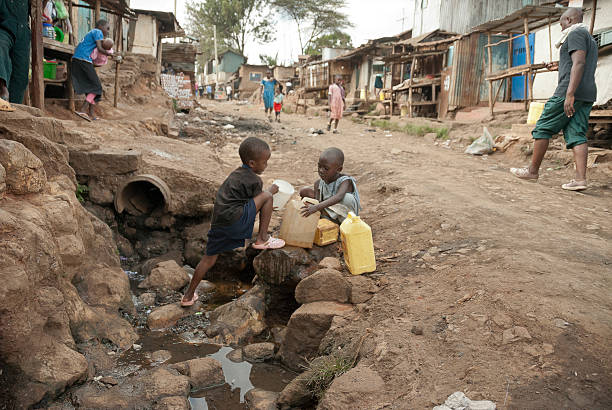
In its recent report on Nigeria and 38 other economies around the world, the World Bank decried the alarming rate of poverty and hunger in the country. The global lender noted that Nigeria’s situation is a worrisome paradox because in spite of being richly endowed with human and material resources, millions of Nigerians are still hungry. The development has inexorably pushed development goals out of reach of the people. Some of the countries listed in the same poverty trap with Nigeria, include Afghanistan, Haiti, Yemen, Sudan, Syria, Democratic Republic of Congo, and Venezuela.
These countries, the World Bank noted, are adversely affected by poverty and hunger mainly due to conflicts and instability. In April this year, the bank also disclosed that the sub-Saharan Africa remained the epicenter of poverty in the world. In the case of Nigeria, the bank’s latest report revealed that extreme poverty was driven by a combination of insecurity from banditry, kidnapping, and prolonged insurgency, especially in the North-East and North-West, but spreading fast in other parts of the country. The report observed that the upswing in extreme poverty level began during the COVID-19 pandemic in 2020, but has expanded at unprecedented rate in recent years.
The worrisome trend has drastically shrunk Nigeria’s per capita Gross Domestic Product (GDP) by an average of 1.8 per cent annually, while expanding by 2.9 per cent in other developing economies. According to the global lender, in 2025, about 421 million people in Nigeria and the 38 listed poverty-stricken economies are struggling to feed each citizen with less than $3 US dollar per day. Though Nigeria’s GDP looks better on paper than the 38 economies, the improvement seems vitiated by many economic policy somersaults such as surging inflation, naira depreciation and foreign exchange volatility, all of which have pushed prices of essential goods and services beyond the purchasing power of the ordinary people.
Beyond the World Bank’s report on extreme poverty and misery index in Nigeria, early this year, PricewaterhouseCoopers (PwC) International Limited said an additional 13 million Nigerians were at risk of being in the poverty net. According to 2022 findings by the National Bureau of Statistics (NBS), over 133 Nigerians are multi-dimensionally poor. The figure represents about 63 per cent of Nigeria’s total population, estimated at over 220 million. The report also indicates that Nigeria’s economic environment, with soaring inflation and rising cost of living, is worsening poverty levels with far-reaching implications for the citizens.
Nigeria’s poverty rate reached 38.9 per cent in 2023, with 87 million people living below national poverty line. In a subsequent update in 2024, the World Bank corroborated the NBS report, stating that, at least 129 million Nigerians were living below poverty line, reflecting a sharp rise from 40.1 per cent of the population in 2018 to 56 per cent in 2024. Official figures have shown that the depreciation of Nigeria’s GDP per capita dropped by 25 per cent from $2,162 in 2022 to $1,621 in 2023, and below $1,000 in 2024, according to the PwC report, and now less than $3. Rising inflation and currency devaluation have led to extreme poverty in the country. Although the NBS food inflation rate for June, 2025, stood at 21.97 per cent, it has not reflected on the prices of goods and services across the country. Prices of petroleum products, cooking gas, transport fares and electricity tariff have escalated the cost of living.
Government’s poverty programmes have been underfunded, poorly targeted and implemented haphazardly. Despite a GDP growth of 3 per cent in 2024 and a projected 3.5 per cent for 2025, the task to reduce poverty in the country has become very urgent. Poverty intervention programmes have not been able to address the problem. The economic reforms implemented so far are not sufficient enough to stimulate inclusive growth that will impact the living conditions of Nigerians.
Without pragmatic measures, the current economic hardship will jeopardize government’s long-term development projections. Therefore, concrete economic measures are needed to lift millions of Nigerians out of poverty. Such reforms should address Nigeria’s current sluggish growth, low human capital, labour market weakness, and exposure to domestic and external shocks. According to World Bank’s 2022 assessment report, these are some of the problems holding back government’s attempts to eradicate poverty. No doubt, a seamless implementation of the reforms will diversify the economy, boost structural transformation, create jobs and support social protection programmes that will alleviate poverty.