Follow Us on Google

Stakeholders call for increased investment, deployment of advanced technologies, others
__________________________________________________________________________
From Adanna Nnamani and Francis Onyedikachukwu, Abuja
Nigeria has recorded 100 per cent availability of its major pipelines for the first time in two decades, the Nigerian National Petroleum Company (NNPC) Limited has said.
The development, according to the company, followed the implementation of an integrated pipeline security framework involving security agencies, pipeline operators and host communities.
The Group Chief Executive Officer of NNPC Limited, Bayo Ojulari, disclosed this at the 2026 Nigeria International Pipelines Technology and Security Conference (NIPITECS 2026) in Abuja.
The two-day event was organised by the Pipelines Professionals Association of Nigeria (PLAN) under the theme: “Financing the Future: Unlocking Capital for Resilient Pipeline Infrastructure in Nigeri.”
Ojulari, who was represented by the Head of NNPC Gas, Audu Ibrahim, said pipeline availability had remained between 95 and 100 per cent over the preceding 18 months, attributing the improvement to the security framework coordinated by the Office of the National Security Adviser, alongside enhanced surveillance and community engagement.
He said the improved security situation had contributed to increased crude oil production, which rose to 1.71 million barrels per day, the highest level recorded in five years.
The NNPC boss also disclosed that recovery across Nigeria’s five crude oil terminals averaged 98 per cent between April 2025 and May 2026, reflecting improved operational efficiency across the country’s oil infrastructure.
According to him, the progress recorded in pipeline security and availability underscores the importance of sustained collaboration among government agencies, industry operators and host communities in protecting critical national energy assets.
On gas infrastructure development, Ojulari said Nigeria’s gas production had reached 7.5 billion standard cubic feet per day, with the government targeting 10 billion standard cubic feet daily by 2027 and 12 billion by 2030.
He said the targets were backed by Nigeria’s estimated 215 trillion cubic feet of gas reserves, the Petroleum Industry Act, the Decade of Gas Framework and the Gas Master Plan.
Ojulari further disclosed that NNPC had signed gas sales and purchase agreements covering 1.29 billion standard cubic feet per day for long-term supply and 750 million standard cubic feet per day for domestic industrial use.
He said the agreements represented more than $20 billion in associated investments, adding that reliable pipeline infrastructure remained critical to translating the country’s gas resources into electricity, industrial development and economic growth.
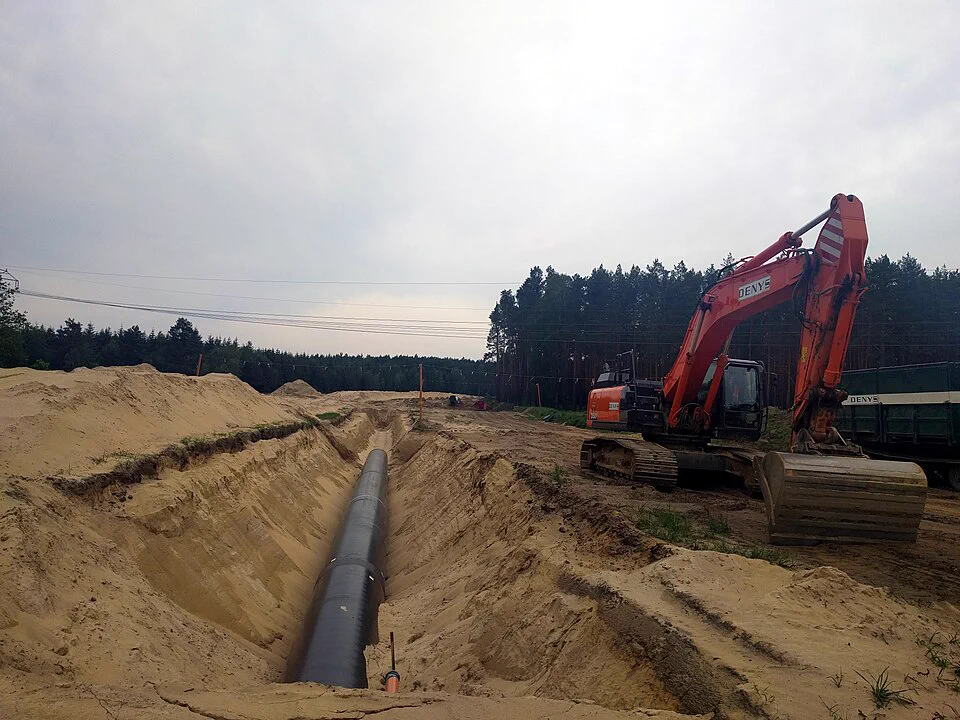
On major gas transportation projects, he said the 640-kilometre Ajaokuta-Kaduna-Kano (AKK) gas pipeline had reached about 95 per cent completion, with gas delivery to Abuja expected before the end of 2026, followed by Kaduna and Kano.
The 40-inch pipeline, valued at approximately $2.8 billion, is designed to transport up to 2.2 billion standard cubic feet of gas daily to support power generation, fertiliser production and manufacturing.
He also highlighted progress on the 130-kilometre Obiafu-Obrikom-Oben (OB3) gas pipeline, designed to transport up to two billion standard cubic feet of gas daily.
According to him, NNPC completed the technically challenging Niger River crossing on April 3, 2026, using horizontal directional drilling technology, while pre-commissioning was completed in August.
Ojulari said the project would strengthen connectivity across Nigeria’s eastern and western gas networks and improve the country’s overall gas transportation capacity.
He stressed that sustained investment in pipeline infrastructure, technology and security would be essential to achieving Nigeria’s energy ambitions.
Meanwhile, the President of PLAN, Engineer Ngozi Adeleke, called for increased investment, stronger collaboration and the deployment of advanced technology to strengthen the country’s pipeline infrastructure.
Adeleke said pipelines remained the backbone of the energy value chain, connecting producing fields to processing facilities, power plants, industrial centres, export terminals and consumers.
She said the association would continue to promote professionalism, operational excellence, safety, integrity and capacity development across the pipeline industry.
According to her, PLAN would also sustain its advocacy for policies and practices that encourage local and international investment in critical pipeline infrastructure.
She urged operators, financiers, regulators, technology companies, service providers, academia and host communities to work together to develop practical solutions to the sector’s financing, security and operational challenges.
Adeleke said the association would use the conference as a platform to foster partnerships, stimulate innovation and encourage knowledge sharing capable of advancing Nigeria’s pipeline ecosystem.