Follow Us on Google


A Nigerian man identified simply as Ayomide pretended to be a woman named Ava on TikTok to trick a Canadian teenager into sending nude photos, then threatened to leak them unless he was paid, according to an investigation by the Associated Press and PBS FRONTLINE.
The joint investigation, published on Tuesday, detailed how the young Nigerian used fake profiles and messaging apps to sexually extort teenage boys overseas.
The Canadian victim, now 18, said he was 15 when ‘Ava’ first followed him on TikTok.
Thinking he was talking to a girl, he chatted with the account before being convinced to continue the conversation on Zangi, an encrypted messaging app.
Ayomide, said to be in his early 20s, allegedly sent the boy a nude image lifted from the internet, passing it off as his own, and then talked his victim into sending an intimate photo back.
Once he had the image, he threatened to send it to the teenager’s family, friends and employer if he did not pay up.
The boy first paid $500 in the hope that it would stop the threats, but the demands kept coming.
“Not just yet. This isn’t that simple,” Ayomide reportedly told the teenager after he asked that they part ways.
Investigators said they examined more than 200 WhatsApp messages Ayomide sent to the victim, many of them threatening to reveal his identity and post his intimate photo.
In one message, Ayomide threatened to disappoint the victim’s mother by sharing the photos online, apparently to force him to comply with the demands.
He also sent the victim personal identification details and screenshot of his Tiktok followers to reinforce the message.
In all, the victim said he lost lost close to $2,000, although Ayomide said he only got a few hundred dollars from him.
Ayomide went on to send more than 100 WhatsApp messages over 11 days, but the teenager eventually stopped responding.
Ayomide told the AP he never released the boy’s photograph.
Reporters met Ayomide in Lagos, where he showed them chat histories from some of his scams, including the exchange with the Canadian victim.
The teenager was only contacted after he turned 18. He spoke on condition of anonymity because of the trauma of an experience he had not even told his family about.
“Scamming is not good,” Ayomide, who is barely older than his victim, told the AP.
The self-professed computer science student said he turned to internet scam to meet financial needs, including payment of school fees and rent.
But the investigation found he did not quit. About a year after promising to stop, he had teamed up with a group of other Yahoo Boys at his university, the investigation found.
How he operated
Ayomide’s approach was straightforward: pose as an attractive woman, follow hundreds of foreign men and boys on TikTok, and strike up conversations with those who followed him back — “What’s your name? Are you alone today? Do you want to have fun?” — before shifting the chat to a private messaging app.
He said that for every 50 people he follows on TikTok, about 10 follow him back, and five of those are willing to chat.
He collected payments through gift cards, including Apple and Steam cards, the investigation further found.
The AP described Ayomide as part of a wider network of Nigerian online fraudsters, widely known as Yahoo Boys, who target young people in Western countries through social media.
Financial sextortion is when criminals pressure victims into sharing nude images or videos and then threaten to publish the material unless they are paid.
The FBI has warned of a sharp rise in financially motivated sextortion targeting minors.
By August, the National Centre for Missing & Exploited Children (NCMEC) said it had received over 40,000 reports of financial sextortion, compared with about 50,000 for the whole of last year.
According to AP, the Economic and Financial Crimes Commission (EFCC) in Nigeria had worked with US law enforcement on efforts to tackle transnational cybercrime.
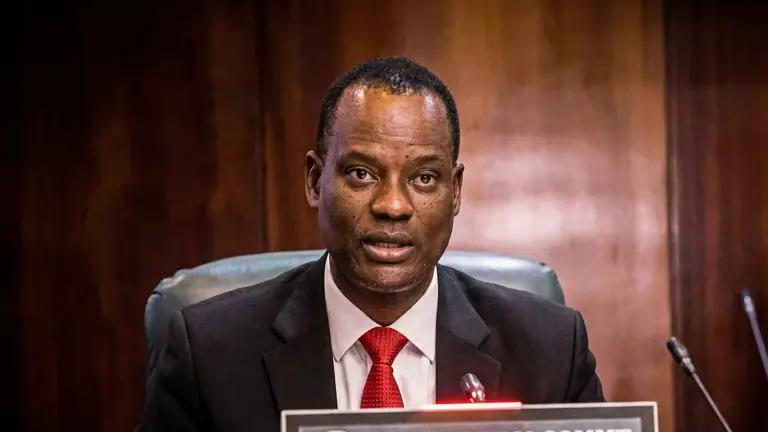
EFCC Chairman, Olanipekun Olukoyede assure the news agency that Nigeria would sustain its fight against internet fraud.
“Rest assured, Nigeria is no longer going to be a safe haven for fraudsters or criminal activities,” he said.