Follow Us on Google
•Tax reforms implementation, national census, state police creation, Ekiti/Osun guber polls, Dangote/NNPC price war, others to dominate headlines this new year
By Omoniyi Salaudeen
The world at large is still basking in the euphoria of the New Year. For Nigeria, this marks a high-stakes transition cycle characterized by early election fever, critical economic restructuring, alliance formation, and party primaries.
As such, the year is set to be eventful, especially with the new tax reforms kicking in and the presidential election looming. Some of the major events expected to shape the country’s socioeconomic and political landscape in 2026 include political campaigns, bank recapitalization, national census, Ekiti and Osun state governorship election, Dangote/NNPC price war, among others.
Political campaigns
The political calendar for 2026 is unusually heavy due to proposed electoral reforms and regional cycles. If the bill before the National Assembly seeking to move the 2027 general elections to November to allow six months for all election litigation to be settled before the May 2027 inauguration scales through, the year will be characterized by early electioneering and other political subterfuges. The implementation of the new laws, including the compulsory electronic transmission of results and the potential introduction of early voting for the diaspora and inmates will change the dynamics of power game, giving a new hope for credible transition process.
Implementation of tax reforms
A sweeping overhaul of the tax system begins in the first month of 2026. It aims to reduce the tax burden on 98 percent of Nigerians while aggressively targeting high-net-worth individuals and closing corporate loopholes. Many Nigerians have been skeptical about the implementation of the reforms. Some are even calling for a postponement. However, President Bola Ahmed Tinubu has insisted that there is no going back on the early commencement of the reform policies, describing them as a one-in-a-generation opportunity to build a fairer fiscal system for Nigeria. In a State House release he signed on Tuesday, the President addressed growing public concerns over alleged changes to provisions in the recently enacted laws, which include measures that took effect on June 26, 2025.
“No substantial issue has been established that warrants a disruption of the reform process,” Tinubu stated, urging stakeholders to back the implementation phase now “firmly in the delivery stage.”
As contained in the reforms, the Nigeria Revenue Service (formerly FIRS) officially launches. On October 1, the Digital Tax System also goes live, mandating electronic filing and real-time tracking of tax compliance to reduce human interaction and bribery.
By projection, 2026 is expected to be the year Nigeria reclaims its spot as Africa’s 3rd largest economy, overtaking Algeria and Egypt, following the shocks of 2024–2025 reforms.
Banking sector recapitalization
The bank recapitalization exercise is currently one of the most significant shifts in the Nigerian financial landscape in two decades. It is a massive undertaking by the Central Bank of Nigeria (CBN) to prepare the economy for the Federal Government’s goal of reaching a $1 trillion GDP by 2030. As of late 2025, the exercise is in full swing, with the final deadline for compliance set for March 31, 2026.
According to report, about 16 out of 36 banks have already met or exceeded the requirements as of November 2025. The policy reform is similar to the trend in 2004/2005 Soludo era, where smaller banks opted for mergers, acquisitions, or even downgrade of their licenses to stay compliant.
Ekiti/Osun State off-cycle governorship elections
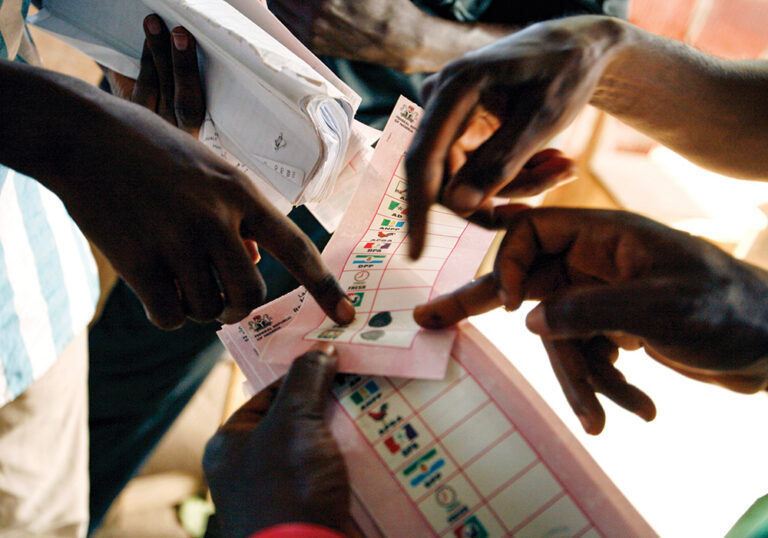
The off-cycle governorship elections in Ekiti and Osun states will be the most significant political events in Nigeria. These two states do not vote with the rest of the country because of past court rulings, making them a high-stakes testing ground for the 2027 general elections.
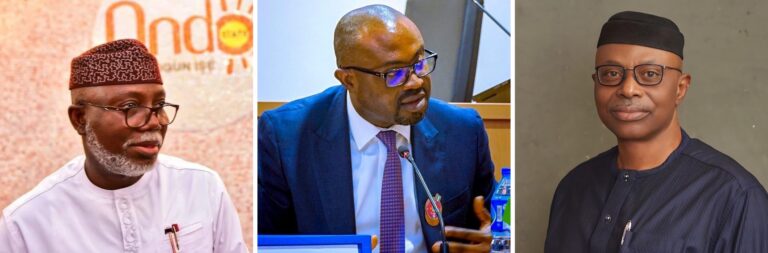
The Ekiti governorship election is scheduled for June 20, 2026. The incumbent Governor, Biodun Oyebanji (APC), has already secured his party’s nomination through a consensus primary in October 2025. He enjoys rare unified support from political heavyweights in the state, including former governors – Niyi Adebayo, Ayo Fayose, Segun Oni and Kayode Fayemi. The APC is banking on continuity, a rare concept in Ekiti politics which has historically been a pendulum state that switches parties frequently.
The Osun election, which is often referred to as the Battle of The West, is the final major test before the next general elections. Governor Ademola Adeleke, often referred to as the Dancing Governor, is seeking a second term in the scheduled August 8, 2026 governorship election. The All Progressives Congress (APC), on the other hand, is undergoing a fierce internal cleanup. In its just concluded primaries, the party disqualified seven aspirants, including high-profile figures like Senator Iyiola Omisore, for failing to meet strict sponsorship rules. Having concluded the selection process, the party’s standard bearer, Munirudeen Bola Oyebamiji, is poised to slug it out with Governor Adeleke who has adopted Accord Party as a platform for the election. Because Osun is a swing state, the results will signal whether the APC has gained momentum in the South-West. The Osun State election is expected to be much more volatile and closely contested than Ekiti, especially as the APC aims to reclaim the state.
Coincidentally, this will be the first major election to use the compulsory electronic transmission of results under the proposed new Electoral Act.The two polls will be the final major tests for the Independent National Electoral Commission (INEC) to perfect the Bimodal Voter Accreditation System (BVAS) and electronic result transmission before 2027.
FCT Area Council Polls
Before Ekiti and Osun, the FCT Area Council elections will take place in 2026, serving as the very first pulse-check of the year for the political parties. The Independent National Electoral Commission (INEC) has officially scheduled the elections for Saturday, February 21. This election is a significant local government transition, as it will determine the leadership for the six area councils: Abuja Municipal (AMAC), Abaji, Bwari, Gwagwalada, Kuje, and Kwali. Positions at stake are six Area Council Chairmen and 62 Councillors.
The election is widely viewed as a crucial battle of the heavyweights among the major political parties, each with a different stake in the capital city.
For the All Progressives Congress (APC), this is a home game. Since the FCT Minister is an appointee of the President, the party sees the Area Councils as vital for consolidating grassroots support for the Tinubu administration.
The Peoples Democratic Party (PDP) has historically performed well in Abuja’s municipal and satellite areas. As a show of strength, the party has to retain the current seats like the high-profile AMAC chairmanship and prove that it remains the primary alternative to the ruling party.
Abuja was one of the strongest bases for the Labour Party during the 2023 General Elections. This is their first major opportunity to translate that presidential-level support into local executive power.
National Census
After several postponements, Nigeria is expected to conduct its first biometric-based census in 20 years. This will provide critical and likely controversial data for state resource allocation and the 2027 election boundaries.
It marks the first time in 20 years (since 2006) that Nigeria will conduct a comprehensive headcount, shifting from years of relying on projections and estimates to using hard data.
For the first time, Nigeria is adopting a biometric-based census. This technology-driven approach aims to eliminate ghost entries and double-counting, which have historically marred results.
Using biometrics ensures that the data is verifiable and meets global standards. Digital data collection allows for faster processing and dissemination of results compared to the manual methods of 2006.
Without accurate data, the government has struggled to plan for basic services. The 2026 census will provide the data needed for distribution of government projects and incentives.
The census data will likely trigger a review of electoral wards and constituencies by INEC, ensuring more accurate representation in the National Assembly.
Constitution amendment
The 10th National Assembly has set an ambitious target to finalize a major overhaul of the 1999 Constitution by December 2025, making 2026 the year these changes actually take effect. And because constitutional amendments in Nigeria require approval from 24 out of 36 State Houses of Assembly, the first half of the year will be defined by intense political lobbying at the state level to ratify these alteration bills.
Creation of state police
The most critical amendments set to shape 2026 is the creation of state police. This is perhaps the most debated amendment. President Tinubu and many governors have reached a consensus that centralised policing has failed. If ratified, states will gain the legal power to establish, fund, and manage their own police forces.
Other complementary amendments include checks and balances to prevent governors from using state police as a political tool against opponents. There has been a common fear that governors might use these forces as private armies to harass opponents or rig elections, The proposed framework has several hard safeguards against abuse.
Additionally, the National Assembly and the Federal Police Service Commission will conduct bi-annual certification reviews. If a state police force is found to be violating human rights or national integrity, its licence to operate can be suspended. Under the new arrangement, the Federal Police (NPF) retain the constitutional right to intervene in any state if there is a complete breakdown of public order that the state force is failing to handle or is actively causing.
These measures are to ensure that citizens have a non-partisan channel to report police brutality or political harassment.
Local Government Autonomy
This is another radical constitutional shift in 2026. Following the 2024 Supreme Court ruling, the National Assembly is moving to entrench this into the constitution to make it irreversible. To ensure a departure from the old order, the State Joint Local Government Account where governors often held LG funds will be constitutionally abolished. A push to move council elections away from State Electoral Commissions often controlled by governors to a more independent federal body is also being considered. While the Supreme Court has already ruled on this, 2026 will see the Constitutional lock-in.
Dangote/NNPC price war
The price war between the Dangote Refinery and the NNPC alongside other importers has shifted from a supply crisis to a brutal battle for market share. With petrol prices already crashing from ₦1,200 in late 2024 to as low as ₦699–₦739 in December 2025, 2026 is set to be the year of price discovery.
The most significant escalation is expected in January. Already, Dangote Refinery has reached an agreement with the Independent Petroleum Marketers Association of Nigeria (IPMAN) to begin free delivery of petrol to filling stations nationwide. By absorbing logistics costs, Dangote is effectively bypassing middleman depots that have traditionally kept prices high. This move is expected to force retail pump prices toward a new floor of ₦700–₦750 per litre in most regions.
NNPC is no longer just a regulator—under the PIA, it is now a commercial competitor fighting for its life. By mid-2026, NNPC is expected to finalize agreements to hand over the operations and maintenance of its own refineries-Port Harcourt, Warri, and Kaduna) to private operators. The goal is to restart its own local refining at scale to stop relying on imports, which are currently being decimated by Dangote’s lower prices.
Currently, the price war is creating a survival of the fittest scenario in the downstream sector, causing bleeding within importers and depot owners. In late 2025, importers were projected to have lost over ₦100 billion monthly because they couldn’t match Dangote’s ₦699 gantry price.
With over 20 price adjustments reportedly made by Dangote in 2025 alone, the market has become highly reactive. For the first time in decades, fuel scarcity has largely vanished as the Christmas queue ritual was broken in December 2025.
According to experts, the Dangote-NNPC price war is moving into a post-scarcity phase in 2026. Now, the focus has shifted from where is the fuel to who has the cheapest fuel.
Consequently, Nigeria’s headline inflation, which peaked above 34 per cent in 2024, is projected by experts like Dr Ayo Teriba and the Central Bank to potentially drop to 14 per cent or 15 per cent in 2026.
Since petrol is a foundational cost for almost everything in Nigeria, the drop from ₦1,200 to the current ₦700–₦750 range is finally slowing down the cost-push inflation that plagued the country.
World Investment Summit
Between April 27 and 30, Abuja will host over 80 Heads of State and 8,000 participants. The goal is to secure $5 trillion in global capital commitments for Nigeria and Africa.
Sports Africa Investment Summit
In February, a ground-breaking even focusing on turning sports into a commercial powerhouse for the continent will hold in Lagos.