Follow Us on Google

With oil theft declining, production improving and major investments returning to the petroleum industry, the protection of pipelines in the Niger Delta has become an important part of Nigeria’s economic recovery efforts.
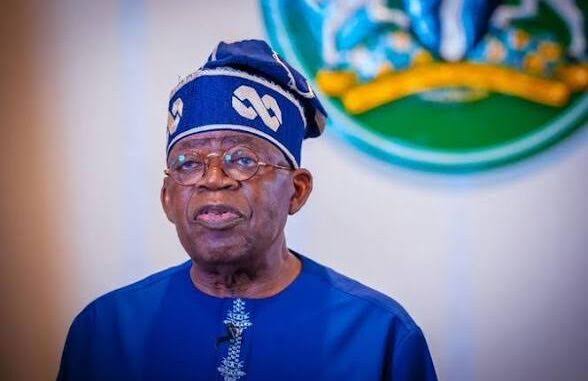
President Bola Tinubu’s October 1, 2026, Independence Day broadcast offered a glimpse into the economic challenges Nigeria faced when he assumed office in 2023 and the progress his administration says it has made since then.
From rising inflation and pressure on foreign exchange to weak investor confidence and widespread oil theft, the country confronted several problems that threatened government revenue, business activity and the livelihoods of millions of Nigerians.
Three years into his administration, however, the President says some of these challenges are easing, with economic growth improving, inflation declining from its peak, foreign reserves strengthening and oil theft falling significantly.
For stakeholders in the petroleum industry, one development deserving particular attention is the improved security of oil facilities in the Niger Delta, where crude oil theft, pipeline vandalism and illegal connections have for years deprived the country of substantial revenue.
The operations of Tantita Security Services Nigeria Limited (TSSNL), the private security company engaged by the Federal Government to protect oil and gas infrastructure in the region, have been linked to the reduction in oil theft and the recovery of production.
Tinubu captured the country’s economic journey in his Independence Day address, acknowledging both the hardship Nigerians have endured and the progress recorded under his administration.
“Our journey has not always been easy. In truth, it has generally been too hard for too many. We have known moments of great hope and periods of profound disappointment. We have endured war, military rule, economic crises, insecurity and political upheaval. Yet through it all, Nigeria, with the indomitable spirit of its people, has endured,” he said.
On economic performance, the President declared: “Our economy has grown by over four per cent this year. Both oil and non-oil sectors have contributed to the renewed period of stable growth. Oil theft is down. Inflation has fallen substantially from its peak.”
He added: “Our foreign reserves have been rebuilt, our foreign exchange market has stabilised, and in 2025 this country recorded its highest revenue from non-oil exports in its history, exceeding $6 billion. This is real money being made by real Nigerian businesses.”
Although these indicators reflect different aspects of the economy, developments in the oil industry remain particularly important because crude oil exports are a major source of Nigeria’s foreign exchange earnings and government revenue.
When crude oil is stolen before reaching export terminals, the country loses potential earnings. Such losses also affect the resources available to governments for infrastructure, healthcare, education and other public services.
Consequently, reducing oil theft and ensuring that more of Nigeria’s crude reaches legitimate buyers are central to efforts to improve public revenue and strengthen the economy.
Tantita and the fight against oil theft
The engagement of Tantita Security Services Nigeria Limited represents one of the approaches adopted to address persistent insecurity around oil and gas facilities in the Niger Delta.
The company, led by High Chief Government Oweizide Ekpemupolo, popularly known as Tompolo, was engaged to help protect the country’s petroleum infrastructure in collaboration with established security agencies.
The thinking behind the arrangement is that protecting pipelines across the Niger Delta requires more than deploying conventional security personnel. It also demands detailed knowledge of the creeks, waterways, settlements and difficult terrain through which the facilities pass.
Tompolo’s approach draws on the experience of people who understand the region, including fishermen, boat operators and others familiar with its waterways and communities.
Their local knowledge can help security teams identify suspicious movements, detect illegal pipeline connections and report activities that may indicate crude oil theft or illegal refining.
Tantita’s personnel monitor oil pipelines and other critical infrastructure, identify suspected points of crude theft and provide information to the relevant security agencies for investigation and enforcement.
The company also works with other security outfits, recognising that the protection of oil assets requires cooperation among different institutions rather than the efforts of a single organisation.
The significance of these operations lies in the economic consequences of preventing theft. Every barrel of crude oil recovered from the illegal supply chain and delivered through legitimate channels represents potential revenue for the country.
A more secure operating environment can also help oil companies plan production, maintain facilities and make investment decisions with greater confidence.
The reduction in oil theft has been linked to Tantita’s operations, with claims of a 79 per cent decline cited by supporters of the company. However, the precise period covered by that figure and the methodology used to calculate it are important in assessing the scale of the improvement.
Nevertheless, the broader objective remains clear: Nigeria needs a dependable system for protecting its oil infrastructure if it is to sustain higher production and maximise the benefits of its petroleum resources.
From revenue losses to production growth
For years, oil theft and pipeline vandalism undermined Nigeria’s ability to meet production targets. Crude was diverted through illegal connections, while attacks and other disruptions forced operators to shut down facilities or spend additional resources repairing damaged infrastructure.
These problems weakened government earnings at a time when the country needed more revenue to meet its financial obligations.
Improved security has helped create conditions for oil production to recover. While security is only one factor affecting output, its importance cannot be ignored in a sector where crude must move safely from producing fields through pipelines and other facilities to export terminals.
Higher production can improve foreign exchange inflows, support government revenue and strengthen the country’s external reserves, provided the additional output is sold and the proceeds are properly accounted for.
The Chief Executive Officer of the Centre for the Promotion of Private Enterprise, Dr Muda Yusuf, has acknowledged the contribution of reforms and improved security to developments in the oil industry.
“The oil production surge has contributed to the improvement in external reserves. It has impacted the capacity of the CBN to stabilise the naira and it has contributed generally to macroeconomic stability. So, the improvement in oil outputs, the improvement in security in the oil producing area has also been a major development that we need to recognize as part of the key achievements of the administration,” he said.
His assessment highlights the connection between oil production and the wider economy.
When Nigeria earns more foreign exchange from crude exports, the supply of dollars available to the economy can improve. This can support the Central Bank of Nigeria’s efforts to stabilise the naira, although exchange rates are also influenced by import demand, capital flows, monetary policy and confidence in the economy.
Similarly, higher oil receipts can improve government finances, but the benefits depend on production costs, international crude prices, contractual arrangements and the amount of revenue that ultimately accrues to the government.
This makes the protection of oil infrastructure an important part of the economic recovery effort, rather than merely a security exercise confined to the Niger Delta.
Technology strengthens surveillance
Tantita says it uses technology to improve surveillance, detect threats and coordinate responses across the facilities under its watch.
According to information published on the company’s website, its security systems combine surveillance equipment, access-control technology, alarm systems and communication facilities to help protect critical infrastructure.
High-resolution cameras, including equipment with night-vision and thermal-imaging capabilities, can monitor locations during the day and at night. Remote monitoring also enables authorised personnel to observe activities without being physically present at every location.
The company says motion sensors and artificial intelligence-enabled systems can identify unusual movements and trigger alerts for investigation.
Access-control equipment is another part of its security approach. Such systems are designed to restrict entry into sensitive areas and keep records of people accessing protected facilities.
In describing its access-control systems, the company said: “Systems such as fingerprint scanners, facial recognition, and retina scanners ensure secure and efficient access management. RFID Smart Card Systems allow for restricted access to key areas and provide a record of entry logs for enhanced accountability.”
Tantita also says it deploys automated barriers and turnstile gates to control movement into high-security facilities.
Its alarm systems are designed to alert security teams when intrusions occur, while perimeter intrusion detection systems can identify attempts to breach protected boundaries. Sensors installed on doors and windows can also notify personnel when forced entry is detected.
Explaining its communications infrastructure, the company stated: “Our advanced radio systems ensure uninterrupted communication across facilities, even in remote locations. We design and equip control rooms with video walls and communication consoles, providing centralized oversight for large-scale operations. Emergency Notification Systems enable quick dissemination of alerts to relevant stakeholders during emergencies, minimizing confusion and delays”.
Such technology can improve the speed with which suspicious activities are detected and reported. However, its effectiveness ultimately depends on reliable equipment, trained personnel, sound intelligence, timely responses and cooperation with the appropriate enforcement agencies.
Other News
In the Niger Delta, where waterways and remote settlements can make conventional patrols difficult, combining technology with local knowledge may offer an advantage in identifying and responding to threats.
Employment and alternative livelihoods
Beyond surveillance and pipeline protection, Tantita’s operations have been associated with employment opportunities in communities across the Niger Delta.
Figures cited by the company indicate that it employs about 136,000 people directly in pipeline-related work, while indirect employment is estimated at more than 300,000 people.
These figures, which require independent verification to establish the number of active jobs and the nature of indirect employment, point to the potential economic significance of security contracts in oil-producing communities.
Employment can help provide alternative sources of income for residents who might otherwise struggle to find sustainable livelihoods. It can also give local people a greater stake in protecting facilities that support national revenue.
However, the long-term challenge is to ensure that economic opportunities extend beyond security-related activities.
Tantita, in partnership with the Stakeholders Development Network and Ecosus Pro Nigeria Limited, has introduced the Tantita Sustainable Rice Farming Initiative, intended to encourage communities previously associated with illegal oil activities to embrace commercial agriculture.
The initiative seeks to demonstrate that farming and other legitimate businesses can provide alternatives to activities that damage petroleum infrastructure and expose communities to environmental and economic risks.
For such programmes to achieve lasting results, farmers need access to land, quality seedlings, equipment, financing, storage facilities and reliable markets. Training and links to processors and distributors are also necessary to make agricultural production commercially viable.
If properly implemented, alternative livelihood programmes could complement security operations by addressing some of the economic pressures that make illegal activities attractive to certain individuals.
The wider objective should be to help oil-producing communities benefit from legitimate economic activity while protecting the environment and the infrastructure on which the national economy depends.
New investments return to deepwater oilfields
Nigeria’s efforts to improve oil production and attract investment are also evident in developments involving major offshore projects.
The Nigerian National Petroleum Company Limited and its partners have signed agreements intended to advance the proposed Bonga Southwest/Aparo deepwater project towards a Final Investment Decision.
Located in Oil Mining Lease 118, the project is estimated to attract investment of up to $21 billion. Its projected peak production is about 175,000 barrels of oil daily, alongside 140 million standard cubic feet of gas per day.
The agreements were executed by NNPC Ltd and the OML 118 contractor parties: Shell Nigeria Exploration and Production Company Limited, Esso Exploration and Production Nigeria (Deepwater) Limited, and Nigerian Agip Exploration Limited.
They include an addendum to the OML 118 Production Sharing Contract and an addendum to the Dispute Settlement Agreement.
A Final Investment Decision is the formal point at which investors commit to proceed with a project after assessing its commercial prospects, costs, risks and expected returns.
The agreements are therefore an important step towards a potential major investment, although the signing of the documents does not by itself mean that the project has reached the final investment stage or that the projected production has begun.
President Tinubu has also approved the Deep Offshore Oil and Gas Projects Incentives (Tax Remission) Order, 2026, which is intended to improve the competitiveness of Nigeria’s fiscal arrangements for deepwater projects and encourage fresh investment.
According to Yusuf, reforms across the petroleum industry have helped improve production and create conditions for further investment.
He also highlighted the contribution of downstream deregulation to the emergence of the Dangote Refinery, arguing that a more appropriate commercial environment can encourage major investors to commit resources to the sector.
“The refinery, he added, has opened the way for other refineries, and investors, to come on board in the oil and gas space. So quite a lot has happened within the oil and gas space, both in the upstream, the midstream, and the downstream,” he stated.
These developments show that Nigeria’s oil industry requires progress across the entire value chain, from exploration and production to transportation, refining and distribution.
Security, however, remains an essential foundation. Investors are more likely to commit substantial funds when they have confidence that facilities can operate without persistent disruption and that the rules governing their investments will remain reasonably predictable.
Monetary reforms and the cost-of-living challenge
The recovery in oil production is unfolding alongside broader economic reforms intended to stabilise the naira, improve public finances and contain inflation.
Under CBN Governor Olayemi Cardoso, monetary policy was tightened significantly, with interest rates raised by more than 800 basis points during the initial tightening cycle. A basis point is one-hundredth of a percentage point.
The CBN also strengthened liquidity management and sought to limit monetary financing of government spending to the applicable statutory framework.
In the foreign exchange market, it introduced a willing-buyer, willing-seller approach, moved towards a unified exchange-rate framework and addressed verified outstanding foreign exchange obligations.
The objective was to improve transparency, reduce distortions and restore confidence in the market.
Nigeria’s external reserves have also strengthened, providing a buffer against external shocks and supporting confidence in the country’s ability to meet international obligations. The level of reserves, however, changes over time and should be assessed against the latest official figures.
Despite these improvements, the economic recovery has yet to translate into sufficient relief for many households and businesses. High food prices, transport costs, energy expenses and borrowing costs continue to place pressure on disposable incomes and production.
Tinubu acknowledged this challenge in his Independence Day broadcast, saying: “Our priority is to bring down the cost of living. We will achieve this by lowering the cost of producing and moving the things Nigerians consume”.
He also stressed the importance of public services and social support, saying: “That is why, working with our states and local governments, we will continue to strengthen primary healthcare, basic education, and the essential public services poorer Nigerians depend on most. Since 2023, we have paid salaries and pensions on time and in full. We have reformed the national pension program to benefit retirees and the vulnerable”.
These commitments underline the next test for the administration: ensuring that improved macroeconomic indicators translate into better living conditions for ordinary Nigerians.
Sustaining the gains
The contributions of Tantita and other security organisations to protecting petroleum infrastructure have received support from some lawmakers and industry stakeholders.
Chairman of the House Committee on Host Communities, Dekor Dumnamene Robinson, has said the contributions of Tantita and its leadership to national security deserve appreciation.
Lawmakers serving on the joint committees of the House of Representatives on Host Communities and Public Petitions, alongside other stakeholders, have also commended the company for what they described as effective and patriotic service in safeguarding critical oil infrastructure.
Such endorsements reflect the importance attached to securing the country’s petroleum assets. However, the sustainability of the gains will depend on transparent performance monitoring, accountability, effective coordination with public security agencies and measurable reductions in theft and production disruptions.
The government and industry operators must also ensure that host communities are not treated merely as locations where pipelines pass. Their residents need meaningful economic opportunities, environmental protection and access to development programmes that can improve their quality of life.
For Tantita, the challenge is to sustain effective operations while demonstrating that the results attributed to its activities can be independently measured and maintained over time.
For Nigeria, the stakes are even higher. Oil revenue alone cannot guarantee economic prosperity, but persistent theft and insecurity can undermine the resources needed to build a more diversified economy.
Tinubu’s Independence Day address presented declining oil theft, improving production and stronger economic indicators as evidence of progress. Sustaining that progress will require the government to combine security with sound economic policies, investment, job creation and social protection.
Ultimately, the success of Nigeria’s oil-sector reforms will be measured not only by the volume of crude produced or the revenue earned, but also by whether those gains translate into better infrastructure, more productive businesses, employment opportunities and a lower cost of living for citizens.