Follow Us on Google
From Juliana Taiwo-Obalonye, Romanus Ugwu, Abuja; Abel Leonard, Lafia; Scholastica Hir, Makurdi; and Jude Dangwam, Jos
Describing many incumbent state executives as visiting governors to their states will definitely not come as a surprise to many Nigerians. This derogatory description, dating back to the beginning of the Fourth Republic, aptly underscores the insignificant period they spend in their various home states in comparison with the duration they stay away, mostly outside the country or in the Federal Capital Territory, Abuja.
Their worrisome persistent absence in their states, investigations revealed, is attributable to their personal comfort, degenerating insecurity, possible escape route from unfulfilled campaign promises, and insufficient funds to execute policies and projects they promised during their election’ campaigns.
While some of them hide under the alibi of Abuja providing a more conducive atmosphere to meet and interact with prospective foreign investors that might be uncomfortable to visit their states, many of them are also deeply involved and preoccupied in politics at the centre, which perpetually keeps them away from their states.
To perfect their personal comfort and cushion their relocation to Abuja, many state governors have reproduced the semblance of the comfort of their State Houses through either renovating the state’s Governor’s Lodge or outrightly building comfortable state-of-the-art country homes at highbrow Abuja locations as their personal homes.
Lamentably, many of them, according to investigations, have a standby movement arrangement to fly in and out of their state just to sign sensitive documents, particularly due to their hostile relationships with their deputies, generally regarded as perpetual spare tyres.
Like other parts of the country, the governors of the states in the North Central geopolitical zone are not exempted from this trend. This investigation examined Nasarawa, Benue, Plateau, Niger, Kwara, and Kogi states, as well as the Federal Capital Territory, to establish how their chief executives divide their time between the seat of power and the seat of government.
Nasarawa: Investment diplomacy or absentee governance?
In Nasarawa, authorities, in defence, claimed that for a governor whose administration has increasingly placed investment attraction, mineral development and national engagement at the centre of its agenda, travelling outside the state is hardly unusual. According to the authorities defending the governor, in an era when Nigerians are demanding greater accountability from public office holders, the question is simply no longer whether a governor travels, but why he travels, how long he stays away, who exercises executive authority in his absence, and what the people gain from those engagements.
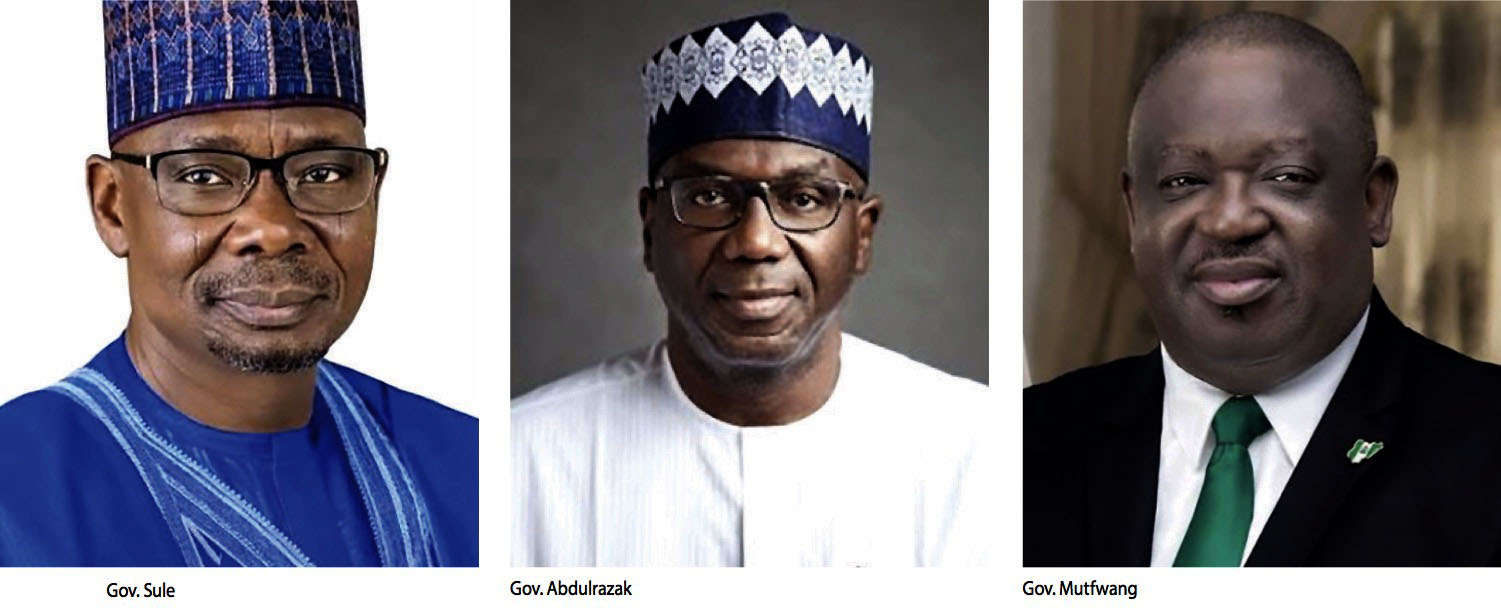
A review of publicly available records of Governor Abdullahi Sule’s activities over the past years shows several movements outside Nasarawa, including official engagements in Abuja, an international assignment in South Africa, a visit to Angola and a major investment related trip to China. But the same records also show repeated appearances in Nasarawa for executive functions, project inspections, security meetings, appointments, commissioning ceremonies and community engagements.
His Senior Special Assistant on Public Affairs, Peter Ahemba, rejected strongly the insinuations that Sule’s travels amount to absentee governance, insisting that the governor’s movements within and outside Nigeria are primarily connected to the economic, infrastructural and institutional development of Nasarawa State. He argued that investment opportunities, industrial partnerships and strategic government relationships cannot always be secured by a governor remaining within the boundaries of his state.
On the question of prolonged absence, Ahemba said the governor has never spent a week in Abuja, and that whenever he travels, he formally relinquishes power to Deputy Governor Emmanuel Akabe, who has assumed duties as acting governor on documented occasions.
However, opposition figures disagree. A chieftain of the Peoples Democratic Party, Danladi Shehu, argued that reported investment gains have yet to translate into tangible improvements in the lives of ordinary residents.
A chieftain of the African Democratic Congress (ADC), Peter Akawu, described the governor’s travels as a waste of public resources, alleging that benefits from mining and other investment activities were concentrated in the hands of a few individuals, a claim that could not be independently established. A chieftain of the Social Democratic Party (SDP), Akolo Umbugus, said the administration should be more concerned with demonstrating the direct impact of the governor’s movements on the people than with the number of countries he visits, arguing that development diplomacy is only justified when outcomes eventually translate into jobs, industries and better economic opportunities for residents.
Events inside Nasarawa during 2026 provide a counterweight to the narrative built solely around the governor’s foreign engagements. In August alone, Sule participated in several major activities across the state, including engagements in Akwanga, the inauguration of the State Security Advisory Council, the swearing in of commissioners and other officials, commissioning of heavy duty machinery, and inspection of major infrastructure projects in Mararaba and Keffi. He also received community delegations and performed official activities from the Government House throughout the period.
Benue: A governor who rarely leaves, but struggles to show results
The situation is arguably different in Benue, where political observers could not categorically call Hyacinth Alia an absentee governor, even though his trips have been challenged in terms of the benefits they have brought to the state. Commissioner for Information and Orientation, Chief Solomon Iorpev, said the governor has stayed in Benue for two years and eight months out of three years in office, and hardly goes anywhere, insisting that whenever he travels, it is primarily for official engagements, including investment drives around the revival of Taraku Mills and the Igumale Cement project.
Iorpev said the governor formally transmits authority to Deputy Governor Sam Ode whenever he travels for an extended period, describing their working relationship as one built on trust and regular consultation.
Even so, chairman of the Benue Network of NGOs, Lazarus Mom, cautioned that excessive travel, even when officials are free to embark on it, could cost the state financially and cause responsibilities to suffer. PDP Secretary in the state, Dan Nyikwagh, was more direct, arguing that Alia cannot be judged by the number of trips he makes to Abuja or abroad, but by what Benue gains from them, and describing the label of absentee governor as increasingly difficult to dismiss given the state’s insecurity, displacement and underdevelopment. He argued that Abuja should be a place a governor visits to secure solutions for his state, not a place where he spends a disproportionate amount of his governing time, adding that Benue’s Government House was deliberately sited in Makurdi rather than Abuja so that the governor would remain close to the people he leads.
Iorpev, in the government’s defence, pointed to a broader record of engagement within the state, noting that Alia has completed a tour of the state’s eleven federal constituencies, attended to youths at the IBB Square, hosted the North Central Regional Security Summit, and engaged investors and stakeholders through the Benue Investment and Property Company.
Plateau: Disputed figures over travel, security spending
In Plateau State, the opposition African Democratic Congress and civil society organisations differed sharply on the state government’s presence and effectiveness amid persistent security challenges. The party’s Publicity Secretary, Silas Wettok, alleged that the state government and Government House spent more than N10.11 billion on travelling between January and June 2026, while over N23.69 billion was reportedly spent on security within the same period, questioning what those resources had achieved as killings continued in rural communities.
The Commissioner for Information and Communication, Joyce Ramnap, rejected the travel expenditure narrative, explaining that the N10.11 billion figure covered travel and transport across the wider state public service, including ministries, agencies, tertiary institutions, the judiciary and the state assembly, rather than the governor’s personal travels. She said Governor Caleb Mutfwang undertook only three international trips between January and June 2026, all tied to defined official engagements, including the Presidential Prayer Breakfast in the United States and an interfaith dialogue in the United Kingdom.
Director of the Civil Liberties Organisation in the state, Steve Aluko, said Plateau had seen a different governance approach compared with previous administrations, since the deputy governor or a designated official routinely takes charge whenever the governor is away. He nonetheless cautioned that frequent absence could have consequences if responsibilities were not properly delegated, urging that travel be guided by diligence and clear productivity goals.
The State House of Assembly maintained that its own work had continued without interruption regardless of the debate over the governor’s movements. Chairman of the House Committee on Information, Mathew Sylvanus Kwarpo, said the tenth assembly had remained active on bills and motions of public importance, citing the recent withdrawal of a proposed pension law for principal officers following public opposition as evidence that the legislature was responsive to the concerns of Plateau citizens. He added that the assembly had enjoyed financial autonomy from the executive throughout the period, with no major conflict between the two arms of government.
Niger: A governor present on ground, But with a troubling precedent
Governor Mohammed Umaru Bago of Niger State has cultivated a public image of frequent, hands on presence across the state, regularly touring local governments, inspecting projects and holding town hall meetings in Minna and beyond.
Lawmakers representing the state in the National Assembly have credited him with commissioning a new university, a teaching hospital and reactivating the Minna airport for direct commercial and pilgrimage flights, achievements that required sustained attention within the state.
However, the administration’s record has not been without controversy. In June 2024, Bago, his deputy, Yakubu Garba, the Speaker of the State House of Assembly and several commissioners and lawmakers all travelled simultaneously to Saudi Arabia for the lesser hajj, leaving state activities, including the Democracy Day celebration, in low key mode. Reports at the time indicated that no power had been formally transmitted to any official before the trip, a situation critics said violated Section 190 of the 1999 Constitution, which requires a governor to hand over authority in writing whenever he is to be absent from the state.
The timing drew particular criticism because it followed a mining pit accident that had buried several people, with rescue operations reportedly moving slowly while the state’s top leadership was away. Opposition figures in the state described the trip as an abandonment of primary responsibilities at a moment the state most needed present leadership.
Beyond that episode, Bago’s international travel has generally been tied to identifiable official purposes, including an executive leadership retreat in Kigali, Rwanda, alongside other governors. His administration has also faced separate criticism over its handling of journalists and citizens who raise questions about insecurity in the state, an issue distinct from, but related to, broader concerns about accountability and transparency in how the government explains its activities to the public.
Kogi: Governing from Abuja instead of Lokoja
Of all the states examined, the criticism most squarely centred on physical absence from the seat of government applies to Kogi State, where Governor Usman Ododo has faced persistent claims that key arms of his administration effectively operate from Abuja rather than from Lokoja, the constitutionally recognised state capital.
In August, 2026, there was a sentiment increasingly shared by residents, describing the state as being governed through what they called a long distance relationship. Many citizens joke that government business is conducted through forwarded messages and voice notes rather than physical presence in Lokoja. The people pointedly referenced the governor’s own public acknowledgement that the office of the Commissioner for Finance had been moved to Abuja on a permanent basis, a claim the state government has not publicly denied.
The perception of governance by remote control has fed into wider criticism of the administration. A newspaper commentary published in July 2026 argued that government promises publicised around infrastructure projects in Kogi East had not matched conditions residents encounter daily, citing the Efekpe Ogolale Road as one example of a widely publicised project that remained in poor condition. While that commentary focused on project delivery rather than the governor’s location, it reflects a broader credibility gap that critics link to reduced physical oversight from Lokoja.
The state government has pushed back against separate allegations this year, including firmly denying reports in August 2024 that Ododo was considering defecting to the PDP, with the Commissioner for Information and Communications, Kingsley Fanwo, dismissing the report as reckless and unprofessional journalism. The administration has not, however, offered a detailed public account addressing the specific claim that core financial administration functions are being run from the federal capital rather than the state capital, a gap that leaves the underlying question about where key decisions for Kogi State are actually made without a clear, on the record answer from Government House.
FCT Minister: A different category altogether
The Federal Capital Territory may not be a state, but it provides services in the status of a state government through the Minister, Nyesom Wike, which has resulted in a debate over whether his frequent foreign trips make him a working or absentee minister. As part of this nationwide investigation, the travel record of the FCT Minister presents a more complicated picture than a simple tally of foreign trips.
Wike does not fall within the constitutional requirement for a governor to formally hand over to a deputy when travelling, since the FCT is administered directly by the federal government. But his movements outside Abuja provide a useful test of whether official foreign travel is tied to clearly documented government business or represents periods away from the territory he is charged with administering.
Available public records show Wike embarked on several significant foreign trips since his appointment, including visits to China, Italy, the United Kingdom and the United Arab Emirates, as well as at least one vacation whose destination was not publicly disclosed. His visit to Beijing in September 2024 was directly connected to memoranda of understanding on electricity and water supply projects for Abuja.
His March 2025 trip to Milan led to agreements on a vocational training centre and agricultural modernisation for the FCT. A further trip to China in May 2025, through Dubai, was tied to water projects in Gwagwalada, Kuje and Kwali, backed by a Presidential approval of N50 billion for the initiative.
His September 2025 trip to the United Kingdom is less straightforward. Reports at the time suggested the Minister had travelled for medical treatment, a claim Wike rejected, saying he had simply gone to rest, having not taken a holiday since assuming office. He noted that he ordinarily travels with official files and certificates of occupancy so that government business is not delayed, but had deliberately left them behind on that occasion. In October 2025, he travelled again to Dubai to attend the Asia Pacific Cities Summit and Mayors Forum, a trip with a clear professional rationale tied to urban development.
The documented record does not by itself establish chronic absenteeism on Wike’s part. His frequent appearances at project inspections, commissioning ceremonies and flag off events across the FCT indicate that periods spent outside Abuja should not automatically be equated with disengagement from his responsibilities, even as legitimate questions remain about the frequency of his personal travel.
Kwara: Crisis visits at home, questions over a trip abroad
Governor AbdulRahman AbdulRazaq of Kwara State, who currently chairs the Nigeria Governors Forum, has responded personally to some of the worst security incidents his state has faced in years. Following the killing of at least 75 people in a terrorist attack on Woro community in Kaiama Local Government Area in early February 2026, AbdulRazaq travelled to the area within days, commiserated with the Emir of Kaiama and bereaved families, directed the state emergency management agency to mobilise support for survivors, and announced the deployment of soldiers under Operation Shield Savannah. He later made similar condolence visits to Oke Ode and other communities hit by bandit attacks in Ifelodun Local Government Area.
Despite that record of physical presence during emergencies, the governor’s travel pattern has drawn separate criticism. In May 2026, AbdulRazaq had travelled to France. The trip came even as residents of Kaiama and other communities continued to face displacement and threats from armed groups. Kwara State officials did not respond to the specific allegations, and the underlying claims about the purpose of the trip.
The governor has also faced criticism over public remarks seen as misaligned with the security situation at home. A viral video in which he pledged to help deliver the Federal Capital Territory to the APC in council elections drew backlash from residents who felt his focus should be on insecurity in Kwara rather than political campaigning in Abuja, prompting the state Commissioner for Communications, Bolanle Olukoju, to issue a statement addressing separate concerns raised by the same controversy.
The governor’s political standing has also become entangled in a public dispute with the FCT Minister, Wike, who accused him in mid September of focusing on gossip rather than governance and of blaming Wike for problems in Kwara. Days later, AbdulRazaq was turbaned Sardauna of Ilorin Emirate in a ceremony attended by a high level federal delegation led by Vice President Kashim Shettima, underscoring his continued political relevance within the ruling party even as questions persist about his attentiveness to the state’s security crisis.
A pattern with different hades
The seven cases examined show that the label of absentee governor cannot be applied uniformly across Nigeria’s political executives. Sule’s frequent foreign travel is tightly bound to an investment led development strategy that his aides insist is producing measurable, if contested, results. Alia has stayed close to Benue but faces sharper questions about outcomes than about presence. Mutfwang’s travel record has become entangled in a dispute over disputed budget figures rather than a clear pattern of absence. Bago has built a reputation for physical presence in Niger, undercut by one serious lapse involving a simultaneous, unauthorised absence of the state’s top leadership. Ododo’s case stands apart, since the criticism in Kogi centres not on foreign travel but on the more basic question of whether the machinery of government has effectively relocated from the state capital to Abuja. Wike’s position as a federal appointee rather than an elected governor places him outside the constitutional framework that governs the others, even as his travel pattern invites comparable scrutiny.
AbdulRazaq of Kwara state is not exempted from the debacle. His recent out of state engagements have earned him opprobrium from the public.
What unites all seven accounts is a shared demand from citizens and opposition figures alike, that public office holders be judged not by whether they travel, but by whether their presence, wherever it occurs, produces results that reach the people they were elected or appointed to serve.
A recurring gap across every state examined is the absence of consolidated, publicly accessible records of departures, returns and formal transmission of executive authority. Where such records exist, they tend to surface only when a controversy forces officials to respond, as happened in Niger during the 2024 hajj trip and in Kogi over the location of the finance office. Where they do not exist, citizens are left to rely on competing claims from government spokespersons and opposition figures, with little independent means of establishing the facts.
Governance experts who have long tracked accountability in Nigeria’s subnational governments argue that the solution does not lie in restricting a governor’s right to travel, since investment diplomacy and federal engagement are legitimate and, in some cases, necessary parts of the job. Rather, they argue for routine, proactive disclosure, published notices of travel dates, purpose and duration, and public confirmation of who exercises executive authority during every absence, regardless of its length.
Until such disclosure becomes standard practice across Nigeria’s 36 states and the Federal Capital Territory, the debate over which governors are genuinely absent and which are merely well travelled is likely to remain unresolved, fought out in press statements and opposition claims rather than settled by verifiable public records.