Follow Us on Google
From Juliana Taiwo-Obalonye, Abuja
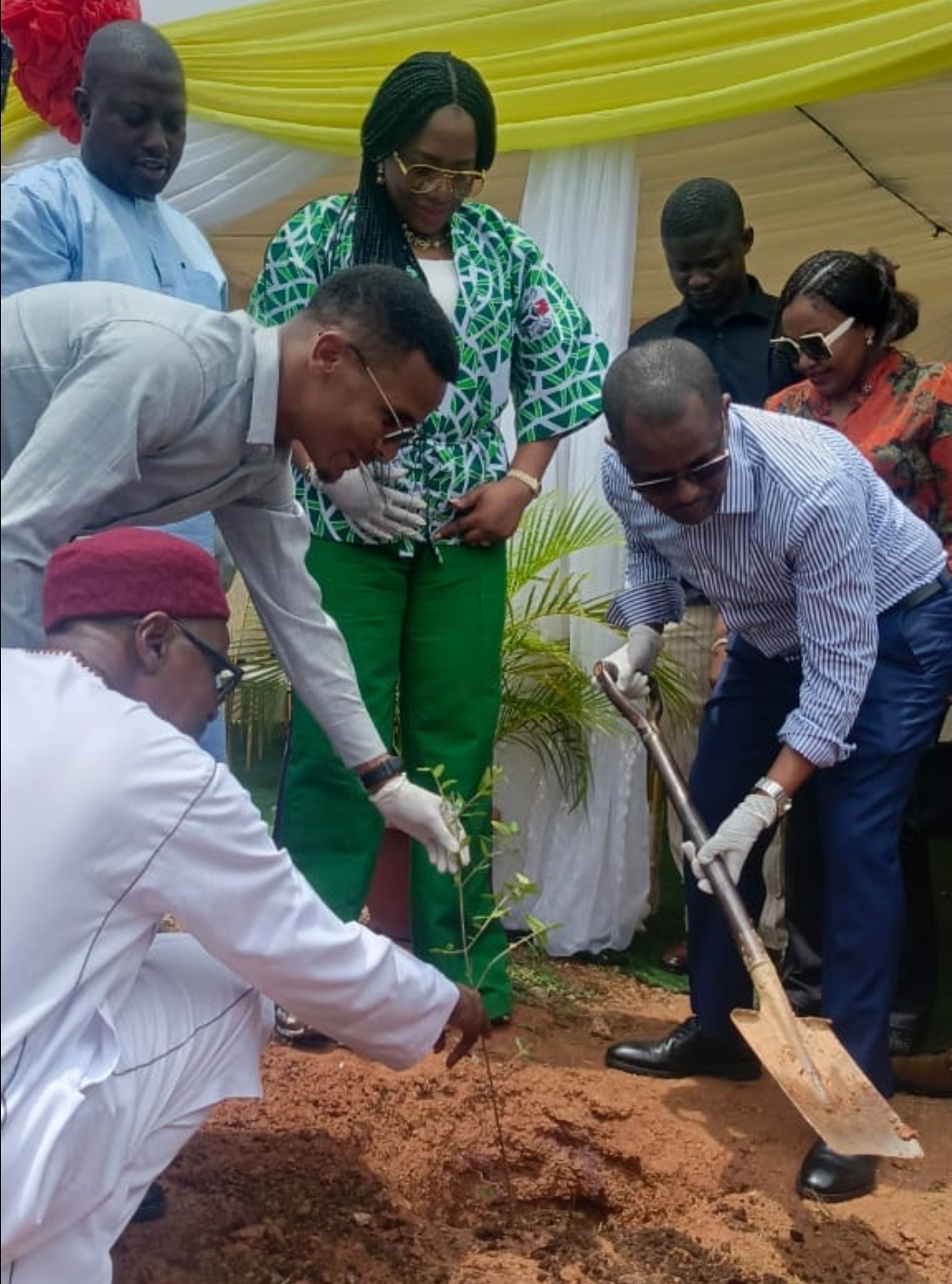
Nigeria and Ethiopia on Friday took their Pan-African partnership beyond diplomatic meetings and conference rooms, as youths, diplomats and officials of the Federal Capital Territory Administration (FCTA) joined forces to plant trees across Abuja in a symbolic push for environmental sustainability and stronger continental cooperation.
The initiative, tagged the “FCTA-Ethiopia Youth Tree Planting Initiative,” was flagged off along Bola Ahmed Tinubu Way in Area 11, Garki, under the theme: “Youth United for a Greener FCT: Renewing Hope Through Tree Planting.”
The programme brought together the FCTA, the Embassy of Ethiopia in Nigeria and the All Progressives Congress (APC) National Youth Wing, blending environmental action with what participants described as a practical demonstration of Pan-African friendship and youth diplomacy.
Speaking on behalf of the FCT Minister, Nyesom Wike, the Mandate Secretary for Health Services and Environment Secretariat, Adedolapo Fasawe, said the trees being planted represented more than an environmental intervention.
According to her, the exercise was a reminder that Africa’s strength lies in cooperation among its people and nations.
“Today, we are here to demonstrate Pan-Africanism. A seed grows up into a tree, a tree becomes a forest. The forest is the strength of Africa,” Fasawe said.
“It is more than an environmental activity; it is a meaningful symbol of Pan-African friendship, shared responsibility and our common commitment to building a greater and more sustainable continent.”
Fasawe said the initiative would not end with the ceremonial planting of seedlings, assuring that the FCTA’s Directorate of Parks and Recreation would monitor and nurture the trees to ensure their survival.
She said the programme was also part of ongoing efforts to restore Abuja’s green spaces and preserve the original vision of the Abuja Master Plan, following calls by the First Lady, Senator Oluremi Tinubu, for greater attention to the capital city’s environment.
“As we continue to build these roads, we continue to also green the environment,” she said, noting that similar exercises were ongoing along major corridors, including the University of Abuja axis and Ibrahim Babangida Way.
The APC National Youth Leader, Dayo Israel, described the collaboration as a new model of youth diplomacy and Pan-African cooperation under the Plant Africa Fraternity initiative.
He said the partnership demonstrated that Africa’s young people could build stronger relationships across borders while taking practical steps to confront common challenges such as climate change.
“Every tree we plant today is more than an environmental gesture. It is a symbol of friendship between Nigeria and Ethiopia, a commitment to the future of Africa,” Israel said.
“Our continent’s future will not be secured by slogans; it will be secured by service, innovation, enterprise and cooperation.
“No tree becomes a forest by standing alone, and no African country can achieve its full potential in isolation.”
Israel commended Wike and the FCTA for supporting the initiative and sustaining environmental interventions across the territory.
Representing the Ethiopian Ambassador to Nigeria, Amb. Legesse Geremew Haile, the Embassy’s Minister Counsellor for Political Affairs, Misgna Tekiu Abrha, said the collaboration underscored the strategic importance of closer ties between two of Africa’s most influential nations.
“If Nigeria and Ethiopia work together, we can say that automatically Africa works together,” Abrha said.
He noted that with a combined population of more than 350 million people, Nigeria and Ethiopia possessed enormous human and economic potential capable of driving solutions to Africa’s environmental and developmental challenges.
Abrha also shared Ethiopia’s experience with its nationwide Green Legacy Initiative, launched in 2019, which he said had planted more than 48 billion trees as the country works towards its target of 50 billion trees by 2030.
He said Ethiopia was committed to expanding party-to-party, institution-to-institution and people-to-people relations with Nigeria.
“We have to work together. We have to give African solutions for our African problems. If we bring our potentials together, we can do a lot,” he said.
The tree-planting exercise along Bola Tinubu Way is expected to be followed by similar environmental and diplomatic engagements involving the University of Abuja, the Nigerian Customs Service and other federal institutions in the coming days.
For the organisers, however, the seedlings planted in Abuja carry a broader message: that the future of Africa, like a forest, can only grow stronger when its nations stand and work together.