Follow Us on Google


• Recommends N30m for each bereaved family, N10m for 41 survivors
From Isaac Anumihe, Abuja
A Federal Government investigative committee has recommended the dismissal and criminal prosecution of officers of the Nigeria Security and Civil Defence Corps (NSCDC) implicated in the deaths of suspected illegal miners in Niger State, alongside N1.4 billion in compensation for bereaved families and survivors.
However, the report has raised fresh questions over the number of fatalities, as the committee recommended compensation for only 33 bereaved families, despite the Federal Government’s earlier confirmation that 37 suspected illegal miners died in the incident.
The discrepancy was not explained in the findings publicly presented by the committee on Tuesday, leaving unanswered questions about the four additional deaths previously acknowledged by the authorities and whether the affected families would benefit from the proposed compensation.
The committee, chaired by Jonathan Kure, also recommended the prosecution of culpable NSCDC officers for offences including murder, criminal negligence, torture and inhuman treatment, where supported by the evidence. It established that the victims died from suffocation in a severely overcrowded and poorly ventilated detention cell.
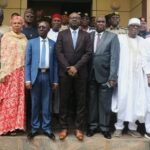
Presenting the report to the Minister of Interior, Dr Olubunmi Tunji-Ojo, in Abuja, Kure said the proposed N1.4 billion compensation comprised N30 million for each of the 33 bereaved families and N10 million for each of the 41 survivors.
The difference in the figures is significant because the Federal Government, on September 19, 2026, announced the constitution of an independent committee to investigate the deaths of 37 suspected illegal miners in NSCDC custody.
Tunji-Ojo inaugurated the committee on September 22, mandating it to establish the identities of the deceased, investigate the circumstances of their arrest and detention, determine the causes of death and recommend appropriate sanctions and compensation.
The figure of 37 was also adopted by the Niger State Government, which announced on October 5 that it would provide N5 million to each bereaved family and N2 million to each of 32 survivors.
Governor Umaru Bago presented cheques totalling N249 million to the Emir of Minna, Alhaji Umar Faruk Bahago, for distribution to the beneficiaries, while Vice President Kashim Shettima announced a separate N250 million Federal Government donation during a condolence visit to the state.
The latest recommendation has introduced another discrepancy, this time over the number of survivors. The Federal Government panel identified 41 survivors, compared with the 32 beneficiaries recognised under the earlier state intervention.
Neither Kure nor Tunji-Ojo explained the differences in the casualty and survivor figures during the presentation. It therefore remains unclear whether the latest figures resulted from further verification, additional testimonies or findings that were not disclosed publicly.
Beyond the compensation controversy, the committee described the deaths as a preventable custodial tragedy caused by severe overcrowding, unlawful and unsuitable detention conditions, failure of duty of care, disregard for repeated distress warnings, inadequate supervision and wider institutional deficiencies.
Kure said medical and forensic evidence established that the deaths resulted from environmental asphyxia and acute respiratory failure caused by prolonged confinement in a severely overcrowded and poorly ventilated cell, aggravated by heat stress and dehydration.
The findings effectively dismissed the initial claim by the NSCDC that the detainees might have died following a disease outbreak.
According to the committee, the conditions under which the suspects were detained exposed serious failures in custodial management and a breach of the responsibility of security personnel to protect people in their custody.
The panel also found that the operation leading to the arrests was conducted without an operational order or approval from the NSCDC national headquarters, raising further questions about compliance with established procedures.
It recommended the summary dismissal of officers found principally responsible for the tragedy, alongside criminal prosecution where the evidence established individual culpability.
The committee also called for investigations by anti-corruption agencies into allegations of extortion and custodial mismanagement. It recommended administrative sanctions against officers whose negligence contributed to the deaths but who were not found to bear primary responsibility.
Other recommendations included educational support for dependants of the deceased, medical rehabilitation for survivors, psychological assistance for affected families and a formal apology by the Federal Government.
Other News
Receiving the report, Tunji-Ojo directed the NSCDC Commandant-General to suspend officers identified as having concealed information or destroyed evidence relevant to the investigation.
The directive followed concerns that some officials had allegedly interfered with material evidence connected with the tragedy, despite earlier instructions that all records and exhibits be preserved for the independent investigators.
The minister also promised to forward the report to the Office of the Attorney-General of the Federation and Minister of Justice for further legal action, where necessary.
He said the government would work closely with the NSCDC to implement institutional reforms aimed at strengthening detention procedures, professional conduct and accountability.
“And we will work very closely with the NSCDC to make sure that the institutional reforms that are needed to be put in place to ensure that a body, an agency set up to protect Nigerians does not end up hurting Nigerians. We will make sure that those reforms are well implemented,” he said.
Tunji-Ojo thanked the committee for its work, stressing that the government remained committed to securing justice for the victims and preventing similar incidents.
“Our commitment is to ensure that justice is done. The memory of those who lost their lives is honoured, and no other Nigerian has to endure such a tragedy in the future,” he said.
The minister said the findings underscored the need for far-reaching institutional changes, warning that the failure to protect suspects in custody must not be repeated.
“As a minister, I do not ever wish to sit and chair a committee of this nature again, and I would not want my successors to find themselves in a similar situation. We must learn from the lessons of this tragedy and take concrete steps to prevent its recurrence,” he said.
The tragedy occurred on September 17, 2026, after suspected illegal miners arrested during operations around the M.I. Wushishi and Lukoto areas of Minna on September 15 and 16 were detained at an NSCDC facility in the state capital.
The deaths triggered protests by residents and relatives of the victims, who demanded explanations over the circumstances surrounding the mass fatalities.
Survivors alleged that the detainees were confined in an overcrowded cell with inadequate ventilation and that their complaints about deteriorating conditions were ignored by security personnel.
The incident prompted President Bola Tinubu to order a comprehensive investigation, directing that any official found responsible through negligence, abuse or misconduct should face appropriate sanctions and prosecution.
The President maintained that the government’s determination to combat illegal mining did not diminish its obligation to protect the lives and dignity of suspects in custody.
Following the directive, Tunji-Ojo ordered the suspension of the Niger State NSCDC Commandant, Suberu Aniviye, and 20 other officers pending investigation.
The Federal Government subsequently established the 10-member independent committee, comprising security experts, legal practitioners, medical professionals and representatives of relevant institutions.
The committee was initially given two weeks to conclude its assignment but later sought an extension until October 21, citing the volume of testimonies, pending forensic and pathology reports, and the need to give implicated officers an opportunity to respond.
Meanwhile, the Niger State Government constituted a separate judicial commission of inquiry to investigate the tragedy.
During proceedings before the state commission, the suspended NSCDC commandant reportedly apologised to the families of the deceased, describing the incident as an avoidable mistake.
With the Federal Government committee now concluding its assignment and recommending criminal prosecution, disciplinary sanctions and financial restitution, the unexplained difference between the 37 deaths earlier acknowledged by the authorities and the 33 bereaved families covered by the compensation proposal remains an outstanding issue requiring clarification.