Follow Us on Google
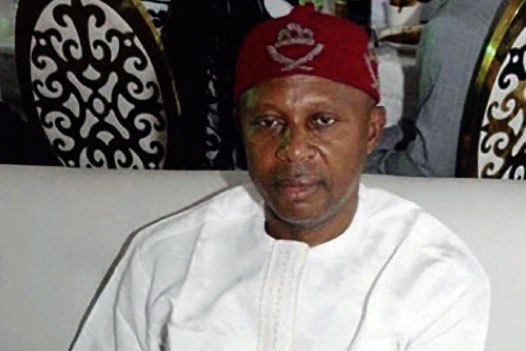
By Dickson Okafor
National President, Global Freight Forwarders and Maritime Association (GFFMA), Basil Akukwe, has blamed corrupt leaders that have been at helm of the governance affairs of the country being responsible for the clear fact that Nigeria is still crawling economically.
He lamented that Ghana, whose citizens were chased out of Nigeria in 1983, under the Shehu Shagari administration, has turned out today to be the new economic destination for Nigerian youths to seek greener pastures.
Akukwe called on the political leadership to replicate in Nigeria the modern standards of rail transportation they see overseas in Nigeria as a key component of revamping the nation’s economy.
In this interview, he speaks on other relevant issues.
Looking at Nigeria since independence, are you satisfied with the level of socio-economic development of the country when compared with Ghana and some other West African countries?
If you look at the way things have been going since 1960, when Nigeria gained independence till date, all the structures put in place by the British colonial administration collapsed immediately after we took over the government. So, going by how governance has been since 66 years of nationhood, you will agree with the assertion that Nigeria was indeed designed by the British colonial masters to fail. The three leading presidential candidates have rolled out their campaign arsenals to woo the electorate, but honestly, I don’t know who among the three of them can save or reset the country. Nigerians who will decide who becomes the next President in 2027 will compare their antecedents. To me, let any candidate that has the fear of God, conscience, that love the people, and who is less corrupt emerge winner next year. Whichever way we look at the situation of Nigeria since 1960, I may not be completely satisfied, but there are reasons to give thanks to Almighty God for taking Nigeria this far in spite of her numerous challenges. Since Independence, corruption, regional and personal interests have held Nigeria by the throat. All kinds of anti-graft agencies have been formed to curb corruption and mismanagement of public funds, but all efforts have proved abortive. Because our past leaders paid less attention to how to improve the economy or even maintain the infrastructures and institutions our colonial masters handed over them. That is why we are witnessing infrastructural decay. As you can see the multinational companies that the colonial masters brought to Nigeria through which our youths were gainfully employed have relocated to neighbouring countries. This was caused by lack of steady power supply, insecurity, poor road condition and bad governance
In the heat of economic downturn ravaging Nigeria, the Alhaji Shehu Shagari administration on January 17, 1983, issued an executive order requiring all Ghanians and other undocumented immigrants to leave the country or face arrest. That was how the expression “Ghana Must Go” was coined. But today, Ghana is the new economic destination and resort for Nigerian youths to seek greener pastures after they were chased away from South Africa because of xenophobic attacks. Unfortunately, at 66 Nigeria is still crawling economically. Nigeria’s past and present governments have been trying to attract foreign investors, but it has not yielded positive results because there is no enabling environment for businesses to thrive. Before the Economic and Financial Crimes Commission (EFCC) Chairman was born, there were other anti- graft agencies yet, nothing has changed. That is why I keep asking, how did we get to where we are? Because one thing that makes me cry is whenever I remember that my late father was an ex-railway worker. He used to travel from Maiduguri to Kano, Kaduna, Jebba to Otukpo — throughout the country and he was happy doing his job. With his salary he took good care of us, but today all those things are no more. So, until Nigeria guarantees steady power supply, good road network, security, kills corruption and enthrones transparent governance there will be no socio-economic development.
Several countries have improved rail transportation, linking their ports to the rail network for conveyance of containers by rail. What is your assessment of the Nigerian situation?
Whenever I travel overseas I spend time wondering what kind of country is Nigeria that is richly endowed by Almighty God with human and mineral resources including oil, yet we are not self-reliant even in agriculture. Western nations have made their transport systems and institutions function effectively and are functioning accurately. Before now, even the railway, which was a means of transportation that could move up to 3,000 containers to any part of the country that was functioning effectively when the colonial masters were here, is no longer operational. And through rail lines, petroleum products can as well be moved across the country and not by road. That is the reason our roads are in bad condition. At Apapa and Tin Can Island ports there are rail lines with which the colonial masters were using to convey containers across the country, but today they are no longer functioning. And recently the EFCC Chairman promised to reward between 2.5% and 5% to whistleblowers who provide credible information leading to the recovery of stolen Nigerian assets stashed abroad. Yes, we know that he must think of what he can do to protect his job in order to show that he is working. Why won’t government officials steal our commonwealth when the institutions have collapsed? That is the reason we have congestion on the major highways in the country. So, Nigeria must go back to the drawing board and replicate the modern standard of rail transportation they see overseas here.
At the recent NBA Conference held in Port Harcourt, former Minister of Transportation under the Muhammadu Buhari administration, Rotimi Amaechi, tried to distance himself from the seemingly idle standard gauge rail network built during his time. Would you say he is justified?
Other News
The former governor of Rivers State and immediate past Minister of Transportation, Rotimi Amaechi put up a poor show. He cannot be justified because as the Minister of Transportation he constructed a rail line from Daura to Niger Republic, but could not do similar things in the Southeastern part of the country. He is inexcusable from the idle standard gauge rail network built during his time as minister of transportation. The ministry under his leadership spent billions to build the rail lines with equally investing in locomotives, passenger coaches and flatbed rolling stock for conveying cargo. He should bury his head in shame.
What can you say to President Tinubu in terms of continuity of Buhari’s economically viable projects with potential to contribute to national economic development?
President Bola Ahmed Tinubu has made clear that four years is not enough to fix Nigeria hence he is demanding for a second term to be able complete his administration’s economic reforms. It is unfortunate that some of our leaders deliberately choose hatred and bitter politics over better life, even now that the consequences of misused opportunities and mismanagement of our commonwealth are severely affecting the lives of the citizens. These self-centred leaders want the poor economic situation to continue. Therefore, to fix Nigeria national interest must be separated from politics. With the declaration of N15 trillion of economic gains from subsidy removal, Nigerians’ hardship is yet to ease though the Minister of Humanitarian Affairs and Poverty Reduction, Bernard Doro declared that the government has spent N600 billion in cash transfers to support 10 million vulnerable Nigerian households. The clear contradiction Nigerians see is the main reason people criticize most governments in power globally because they tell a lot of lies. I have never seen any vulnerable person or household in my area that has benefited from the N600b the minister claimed to have disbursed. Like other Nigerians, I want government policies that will bring down the cost of living for ordinary Nigerians.
I will concede that the Federal Government has approved the comprehensive modernization of the other major seaports which include, Onne, Rivers, Delta and Calabar ports as part of efforts to reduce cargo pressure on Lagos, cut shipping delays and lower the cost of moving goods. Also, the government is also pursuing six new deep-seaport projects across Nigeria. So, we hope to see the economic reform policies of the present administration turn around the nation’s economy.
Each time you travel to the South-East and pass the Onitsha River Port built by the Shehu Shagari administration, what thoughts come to you?
I get depressed each time I look at the state of the Onitsha River Port because it has been abandoned by previous governments because of its location. The River Niger was supposed to be dredged up to Lokoja to allow barges to bring containerized cargo to hinterland. I agree with a school of thought that believes that the project was abandoned to deny South-East full operation of the Onitsha River Port. The region has the largest number of importers and freight forwarders not only in Nigeria, but in Africa. It is expected that Onitsha River Port should have been included in the approval of the comprehensive modernization of the other major seaports like Onne, Rivers, Delta and Calabar ports as part of efforts to reduce cargo pressure on Lagos, cut shipping delays and lower the cost of moving goods. Southeast deserves a seaport because of the high number of containerised cargoes that go to the region daily. So, Onitsha River Port abandonment is politically motivated.
Minister of Works Dave Umahi has often boasted about the multi-trillion Naira road projects done by the Bola Tinubu administration. What can you say about this as it affects the Southeast?
It is unfortunate that the Minister of Works, Dave Umahi, has recently become talkative because of his political interest and aspiration for the Presidency in 2039. Yes, he performed well as Governor of Ebonyi State. And by defecting to the ruling All Progressives Congress (APC) and delivering the governorship and the National Assembly seats in 2023, President Bola Tinubu appointed him Minister of Works after he won the Senatorial seat. The Lagos/Calabar Coastal Road and the Badagry/Sokoto Highway are laudable multi-trillion Naira road projects that have been embarked upon by the President Tinubu administration. However, they should not be what Umahi will often boast about because other major roads linking states and cities have been abandoned. The Benin bypass and Lagos/ Shagamu as well as the Benin to Enugu expressways are in deplorable conditions. These are the main roads you can take to the South-East, South South and parts of the north. The grueling and agonizing traffic situation on these roads right now is unprecedented. So, Umahi should have human feeling for road users across the country. Innumerable numbers of people have lost their lives on that road due to kidnapping and accidents on those roads. I joined other well-meaning Nigerians to appeal to the Minister of Works. Sen. Dave Umahi to give focused attention to repairing the Benin-bypass and Lagos/Shagamu and Benin/Onitsha roads, to save the lives of innocent people being wasted as a result of the sorry state of those roads. This has become even more compelling for the needful to be done before Christmas because the cost of airline tickets has become prohibitive. For more than 99 per cent of Nigerians travel by road is the only option at Christmas time.
As the National President, Global Freight Forwarders and Maritime Association (GFFMA), please tell us bit about what you are doing to support and enhance the operations of the members of the association.
We have continuously organised workshops with the Nigerian Customs Service and other major stakeholders to sensitise our members on adhering to the principles of freight forwarding and maritime business in line with the global best practices in the country. Also, the association plans to make funds available to members and that is on the way. We are partnering with an organization in Singapore and we are in the process of opening an academy in maritime services to teach intending freight forwarders the functions of clearing agents.
The commencement of the academy is been delayed because of logistics, but very soon we will overcome the challenges. When the academy takes off it will improve the freight forwarding business in the country. It is important to put on public record why we changed the name of the association from Freight Forwarders Association of Badagry (FFAB) to Global Freight Forwarders and Maritime Association (GFFMA). The main purpose is to make it all inclusive in terms of membership and to widen our scope of operations.