Follow Us on Google

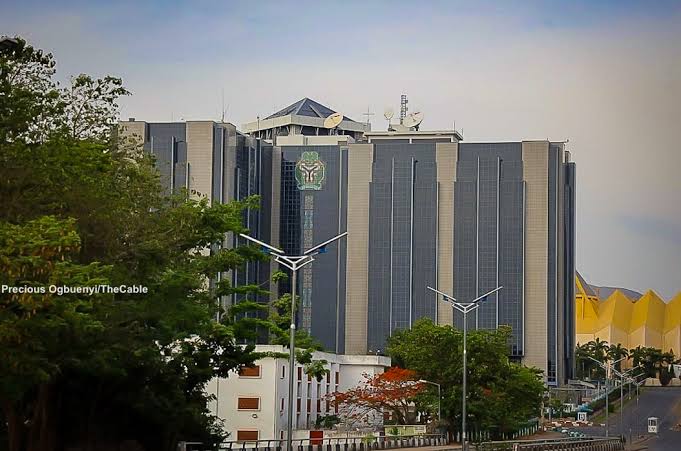
Nigerian bank shareholders are experiencing dividend drought. The sharp drop in payments comes as lenders grapple with stricter Central Bank of Nigeria (CBN) rules on bad loans, mounting credit losses and regulatory requirements.
Operational analysis reveals that only three banks paid interim dividends from their half-year 2026 results, compared with six lenders in 2024 and four in 2025. This shows a widening squeeze on investors who traditionally look forward to regular payouts.
The development comes barely two years after Nigerian banks raised about N4.65 trillion from shareholders and investors to fortify their capital base and meet the CBN’s recapitalisation requirements.
Interim dividends are payments companies make to shareholders before the end of their financial year, usually after announcing half-year results. They provide investors with part of the profits earned during the year.
Zenith Bank, Guaranty Trust Holding Company (GTCO) and Stanbic IBTC were among the few lenders that maintained interim dividend payments in 2026.
United Bank for Africa (UBA), which paid N2 per share in 2024 and reduced the amount to 25 kobo in 2025, declared no interim dividend in 2026.
Access Holdings has also not paid an interim dividend since 2024, while Fidelity Bank’s half-year accounts were still awaiting CBN approval as of October 2026.
The situation is also reflected in the banks’ full-year dividend payments.
For the 2025 financial year, Access Holdings, First HoldCo and Fidelity Bank paid no dividends, while UBA reduced its total dividend from N5 per share in 2024 to just 25 kobo in 2025.
FCMB Group also cut its dividend from 55 kobo to 35 kobo per share.
In monetary terms, Access Holdings and UBA jointly returned about N296 billion to shareholders for the 2024 financial year.
However, their combined dividend payment fell dramatically to N10.3 billion for 2025.
Dividend cuts were not necessarily because the banks were making losses.
For instance, Access Holdings recorded a profit before tax of more than N1 trillion in 2025, while UBA posted N503 billion profit before tax in the first nine months of 2026.
Rather, the pressure is largely linked to regulatory restrictions, the recognition of bad loans and the need for banks to strengthen their financial positions.
The dividend restrictions followed a June 13, 2025 CBN circular directing banks that still relied on regulatory forbearance to suspend dividend payments until they had fully exited the arrangement and met the regulator’s capital and provisioning requirements.
Regulatory forbearance refers to temporary concessions granted by the CBN to banks, allowing them additional time or flexibility in dealing with troubled loans and certain regulatory requirements.
However, the end of the arrangement meant that affected lenders had to properly recognise loans that might not be repaid and make adequate financial provisions against them.
This process has significantly increased impairment charges across the banking industry.
Loan impairment occurs when a bank recognises that a borrower may not repay a loan in full.
The lender must then set aside money to cover the expected loss, reducing the amount of profit available for distribution to shareholders.
It is estimated that nine banks recorded about N3.2 trillion in impairment charges.
First HoldCo recorded about N826 billion in impairment charges in 2025, while Zenith Bank, Access Holdings and UBA reported N742 billion, N524 billion and N331 billion respectively.
There is also significant exposure to the oil and gas sector, including a distressed $2 billion loan to a Nigerian oil and gas operator, as part of the problem.
For UBA, net loan impairment charges rose to N255.1 billion in the first nine months of 2026, compared with N46.1 billion in the corresponding period of the previous year.
Another factor restricting dividend payments is the CBN’s rule on non-performing loans (NPLs).
Non-performing loans are credit facilities whose borrowers have failed to make repayments for a specified period, usually 90 days or more.
Under the CBN’s prudential guidelines, banks with NPL ratios above 10 per cent are not allowed to pay dividends, while those with ratios between five and 10 per cent face restrictions on how much they can distribute.
First HoldCo’s NPL ratio stood at 10.4 per cent in September, placing it above the regulatory threshold.
The report also highlighted the impact of regulatory risk reserves, which are funds banks must retain when their financial statements do not provide enough provisions to satisfy the CBN’s prudential requirements.
First HoldCo had about N850 billion in such reserves, while UBA had N233 billion, further limiting the profits available for distribution.
Despite the difficulties, some lenders have continued to reward shareholders with higher dividends.
Zenith Bank doubled its total dividend per share from N5 in 2024 to N10 in 2025, while GTCO increased its payout from N8.03 to N12.76.
Stanbic IBTC raised its dividend from N5 to N6.50, while Wema Bank increased its payout from N1 to N1.25.
Zenith Bank, GTCO and Stanbic IBTC jointly paid about N978 billion in dividends for the 2025 financial year, exceeding the combined payouts of the other listed banks.
The report attributed the difference to the ability of some lenders to resolve legacy loan problems earlier or avoid significant dependence on regulatory forbearance.
The dividend squeeze has been particularly painful for investors who participated in the banking industry’s recapitalisation exercise.
Over the past two years, banks raised approximately N4.65 trillion in fresh capital, with a substantial portion coming from existing shareholders through rights issues and public offers.
This means some investors provided additional money to strengthen the banks but are now receiving reduced or suspended dividends.
In some cases, the number of shares held by investors also increased substantially following new share issues, meaning that shareholders may have to wait longer to enjoy improved returns on their investments.
The report noted that the market had also begun to reflect investors’ concerns, with Access Holdings trading at about N28.40 in early November, equivalent to roughly 0.4 times its book value.
UBA shares also traded around N40, remaining broadly flat in 2026 despite a strong rally in the wider equities market.
The next major opportunity for banks to restore dividend payments will come with their full-year 2026 results, expected between March and May 2027.
Some lenders have already indicated their intention to improve shareholder returns.
First HoldCo adopted a dividend policy in July 2026 targeting the distribution of at least 60 per cent of profits, subject to regulatory approval.
UBA’s Group Managing Director, Oliver Alawuba, also expressed optimism that 2026 would mark a return to stronger profitability and dividend-paying capacity.
Fidelity Bank has indicated a dividend payout target of between 25 and 40 per cent of profits, while Access Holdings says it is working towards resolving outstanding regulatory compliance issues.
These commitments would depend on improvements in loan quality, regulatory approvals and the ability of banks to meet capital and provisioning requirements.
It also warned that the CBN’s September 2026 decision to reduce the Monetary Policy Rate by 350 basis points to 23 per cent could put additional pressure on banks’ lending margins.
Non-performing loan ratios, regulatory reserves, timely publication of financial statements and official confirmation that banks have exited regulatory forbearance are key indicators investors should monitor.
Summarily, shareholders must appreciate that a bank can make billions of naira in profits and still be unable to pay dividends to its investors as it needs to meet certain regulatory requirements.