Follow Us on Google

The International Labour Organization (ILO) has urged employers and private employment agencies in Nigeria and Ghana to strengthen safeguards for migrant workers and translate labour migration policies into fair, transparent recruitment and employment practices.
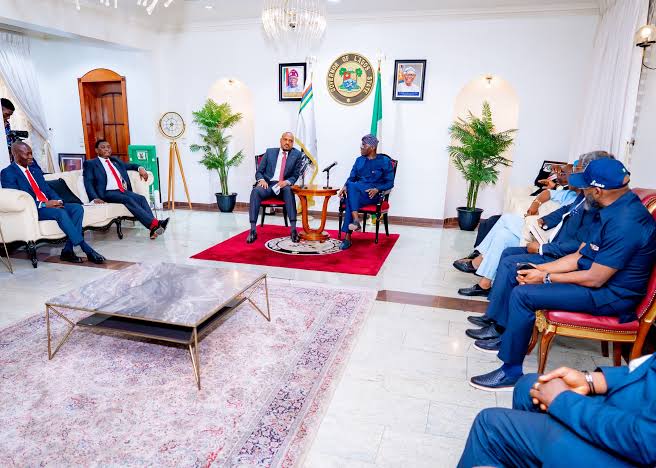
The call came at the Nigeria-Ghana Employers’ Learning Exchange on Fair Recruitment and Responsible Labour Mobility in Lagos, organised by the ILO in collaboration with the Nigeria Employers’ Consultative Association (NECA) and other stakeholders.
The two-day engagement focused on helping businesses identify recruitment risks, strengthen compliance and develop a practical checklist covering recruitment costs, employment contracts, workers’ documentation, grievance procedures and other safeguards against exploitation.
Speaking at the event, NECA Director-General, Adewale Smatt-Oyerinde, said employers had a responsibility to ensure that the benefits of labour migration were accompanied by respect for workers’ rights and decent working conditions.
Smatt-Oyerinde, whose address was delivered by the association’s Assistant Director, Learning and Development, Isabella Usen, said businesses could not leave the responsibility for fair recruitment to government and employment agencies.
“Employers are central to this conversation. As users of labour and key participants in recruitment and employment relationships, employers have both an economic interest and a responsibility to ensure that workers are recruited and employed under conditions that respect their rights, comply with applicable laws and promote decent work,” he said.
He noted that labour migration offered opportunities for workers while helping businesses address skills shortages, improve productivity and support economic development, but stressed that these gains depended on effective governance and responsible recruitment.
Private employment agencies, he added, occupied a critical position in the recruitment chain, with their practices capable of strengthening confidence in labour markets or exposing workers and employers to significant risks.
He called for closer cooperation among businesses, recruitment agencies, government, workers’ organisations and other stakeholders to uphold workers’ rights throughout the recruitment and employment process.
The exchange, themed “From Policy to Practice: Strengthening Employers’ Capacity to Effectively Engage on Labour Migration Governance,” brought together employers, recruitment agencies, employers’ organisations and technical stakeholders from Nigeria, Ghana and Kenya.
A central objective was the development and validation of an Employer Fair Recruitment and Responsible Labour Mobility Checklist to help businesses apply fair recruitment principles in their daily operations.
The proposed checklist would cover verification of recruitment agencies, due diligence, recruitment costs, accurate job information, written contracts, non-discrimination and protection of workers’ documentation.
It would also address compliance with agreed employment conditions, access to grievance mechanisms, cross-border mobility requirements, skills and qualifications, migrant workers’ protection and responsible return arrangements.
Smatt-Oyerinde urged participants to draw on their experiences to ensure that the checklist addressed practical challenges faced by employers and recruiters.
“Our objective should be to develop a tool that is relevant, usable and capable of being adopted by employers and recruitment agencies, rather than simply producing another document that sits on a shelf,” he said.
He recalled that NECA established the Labour Migration Advisory Committee for Employers (LMACE) in 2023, with ILO support, to coordinate employer participation in labour migration governance, strengthen policy dialogue and promote fair recruitment.
The association also developed a policy brief, Enhancing Policy Coherence through Employer Participation in Labour Migration Governance in Nigeria, which identified gaps in workers’ protection, recruitment practices, monitoring, implementation and institutional coordination.
He said the findings informed a stakeholders’ dialogue held in Lagos on July 6 and 7, 2026, where representatives of government, employers, workers’ organisations, recruitment agencies and civil society examined measures to improve compliance and oversight.
The latest exchange, supported through the ILO’s FAIRWAY and ACTION initiatives, was designed to turn those discussions into action within businesses and recruitment systems.
Smatt-Oyerinde said cooperation between Nigerian and Ghanaian employers was necessary because recruitment arrangements, skills needs and worker protection challenges frequently crossed national boundaries.
The programme also provided for lessons from Kenya on recruiter-led fair recruitment practices, alongside case studies, employer scenarios, group exercises and peer learning.
He urged employers’ organisations to lead efforts to ensure that business interests, workers’ rights and decent work principles advanced together.
“Let us use these two days to move beyond what ought to be done and focus on what can be done, who should do it and how we can sustain the progress made,” he said.