Follow Us on Google
From Judex Okoro, Calabar
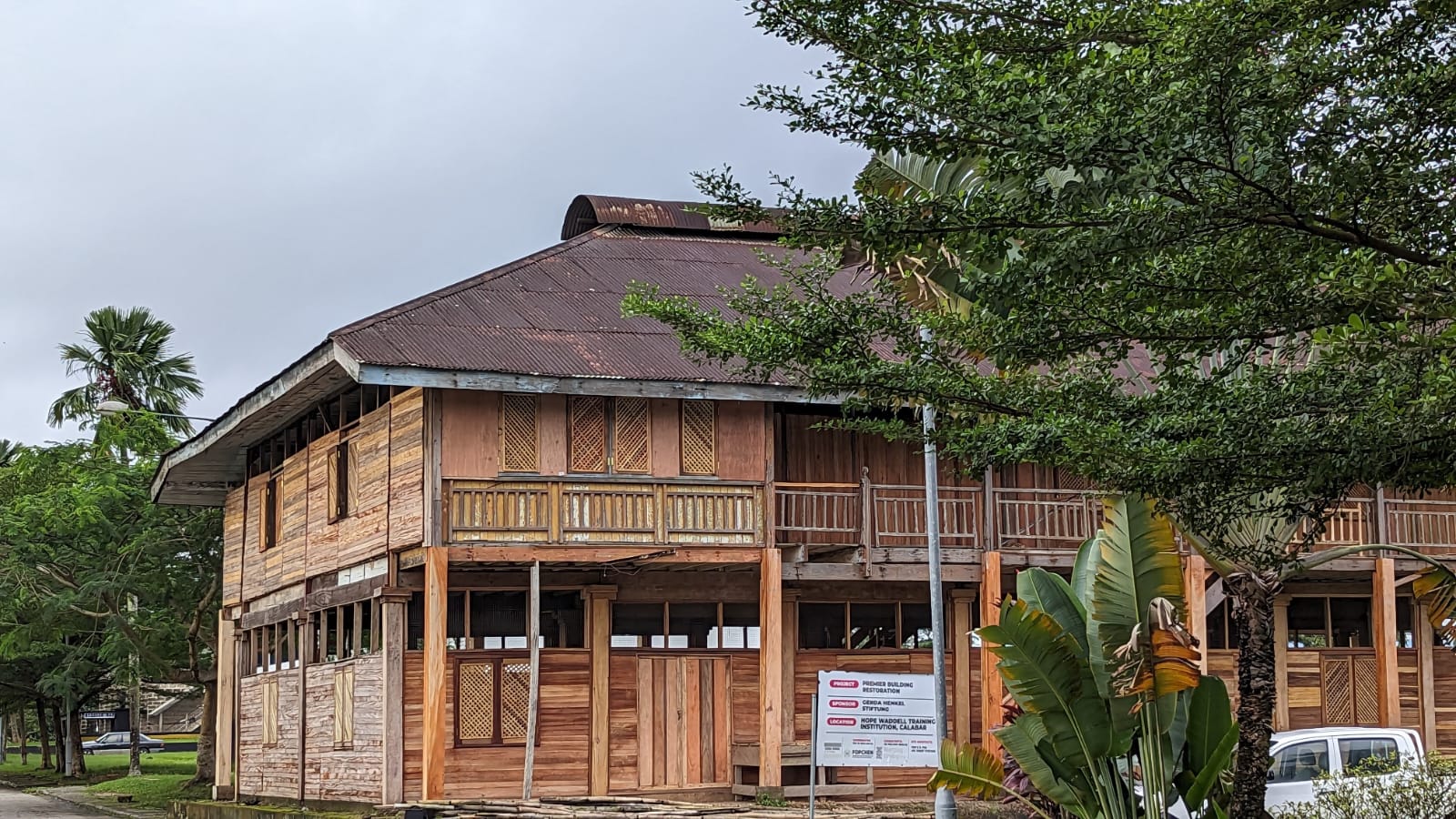
An NGO, the Foundation for the Preservation of Cultural Heritage in Nigeria, (FOPCHEN), has completed the first phase of renovation work geared towards restoring over 120 years old iconic structure.
The historical edifice is a one-storey building located in Hope Waddell Training Institute, Calabar, Cross River state capital, and was built in 1894 serving as an ancient educational structure erected by the missionaries in Nigeria.
The restoration of the iconic building, erected in 1894 was facilitated with grants from Gerda Henkel Stiftung as announced by FOPCHEN last year during the commemoration of International Day of Monuments and Sites
Speaking in a media chat in Calabar, the program Director/ Principal Investigator Foundation for the Preservation of Cultural Heritage in Nigeria, (FOPCHEN), Prof. Bekeh Ukelina, said the restoration process entails bringing back the architectural aesthetics of the iconic structure using indigenous wood from Cross River.
Prof. Ukelina said: “Our team has worked really hard to deliver the product that you see here in spite of the several months of severe currency crunch the country went through.
“We could not have achieved what you see here without Gerda Henkel’s support, our team of expert architects and the dedicated carpenters.”
“What is happening here at the Premier building are restoration works, taking the building back to when it was first assembled using indigenous wood from Cross River State.”
Commending Gerda Henkel’s team of expert architects, and the dedicated carpenter for their wonderful support, Prof. Ukelina explained that “the restoration works at the premier structure were meant to restore the original concept after years of tears and wear due to age.”
Also speaking, the lead heritage architect, Dr Tokie Laotan-Brown, said:
Also speaking, Dr. Tokie Laotan-Brown, the lead heritage architect on the project, said: “By assessing the Premier building, we carefully observed, surveyed and documented it. We identified six damage topologies indicating a vulnerable structural state with a significant risk of collapse.
“It was crucial to detect the critical pathologies and defects, while discovering a bit of history under layers of decayed Scot’s Pine over more than a century.
“It was based on these damage topologies that the restoration teem devised a treatment approach to restore and curtail the immediate collapse of the building while introducing indigenous timbers.
“In restoring the building, the team was conscious of carbon footprints and sourced all of its wood within Cross River State and processed the woods locally.”
On his part, the site architect, Robert Utietiang, stated that they used four types of wood throughout the site, adding “we used teak, Black Afara, White Afara, and Iroko and selected these woods because they are hardwoods and were the most environmentally suitable and compatible with the building.
“With the completion of the first phase, the building is fully secured and there is no risk of collapse. All the walls of the building have been covered. The second phase of the project will focus on finishing works. At the completion of the project, a technical manual will be published.”