Follow Us on Google
• Says action sends wrong signal
• President’s order has exposed myth of anti-graft agency’s independence -Atiku, ADC
From Juliana Taiwo-Obalonye and Ndubuisi orji, Abuja
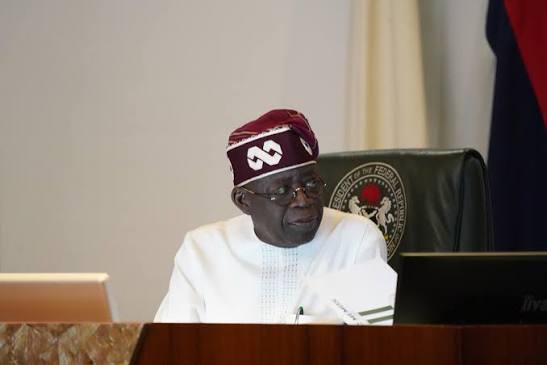
President Bola Tinubu’s directive to the Economic and Financial Crimes Commission (EFCC) to withdraw its court-backed order freezing the accounts of the Osun State Government has triggered a wider debate over the balance between anti-corruption enforcement, electoral neutrality, and the independence of Nigeria’s law enforcement institutions.
The President, in a statement personally signed yesterday, said he was not questioning the authority of the EFCC to investigate alleged financial misconduct or seek judicial orders where necessary. However, he expressed concern that the timing of the agency’s action, coming only days before the Osun State governorship election, could undermine public confidence in the electoral process.
Tinubu said he was “deeply embarrassed” not by the EFCC’s exercise of its mandate, which was backed by a court order, but by the timing of the action.
“I must state that I feel deeply embarrassed not by the EFCC’s exercise of its mandate backed by a court order, but by the timing of the agency’s action,” the President said.
According to him, anti-corruption and law enforcement institutions must be allowed to operate independently and within the law, stressing that strong institutions remain essential to democratic governance.
However, he said government agencies must also consider the wider implications of their actions, particularly during sensitive electoral periods.
The President noted that actions taken by federal institutions close to elections could create perceptions of political interference, regardless of the intention behind them.
“Osun State is only a few days away from its gubernatorial election. Therefore, nothing ought to be done to give an impression that the EFCC or indeed any other agency of the federal government is being used to interfere with the election,” he stated.
Tinubu said he had not been fully briefed on all the circumstances surrounding the EFCC’s decision to obtain the order restricting access to the state government accounts. Nevertheless, he said the overriding public interest in protecting confidence in Nigeria’s democratic process informed his intervention.
He subsequently directed the EFCC to return to court and seek the withdrawal of the order.
“Accordingly, I have directed the EFCC to immediately proceed to the court to vacate the order and discontinue whatever action it has instituted against the Osun State Government in this regard,” he said.
The intervention has since generated fresh arguments over whether the President’s action strengthens confidence in the electoral process or raises further questions about the operational independence of anti-corruption agencies.
EFCC defends action
The EFCC has defended its decision, insisting that the freezing of accounts linked to high-profile investigations is a routine legal measure and not politically motivated.
The commission’s Director of Public Affairs, Wilson Uwujaren, said the action against Osun was carried out within the agency’s mandate and was not targeted at any particular government.
Speaking on Arise Television’s Morning Show, Uwujaren said the EFCC had taken similar steps in previous cases where investigators identified suspicious financial transactions.
He cited the Edo State governorship transition as an example, stating that the commission restricted access to certain accounts before Governor Monday Okpebholo assumed office because investigators detected suspicious transfers.
According to him, the intervention helped preserve about N12 billion for the incoming administration.
“During the Edo State election, before the coming of the governor of Okpebholo, EFCC also took actions to restrict the account of that state government when we saw that funds were being moved to suspicious accounts and we were able to preserve N12 billion for them,” Uwujaren said.
He maintained that the commission was simply carrying out its statutory responsibilities. “This is not targeted at any particular government. We are simply doing our work under the law.”
The EFCC had earlier disclosed that its investigation into the Osun State Government began in March and centred on allegations concerning the handling of ecological and intervention funds.
The commission said some officials of the state government, including the Accountant-General, had been invited and interviewed as part of the investigation.
Atiku questions EFCC independence
Former Vice President Atiku Abubakar, however, said the President’s directive had exposed what he described as the weakness of claims that the EFCC operates independently of the Presidency.
Other News
Atiku, through a statement issued by his Senior Special Assistant on Public Communication, Phrank Shaibu, argued that Tinubu’s intervention raised questions about the relationship between the Presidency and anti-corruption agencies.
He said the directive had “perhaps unwittingly, exposed the fiction of institutional independence” under the current administration.
According to him, the President could not claim that the EFCC operates independently while simultaneously directing the commission to discontinue an action already initiated.
“President Tinubu cannot have it both ways. He cannot claim that he neither knew of nor interfered in the operations of the EFCC and, in the very next breath, announced that he has directed the Commission to discontinue its action and return to court,” Atiku said.
The former Vice President argued that if the EFCC promptly complied with the directive, Nigerians would be left questioning whether the agency was genuinely autonomous or merely exercised independence at the discretion of the executive.
He said institutional independence should not depend on political convenience. “One cannot preach institutional independence while exercising direct operational control over the same institution. That is not institutional autonomy; it is executive control disguised as independence.”
Atiku also questioned why the EFCC’s public statement on the Osun matter did not mention the court order, while the President’s intervention was based on the existence of such an order.
He called for clarity from the government, saying Nigerians deserved a consistent explanation of the circumstances surrounding the action.
Freezing Osun account assault on democracy
Earlier, Atiku had described the freezing of Osun State’s statutory allocation account as a threat to democratic stability, warning that such an action close to an election could disrupt governance and create public distrust.
He said restricting access to a state’s principal operational account could affect salary payments, essential services, and the ability of government to function effectively.
According to him, while financial misconduct must be investigated, anti-corruption agencies must operate in a manner that does not create the impression of influencing political outcomes.
“If there are legitimate concerns requiring investigation, the law provides due process. Anti-corruption agencies must not conduct themselves in a manner that creates the perception that they are being deployed to influence political outcomes or weaken elected governments at critical electoral moments.”
Atiku accused the administration of selectively using state institutions against opposition-controlled states, describing the development as part of a troubling pattern.
He argued that democracy depended not only on conducting elections but also on ensuring that citizens believe government institutions act fairly and independently.
“Institutions established to enforce the law must never become instruments for creating fear or conferring political advantage,” he said.
The former Vice President called on all institutions involved in the Osun governorship election to maintain neutrality and allow the people of the state to determine their leadership without interference.
The controversy has placed renewed attention on the difficult balance between fighting corruption and protecting democratic credibility, especially when investigations involving public institutions occur close to elections.
ADC’s Adio faults Presidency’s statement on EFCC, alleged court order over Osun accounts
House of Assembly candidate for Eti-Osa Constituency II, Ayodele Adio, has criticised a statement attributed to the Presidency directing the EFCC)to vacate what it described as a court order suspending the accounts of the Osun State Government, describing the claim as misleading and legally untenable.
Adio said there was no court order for the EFCC to vacate, arguing that the Presidency’s position reflected a misunderstanding of the law.
He further maintained that even if such an order existed, the EFCC lacked the legal authority to set it aside.
“There was no court order to vacate. More importantly, even if such an order existed, the EFCC has no legal authority to vacate or set aside a court order. Only a competent court can vary, discharge or vacate its own orders.”
Adio questioned the basis of the Presidency’s statement, arguing that it had created unnecessary confusion over an issue that should be governed strictly by the law.
“What exactly is being presented to Nigerians? The rule of law cannot be replaced by public relations. Public institutions must operate within the limits of the law, not manufacture narratives that cannot withstand legal scrutiny,” he said.