Follow Us on Google
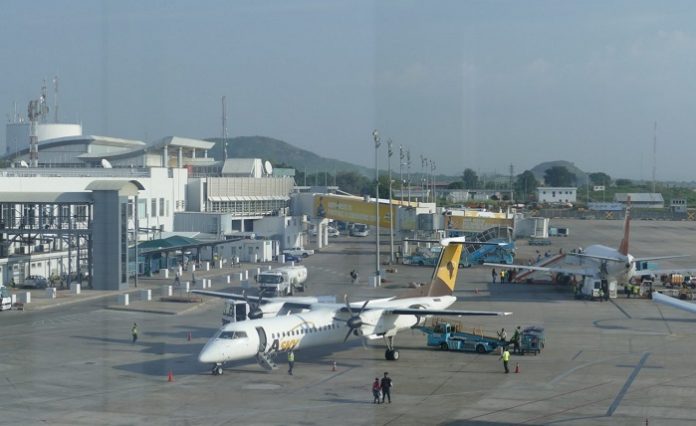
With over N500 billion reportedly spent by state governments in building new airports, most of them considered unprofitable, the recent warning by the Federal Airports Authority of Nigeria (FAAN) against embarking on new airports without having a feasibility assessment is timely and should be heeded. The cautionary advice by the Managing Director of FAAN, Mrs. Olubunmi Kuku, came amid a recent survey, which revealed that less than 10 per cent of Nigerians currently travel by air as a result of soaring airfares and other economic challenges. This is in spite of the fact that airports remain critical infrastructure for economic development.
According aviation statistics, building a new airport in the country generally costs over N100 billion or $135 million (at current exchange rate) for a modest state-level or cargo airport. But building a major hub international airport can cost up to N712 billion or $500 million. However, the total cost fluctuates widely depending on the airport’s classification, location, runway specification, and intended capacity. This could be unsustainable for most state governments embarking on such white elephants against the needs of other competing sectors like education, healthcare and agriculture.
Out of 30 airports in the country, not more than four are consistently viable or profitable. The viable airports in the country include the Murtala Muhammed International Airport, Lagos, Nnamdi Azikiwe International Airport, Abuja, Aminu Kano International Airport, Kano, and the Port Harcourt Airport, Port Harcourt. Many state-owned airports are struggling to remain viable with low passenger demand and other economic challenges.
As FAAN has rightly advised, airport development should be driven by need and business consideration. We say this because many states cannot afford the huge cost of building and maintaining standard airports. This can explain why the federal government is often called upon to take over the state-owned airports.
New airports are expected to meet global aviation standards, including the provision of adequate firefighting equipment, trained aviation security personnel, and modern navigational facilities. Besides, the sector is annually witnessing low patronage of air passengers. For instance, in 2025, Nigeria recorded only 17.5 million air travellers. This is about 60 per cent lower than what was recorded four years ago. This is despite Nigeria’s population of about 220 million people. The figure highlights the limited size of Nigeria’s aviation market. It means that only 10 per cent of the population travels by air.
Other News
Arising from this, it has become imperative for state governments to carry out a feasibility study before embarking on new airport projects. The government can stop airport project if it has no chance of being viable. Airports thrive and become viable when supported by industries, commerce and tourism. It is about putting up manufacturing plants in place, agriculture or cargoes that will drive traffic into the states. Building new airports should not be used as performance indicator, when indeed, many of them are yet to implement the national minimum wage of N70,000. Moreover, some of these states have not addressed the rising security challenges in their domains.
We advise the state governments to address transportation challenges by strengthening road and rail infrastructure. While not disputing the fact that airports can contribute to economic growth, the unbridled haste to build new airports by almost all the states is not tidy. The argument by some state governments that their investments in new airports are aimed at boosting economic growth and expansion of the aviation sector is not enough to embark on building new airports when most existing ones are struggling to survive.
For instance, Bayelsa government reportedly spent over N60 billion in the construction of Bayelsa International Airport. Ogun State has also spent about $800 million in building the state Agro-cargo Airport. Similarly, Ebonyi State Airport gulped over N63 billion. This includes an initial construction phase and N17.3 billion allocated for runway repairs and terminal building. Despute having an airport, Anambra State government is building a Cargo Airport in Uga with N10 billion already spent on the project. Abia, Zamfara, Ekiti and Nasarawa states have invested a total sum of over N159 billion in new airports. In the same vein, some of these states are rushing to establish their airlines, which will compete with well-established private airlines to serve a stagnant 15 million passengers.
Despite the huge capital injections, over 90 per cent of Nigeria’s total passenger traffic goes through Lagos, Abuja, Kano and Port Harcourt airports. All things considered, we urge state governments to declare a moratorium on new airports and focus on more pressing projects that will impact on the welfare of their citizens.