Follow Us on Google
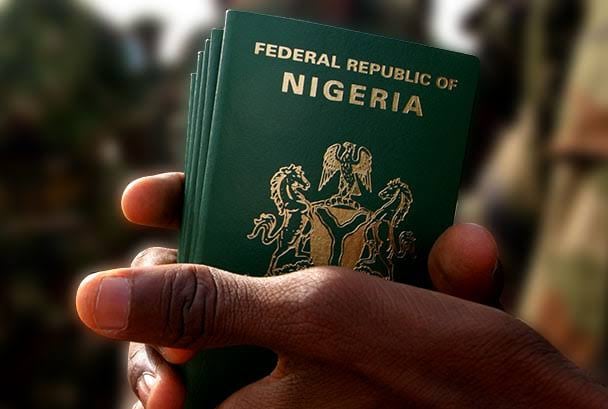
The recent hike in Nigerian standard passport fees is quite unnecessary and ill-timed. Coming at a time of economic hardship and suffering, it presents the government as being insensitive and uncaring. The Nigeria Immigration Service (NIS), which announced the upward review for the passport with effect from September 1, 2025, said the revised charges would apply only to passport applications processed within Nigeria.
The fee for a 32-page passport with five-year validity was increased from N50,000 to N100,000. Last year, it was increased from N35,000 to N50,000. Similarly, a 64-page passport with 10-year validity was increased from N100,000 to N200,000. It was increased from N70,000 to N100,000 in August 2024. There was no increase for applicants abroad. They will continue to pay $150 for a 32-page, five-year passport and $230 for a 64-page, 10-year passport.
When juxtaposed with the cost of obtaining passports elsewhere, it becomes apparent that the Nigerian passport is among the costliest ones despite ranking among the lowest in the world. In Africa, it ranks only ahead of South Sudan, Eritrea, Libya and Somalia. The fee for a first-time adult passport book for the United States is $130 plus a $35 execution fee. If it’s a passport card, it is $30. Renewal for passport book is the same $130 while passport card is also $30. Passport book and card cost $160.
For the United Kingdom, adult standard 34-page passport is £94.50 (online application) or £107 if it’s paper application. A standard 54-page passport costs £107.50 (online application) and £120 (paper form). Child 34-page passport is £61.50 online and £74 for paper application. Child 54-page passport is £74.50 (online) and £87 (paper). For people born on or before September 2, 1929, the passport is free. For South Africa, it costs R600 (about N51,690 at approximately N86.15 per Rand) to obtain an adult standard 32-page booklet and R1,200 (about N103,380) for a standard 48-page booklet.
Simply put, the cost of obtaining a standard Nigerian passport is elitist. Poor Nigerians can’t afford it. The Socio-Economic Rights and Accountability Project (SERAP) described the hike as being arbitrary, unlawful, discriminatory against poor Nigerians and unjustified. It said it would amount to a denial of access to passports for millions of socially and economically vulnerable Nigerians and urged the Federal Government to reverse the hike.
“Nigerians who cannot afford to pay the excessive fees would be denied the effective enjoyment of their citizenship rights conferred by the Nigerian Constitution 1999 [as amended] and human rights treaties to which the country is a state party,” the rights group noted.
The NIS justified the increase, saying it was to sustain quality and integrity of the passport as well as efficient service delivery. It said the same thing when it increased the fee last year. The Minister of Interior, Dr. Olubunmi Tunji-Ojo, also defended the hike. According to him, the increase would not only ensure timely delivery of passport, it would also eliminate corruption. With this new fee regime, Tunji-Ojo noted that Nigerians were expected to get quality passports within one week of enrolment instead of waiting for up to seven months as was initially the practice. He said printing capacity was no longer the problem, and that centralising the approval process would curb corruption in the system.
Whatever be the case, there is no justification for the 100 per cent hike one year after it was last increased. This tends to indicate, rightly or wrongly, that this vital travel document and means of identity has been reduced to a revenue generating tool for government.
The government is fond of hiking the prices of essential services to raise revenue but has fallen short of initiating policies and programmes that will ameliorate the hardship in the country. It removed fuel subsidy that inevitably led to the astronomical rise in the price of fuel and other commodities. It floated the exchange rate which weakened the value of the naira. There are increases in the tax rate, renewal of some vehicle particulars and obtaining some licences from government agencies.
All these are against the backdrop of soaring inflation and cost-of-living crisis in the country. Many Nigerians are overburdened by poverty and hunger. Minimum wage remains N70,000. Yet, it is from this meagre amount that citizens are expected to pay for school fees, medical care, food and some other necessities. If government cannot cushion the effect of the high cost of living, it should not add to the plight of the citizens by hiking passport fees and others.
Many Nigerians are rushing to acquire passports to leave the country because things are not working well. If there is conducive environment for people to thrive in their various endeavours, the rate of migration will reduce. Governance is about the welfare of the people. Therefore, government should not use passport to overtax the citizens. It should reverse the insensitive and avoidable hike forthwith.