Follow Us on Google
by Bimbola Oyesola , [email protected]
The Nigeria Employers’ Consultative Association (NECA) is already looking beyond the 2023 general election, charging the administration that would take over from May 29 to device policies that would salvage the economy from total collapse.
This is even as it has called on the incumbent administration not to abandon governance, while also charging the incoming government on necessary economic and policy options.
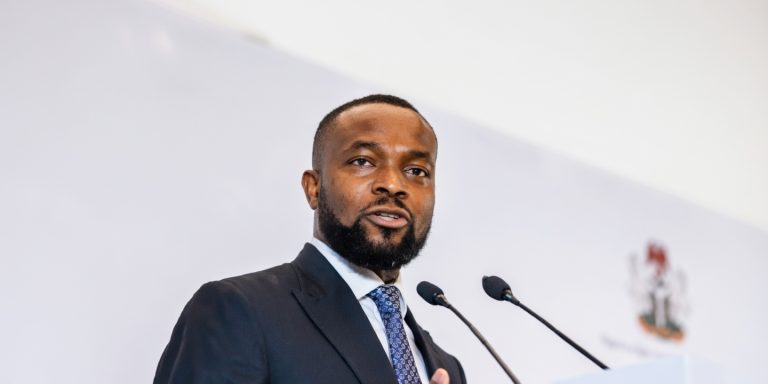
Director-general of the association, Adewale-Smatt Oyerinde, in an interview, stated that the year 2022 remained one of the most challenging years for organized businesses.
“The pandemic inflicted leadership and sustainability challenges that forced organizations to take extraordinary measures in real time, with zero planning.
“Things changed drastically and dramatically, leaving no industry across the world unaffected,” he said.
According to him, enterprises in Nigeria were forced to operate under excruciating circumstances, made worse by inherent systemic contradictions.
He noted that as organizations faced sustainability issues, they, at the same time, had to deal with rising energy cost, regulatory gangsterism, inconsistencies and contradictions in the fiscal and monetary policies (which has made doing business unattractive and created clogs in the wheel of attracting foreign direct investment).
He also listed rising inflation and increasing cost of doing business, which invariably reduced the capacity utilization of industries.
The NECA DG said while some of these challenges are not peculiar to Nigeria alone, Nigeria’s government’s approach to solving them does not inspire confidence.
While making policy recommendations for the current and incoming government, the DG stated that “Government must stop making mockery of Nigeria and the citizens. It is distressing to witness long queues for petrol when government claimed to have paid trillions in petrol subsidy.
“Notwithstanding the subsidy payment, Nigerians are still compelled to endure the long queues to buy almost ‘black market’ rate, fuelling inflation and economic hardship. Government must unravel the scam surrounding the subsidy and make pronouncement on a definitive plan to remove it”.
On policy options to revive the stuttering economy, Oyerinde said the tax system is currently skewed against responsible tax payers.
He advised that the incoming government must further reform the tax system to create incentives for payers and expand the tax net rather than the current over-burdening of legitimate businesses.
He said, “Consistency in the tax policy will improve stakeholders’ confidence rather than the short-sighted attempt to sabotage the established roadmap set out in the 2022 Fiscal Policy Measures and Tariffs Amendments (FPM 2022), which covers 2022-2024.
“While it was gladdening to hear that Government had jettisoned the proposed increases in Excise tax, a more collaborative and evidence driven approach should be adopted for future changes”.
Also highlighting on the rising public debt, the NECA Director-General warned that with government’s debt crossing the N41 trillion mark and a seemingly unregulated borrowing by State Governments, the incoming government must make deliberate attempt to resist the urge to borrow, but should rather establish an accountability system that reduces the cost of governance, curb corruption and make budget padding almost impossible.
Oyerinde said while government and some of its agencies sometime act as all-knowing, “we urge inclusiveness in Policy design, implementation and monitoring.”
He maintained that as private sector is arguably the largest contributor in terms of contributions to GDP, it is therefore, imperative to include Organized Private Sector in all economic-related decision of various arms and tiers of government.
“It is no gainsaying that the country faces enormous challenges, mostly self-inflicted.
“We, therefore, urge the current and incoming Government to explore policy options as suggested and adopt a more robust, all-inclusive strategy, focusing not only on the diversification of the economy, but also on the imperative to urgently reform the current fiscal structure to reflect fiscal federalism, promote healthy competition and drive productivity,” he maintained.