Follow Us on Google

By Adewale Sanyaolu and Isaac Anumihe, Abuja
The Niger Delta Power Holding Company (NDPHC) says more than 1,500 megawatts (MW) of its mechanically available generation capacity remains largely stranded, costing the company over N300 billion as transmission and market constraints limit dispatch to about 500MW per hour.
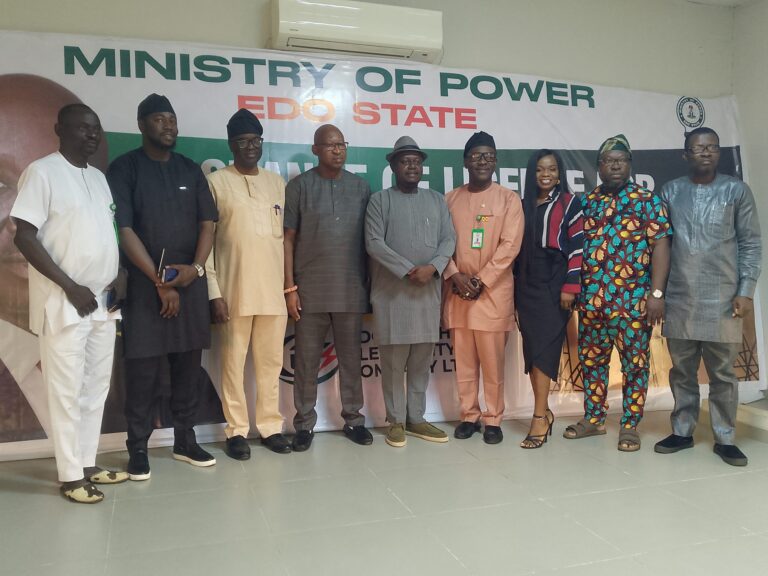
NDPHC Managing Director and Chief Executive Officer, Engr. Jennifer Adighije, disclosed this in Abuja during an oversight visit to the company’s headquarters by the House of Representatives Committee on Power, chaired by Hon. Victor Nwokolo.
Adighije said the significant gap between available generation capacity and actual dispatch was one of the major challenges confronting the company, alongside transmission constraints, low tariffs, inadequate market settlements, gas supply challenges, unpaid debts and vandalism.
According to her, the company has more than 1,500MW of mechanically available generation capacity but receives an hourly dispatch allocation of only about 500MW.
She said the suppressed capacity had resulted in substantial financial losses for NDPHC, putting the cost at more than N300 billion.
Adighije therefore called for regulatory intervention to review the electricity market’s dispatch merit order and enable available generation capacity to be better utilised.
The NDPHC boss also disclosed that the company was preparing to commence the second phase of the National Integrated Power Project (NIPP), with a shift from its gas-fired generation model towards renewable energy.
She said NIPP Phase 2 would focus particularly on exploiting the renewable energy potential of northern Nigeria through solar, mini-hydropower and off-grid projects.
“Where we are currently is NIPP Phase 1, which is power generation from fossil fuels, from gas. The NIPP Phase 2, in line with the Energy Transition Plan, is where we are diversifying our generation mix and preparing to transition to renewable energy,” she said.
Adighije said the planned projects were part of NDPHC’s strategy to close electricity supply gaps and diversify Nigeria’s generation mix.
She disclosed that NDPHC currently contributes about 4,000MW to Nigeria’s installed generation capacity of approximately 12,000MW, accounting for about 30 per cent.
Under NIPP Phase 1, she said the company had built 10 power plants, seven of which were commercially operational, while two were under construction and one was undergoing upgrades.
Beyond generation, Adighije said NDPHC had completed 120 transmission projects, comprising 60 330kV substations, 31 132kV substations and 37 expansion projects, with total installed transformer capacity exceeding 10,000MVA.
Other News
She added that the company had also implemented hundreds of distribution projects involving distribution transformers as well as 33kV and 11kV lines across the country.
On efforts to strengthen NDPHC’s finances and recover assets, Adighije said the company had recovered 110 abandoned containers and 216 packages within her first 100 days in office, saving more than ₦30 billion.
She also disclosed that NDPHC had recovered about $12 million from cross-border bilateral customers in Togo and other debtors from an outstanding liability of more than $50 million.
According to her, the company had recovered several turbines across its power plants, restoring about 470MW of generation capacity to the national grid.
Adighije, however, appealed to the House committee to intervene in outstanding debts owed NDPHC by participants in the electricity market, including the Nigerian Bulk Electricity Trading Plc (NBET), whose liabilities she said had risen above ₦400 billion.
She also sought the settlement of obligations arising from NDPHC assets recognised in the regulated asset base of the Transmission Company of Nigeria (TCN).
Responding, Nwokolo commended the NDPHC management for its efforts to improve generation and address challenges across the power value chain.
He said the committee’s oversight visit was aimed at understanding the company’s challenges and identifying areas where the legislature could support efforts to improve electricity supply.
Nwokolo stressed that the performance of the power sector depended on the effective functioning of generation, transmission and distribution.
“If they don’t generate, there’s nothing to transmit. If they don’t transmit, there’s nothing for me to distribute. So I must commend them,” he said.
He assured NDPHC that the committee would examine the concerns raised and engage relevant stakeholders towards resolving the challenges confronting the company.
Nwokolo also commended Adighije’s approach to restoring generation assets, citing the Alaoji power plant as an example of a facility that could have suffered further deterioration without proactive intervention by the current management.
He said the legislature would continue to support NDPHC where necessary, stressing that the company could not resolve the structural challenges in Nigeria’s power sector alone.