Follow Us on Google
From Abel Leonard, Lafia
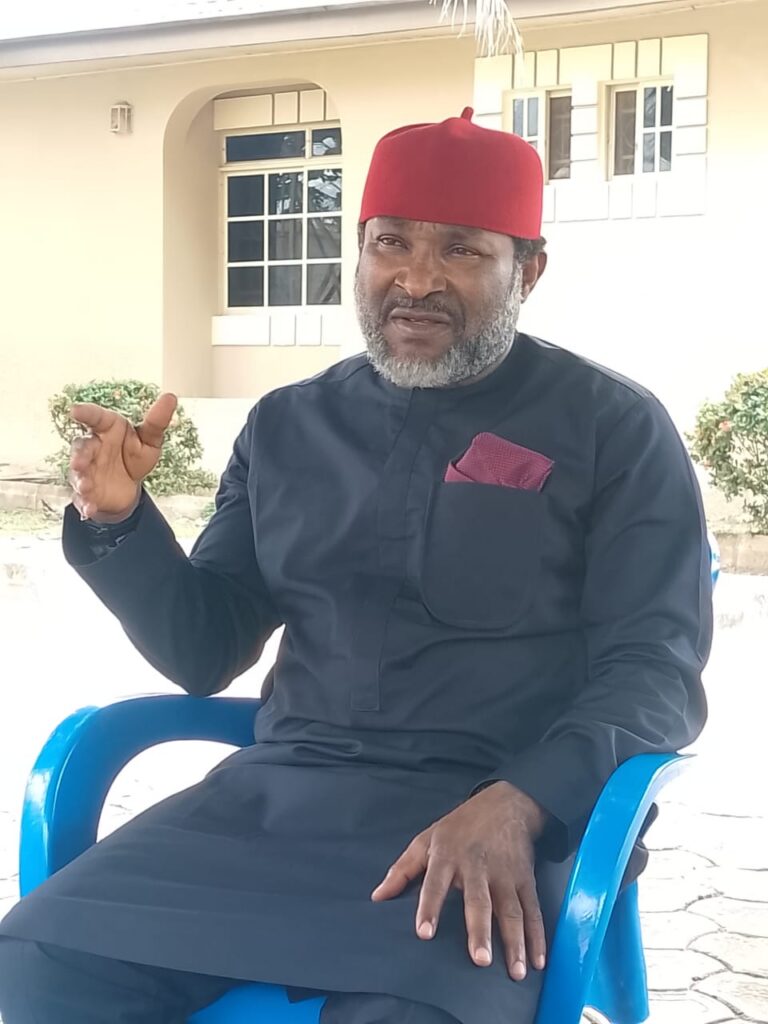
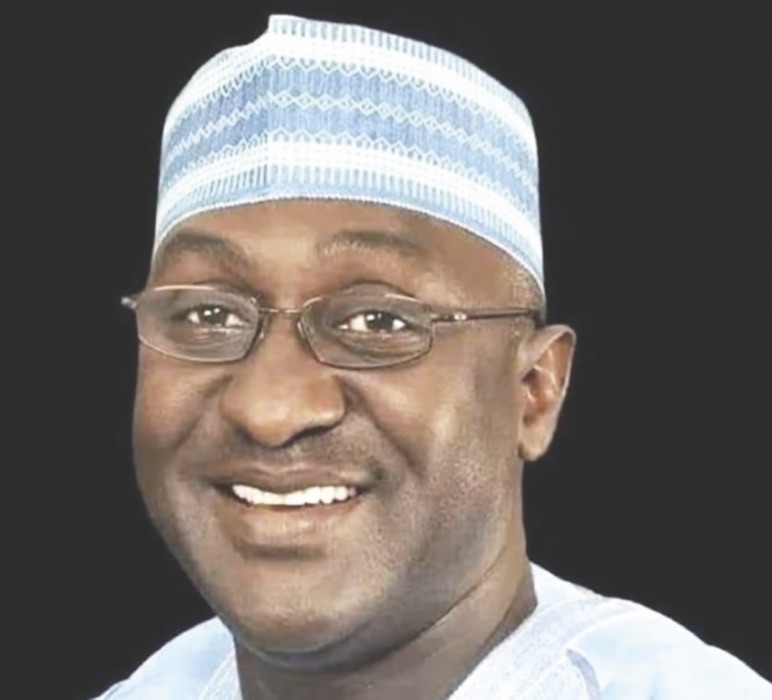
Former Director-General and public affairs strategist, Dr. Mike Omeri, speaks with Abel Leonard on his senatorial ambition, governance, empowerment, party politics, and the future of Nasarawa South.
Dr. Omeri, you have been largely out of elective politics for some time. What has informed your decision to seek a senatorial seat at this point?
Yes, it is true that I have been around politics for quite a long time, although there were periods when I stepped outside active politics to do other things. But politics, for some of us, is not something you abandon; it is about service, ideas, and responsibility to society. What has informed my decision is a deep concern about where we are as a state and as a people, particularly in Nasarawa South. I believe strongly that we have not maximised our potentials. We have abundant human capital, natural resources, and intellectual capacity, but these have not been intentionally harnessed.
At some point, you begin to ask yourself: if you have experience, knowledge, and ideas that can help organise society better, why should you sit back? So, my ambition is not driven by personal gain; it is driven by the conviction that we can do better if leadership is intentional, strategic, and people-centred.
You often speak about Nasarawa State being richly endowed. In your view, what exactly is missing?
Nasarawa State is a highly endowed environment, humanly and naturally. We have fertile land, solid minerals, youthful population, trained professionals, and people with diverse skills. What we lack is the utilitarian value of our human resources, the deliberate application of their capacity and expertise to development. What that means is this: people are trained, educated, and skilled, but there is no structured system to deploy those skills productively. Government has failed to design intentional strategies that link people to opportunities, resources, training, and markets. Instead, what we see is a system that promotes heavy dependence on government jobs and patronage. Unless government deliberately creates linkages beyond itself, with the socio-economic sectors, private institutions, financial systems, and communities, we will continue to waste our human capital.
You have criticised overdependence on government. How can this be practically addressed?
It starts with deliberate empowerment policies. For instance, if government sets aside funds and works with banks to encourage people to go into agriculture, small-scale manufacturing, or services, providing access to equipment, inputs, and labour, you will gradually eliminate excessive reliance on government. Empowerment must not be rhetoric; it must be structured. When people can earn independently, they stop relying on government officials or civil servants for survival. This also reduces pressure on public officers and, by extension, corruption.
Today, what happens is that individuals working in government are forced to compromise either their income or integrity because they are expected to support extended families and communities. That pressure is unhealthy for governance and society.
Some argue that employment into the civil service is still necessary. Do you disagree with this approach?
Not entirely. For certain sectors like education, we must recruit more teachers if there are gaps. Education is foundational. In fact, I even believe that teachers should be recruited nationally, not necessarily limited to indigenes, as long as they are qualified and licensed. Diversity enriches learning and broadens perspectives. However, we should discourage the idea that the civil service is the primary solution to unemployment. The civil service should not be a dumping ground. It is inefficient, unsustainable, and stifles innovation. Instead, we should empower people to create value outside government.
How does this empowerment vision translate specifically to Nasarawa South?
Nasarawa South, like other parts of the state, is richly endowed. What we intend to do is to organise the zone. Right now, communities are not organised. There are no coordinated plan linking people to development initiatives. If given the opportunity in a free and fair contest, we will organise communities strategically. For example, agriculture must not be approached randomly. We should identify specific local governments or districts as agricultural hubs, link them to resources, training, data, and markets, and place experienced professionals in charge.
You can have someone with practical agricultural experience heading a constituency office focused on agriculture. That office becomes a centre for intervention, information, inputs, and coordination. The same applies to other sectors like skills acquisition and small enterprises.
Do you already have a working model for this?
Yes, we do. We already have a blueprint, and we are experimenting with it. Through the Safe Life and Care Initiative, an NGO run by Dr. Amina Omeri, we have trained and empowered a significant number of people in one local government area, with participants drawn from different communities. We have seen the success rate. People acquired skills, started businesses, and became self-reliant. The question then is: why can’t this be scaled up? All we need is structure, coordination, and political will.
You have also linked empowerment to dignity and self-respect. Can you explain this further?
Other News
Empowerment is not just about money; it is about dignity. Today, the relationship between elected officials and constituents is distorted. People come to their representatives not with pride but with desperation. I want to create a situation where, when I visit home, people say, ‘Our senator has come,’ and they bring farm produce, chicken, yams, or grains, not because they are begging, but because they are empowered. That is dignity. When people are empowered, corruption reduces, pressure on public office holders reduces, and society becomes healthier. People regain self-respect and confidence to take risks they would otherwise avoid due to fear and poverty.
What role do you see the legislature playing in this transformation?
The legislature is not the executive. Lawmakers are not meant to execute capital projects. Our role is legislation, oversight, and lobbying. Through effective legislation and advocacy, we can ensure that empowerment programmes are captured in national budgets and properly implemented by relevant agencies. We can also influence policies that promote access to credit, training, and infrastructure. That is how lives are transformed sustainably.
Turning to party politics, how do you view the current crisis within the PDP?
Unfortunately, internal affairs of political parties are now being subjected to excessive judicial interference. Many of these matters are not even justiciable. The Supreme Court has clearly ruled that internal party affairs should remain internal. However, we see lower courts entertaining such cases, issuing controversial judgments, and delaying justice. Some judges know that certain decisions are inconsistent with the law and Supreme Court precedents, yet they proceed anyway.
The PDP constitution does not recognise caretaker committees. That provision was deleted. So, on what legal basis does a judge order the formation of a caretaker committee? That is judicial overreach. When a judge does that, he assumes the role of a constitution maker or lawmaker. Even worse, the mainstream PDP did not ask for such interventions. It is usually a small group exploiting the judiciary to advance political interests.
Do you believe the judiciary shares blame in this situation?
There are many good judges in Nigeria, disciplined, principled, and committed to justice. But there are also some whose actions do not reflect the nobility of the profession. That said, I also blame politicians who take internal party matters to court knowing fully well that they are abusing the system. The judiciary is a product of society, and society must take responsibility.
You have had a long career in governance. Can you reflect on some of your experiences?
I was part of the younger generation of the Nigerian Peoples Party in the Second Republic and later the Social Democratic Party in the Third Republic. In Plateau State, I served as Director of Press Affairs to the governor, and I ensured that the office was not abused. After the creation of Nasarawa State, I served in various capacities, Director of Press Affairs, Director of Information, Commissioner for Youth, Sports and Social Development, and later Commissioner for Information, Sports and Culture. We did quite a number of things. We established the cultural troupe, which remains celebrated today. We participated in the National Cultural Festival in Port Harcourt shortly after the state was created, and Nasarawa came first.
What innovations from that period stand out to you?
One innovation was converting parts of government facilities into shops to generate revenue for maintaining public halls. That freed government resources.
We also established Nasarawa Broadcasting Service and initiated collaborative housing schemes between the state and local governments to reduce expenditure on rent and provide accommodation for civil servants. At that time, there were no proper offices or residences. Many officials worked from garages or temporary structures. Yet, we were motivated because we were building a state.
You have expressed concern about lack of recognition for past leaders. Why is this important?
Thirty years after, none of us has a street or monument named after us, despite the sacrifices. Instead, serving officials name projects after themselves. That is wrong. It erases history and corrupts values. Honouring past leaders creates role models and lessons, both of success and failure. If you don’t document and recognise history, future generations lose direction.
Finally, what message do you have for the people of Nasarawa South?
My message is simple: you have capacity, talent, and potential. What has been missing is encouragement, structure, and organisation. I believe strongly that with the right leadership, we can organise our people, empower communities, and restore dignity. This is not about me; it is about creating a system that works for everyone.