Follow Us on Google
From Abel Leonard, Lafia
Preparations are in top gear to facilitate the return of internally displaced persons (IDPs) from Nasarawa State affected by recent crises in Yelwata, Keana and other communities back to Kadarko town, pending the restoration of lasting peace in their ancestral homes.
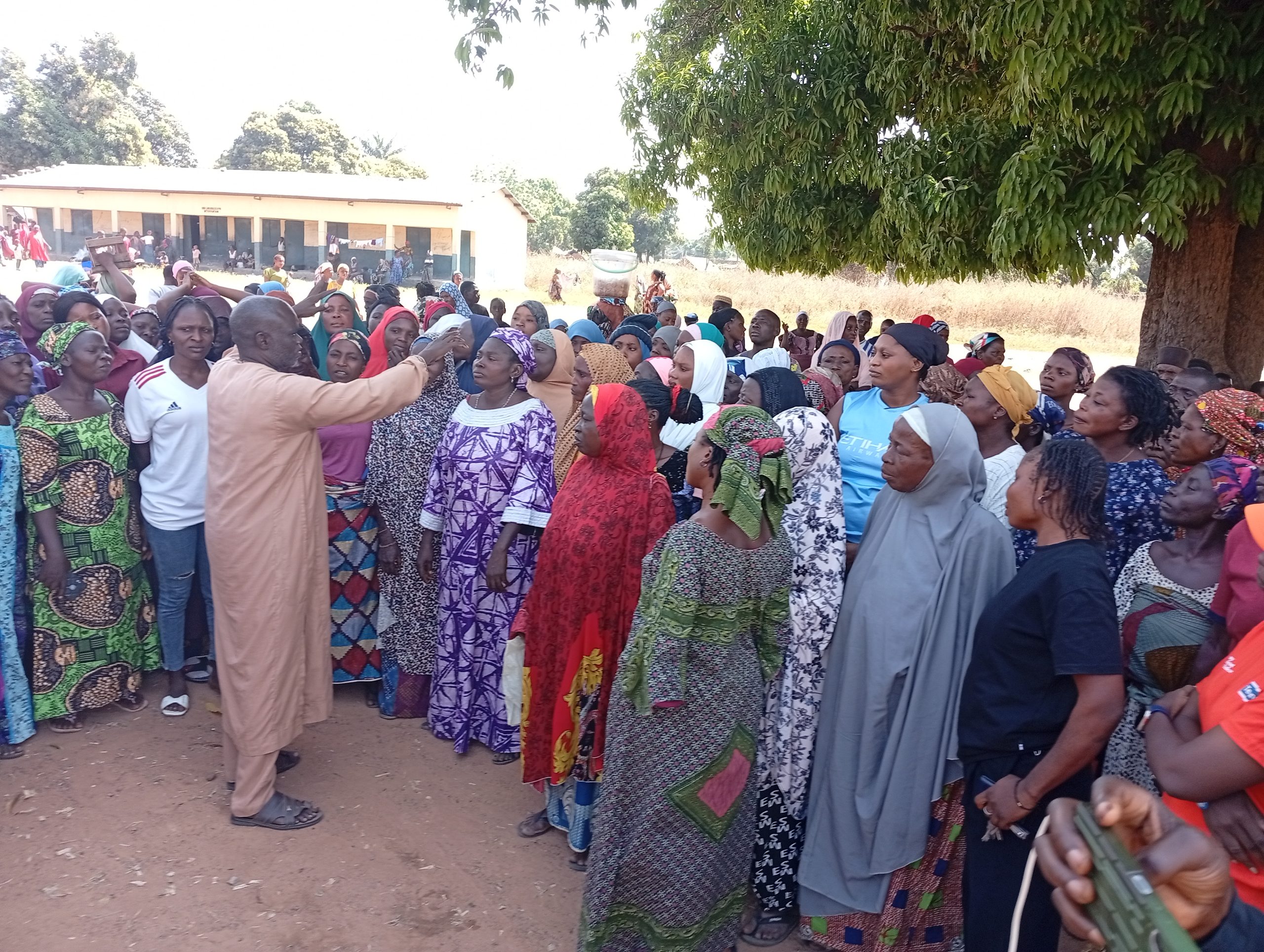
The President of the United Farmers Association, Kadarko, Chief Denis Denen Gbongbong, disclosed this to our coresponsent on Friday while addressing displaced persons taking temporary refuge at Kadarko Primary School.
According to him, many of the displaced persons had lived in IDP camps for over two to three years due to persistent insecurity, but recent improvements in security around Kadarko town had encouraged gradual return.
“The people you saw today are returnees. Some of them fled after the recent incident because they felt threatened, but as security improved in Kadarko, they began to return. We have been campaigning that it is better to be home than to remain in camps,” Gbongbong said.
He explained that while some returnees were being accommodated by neighbours with available space, others had no option but to stay in public facilities under difficult conditions.
“They don’t have mattresses, blankets or basic items. These are public places not meant for habitation. The situation is not humane, but we are managing pending further support,” he added.
Gbongbong said the association had reached out to the Nasarawa State Emergency Management Agency (NASEMA) and security authorities to assist with mobility and logistics to evacuate more displaced persons from camps in neighbouring Benue State back to Kadarko.
“We want them to celebrate Christmas at home, not in camps. From now till December 25, we will intensify efforts to bring them back. We appeal to Nigerians, philanthropists and civil society organisations to see this as a worthy humanitarian project,” he appealed.
He lamented that IDPs were living in harsh conditions in camps, describing them as places where freedom and dignity were absent.
“The camps are not conducive. You live like a prisoner. Here at home, they can farm, gather firewood and regain their dignity,” he said.
On government response to the crisis, Gbongbong alleged that authorities were not properly briefed at the onset, insisting that insecurity in rural communities predated the current administration.
“The governor inherited insecurity. There were IDP camps before he assumed office, and no serious rehabilitation plan was in place. Farmers are vulnerable because their livelihood is in the rural areas,” he stated.
Other News
He said the intervention of the Nasarawa State Emergency Management Agency (NASEMA) had brought renewed hope following recent engagements and assessments.
“For the first time since 2012, officials came with proper data forms to capture the actual number of IDPs. This gives us hope that proper planning and response will follow,” he said.
Gbongbong also disclosed that several communities had been completely deserted due to attacks.
“In Keana alone, about 99 communities were deserted. Doma and Obi also recorded over 20 deserted communities each. The situation is worse along the border areas,” he revealed.
Speaking at the camp, Daniel Ahemba, a 22-year-old displaced person, appealed to government for urgent intervention.
“We have been displaced for over two years. We need relief materials and support to rebuild our lives. Our communities are still unsafe,” he said.
A 15-year-old girl, whose name was withheld, said the crisis had forced her out of school.
“I cannot go back to school because of the insecurity. We ran here for safety. I appeal to the government to help us return home safely,” she said.
Leader of the Alago group at the camp, Maria Orogu, described the situation as painful.
“We are suffering. We cannot return to our communities because of fear. We need the government to come to our aid,” she said.
Similarly, leader of the Hausa-Fulani group, Asmau Lawal, said the displaced persons desired better treatment and protection.
“It is not our fault that we were displaced. We need adequate security and government support,” she said.
A visit to the camp revealed deplorable living conditions, with no beds, mattresses or blankets, forcing women and children to sleep on bare floors in dilapidated structures.