Follow Us on Google
By Amechi Ogbonna
Since October of 2022 when the Central Bank of Nigeria unveiled its new template for the Naira redesign, varied commentaries and interpretations have trailed its implementation.
For some political stalwarts, it was a conspiracy of the power that be to stop interest groups from funding their campaigns’.
But for financial experts including the Central Bank of Nigeria (CBN) itself, the redesign is purely an economic policy designed to checkmate the wanton abuse of the nation’s legal tender by some people.
For the CBN, the best approach to achieving that objective was through deliberate policy -induced reduction in the quantum of cash that people can keep outside banking system to maintain an effective and efficacious monetary policy environment.
From the outset of the policy, the apex bank succinctly enumerated its objectives, to wit, curb the burden of physical cash transactions in favour of more efficient electronic channels, making it a political outlier to the 2023 election narratives giving by some vested interest groups.
For clarity sake, one could recall that shortly before the Federal Government rolled out the policy, there were glaring evidences that the abuse of the local currency was rife in social functions and other forums across the country, where the currency was being hawked like any other commodities, leading to a coterie of illegalities that included kidnapping for ransom, inflation, bribery and corruption.
While these abuses lasted, many Nigerians lived in the primitive culture of stacking wads of naira notes at home, shops and business premises without allowing same to circulate in the economy to create more wealth for the citizens.
As of October 2022, when the policy was announced, Nigeria’s entire economic and political atmosphere was heavily blighted by too much money outside the banking system, with exchange rate heading towards the N1000 mark to $1 even when economic activities in various sectors were really at net zero levels.
Many Nigerians then wondered what they could have been doing with an economy that had an estimated N2.7trillion of N3.3trillion of money in circulation, outside the banking vaults amid other viable alternatives that often come cheaper and more efficient to conduct.
While some observers are of the view that the sensitisation programmes of the CBN were not adequate enough to convey the message of the redesign policy, the CBN never failed to restate the dangers of transacting with huge amounts of cash in a highly insecure environment like Nigeria.
Indeed recent analysis of traffic robberies and burglaries in cities and rural communities did show that most of such nefarious activities often happen in locations where victims were known to carry large sums of cash as opposed to the use of electronic channels for financial transactions.
For instance, in his recent presentation of a committees report to the Red Chamber on the Nigeria’s naira redesign policy, chairman of the Senate Committee on Banking Insurance and Other Financial Institutions, Senator Uba Sani, argued that CBN’s Cash Withdrawal Limits was well conceived by the apex bank for transformation of the nation’s economy and falls within its mandate as provided for in section 2(d) and 47 of its extant Act.
According to him, implementation of the Cashless policy in six states alone resulted in reduction in cost of currency management by 15.20 percent from N36 97 billion to N31.35 billion between 2013 and 2014.
The lawmaker had also given thumbs up for the monetary policy regulators for their forthrightness in pushing for its adoption by the generality of Nigerians as it is cheaper and more efficient.
Looking at the long term goals and objectives of dealing a frontal blow on inflation, kidnapping for ransom, bribery, corruption and terror financing, several Nigerian experts have equally hailed the policy in-spite of its unintended consequences on the economy and peoples lifestyles.
Many were however taken aback by last week’s ruling of the Supreme Court that extended the lifespan of the old notes by additional eight months to December 31, 2023.
While some sound economic minds would not want to politicise the ruling of the apex court, it would be rather absurd under Nigeria’s current tense political environment, to interpret the judicial pronouncement as victory for the political class who ordinarily would wants Nigerians to continue carrying cash in Ghana Must Go bags in a 21st century globalising economy.
Already many have continued to gloat over the ruling seeing the redesign policy from the prism of politics with no value addition to Nigerian masses.
Notwithstanding that the naira redesign policy had some downside effects on persons and businesses especially the Micro, Small and Medium Enterprises MSMEs, its longterm impact in pushing the frontiers of cashless policy adoption by individuals and corporate entities cannot be overemphasised.
Looking at recent data issued by the Nigeria Inter-Bank Settlement Systems (NIBSS) transactions worth N38.9 trillion were consummated electronically in November through the NIBSS Instant Payment platform (NIP), the highest monthly transaction record on the platform.
According to the NIBSS data, the November figure brought the total value of NIP deals in the last 11 months to N345 trillion.
Year on year, the e-payment value increased by 50 percent compared with the N25.9 trillion recorded in November last year.
The N38.9 trillion reported in November was also higher than the N34.5 trillion recorded in the preceding month of October by 12.7 percent.
Indeed, the value of the e-payment recorded in NIBSS was a reflection of the increase in the volume of deals within the month. The NIP volume rose to 492.2 million in November, showing a 53.8 percent increase over 319.9 million recorded in the same period last year.
But even as the cashless policy of the Central Bank of Nigeria (CBN) continues gaining traction with many customers embracing the use of e-payment channels for regular transactions, some key adjustments like those limiting the amount of cash that can be withdrawn by individuals and corporate organisations are further expected to trigger stronger spike in electronic transactions across the country in the months ahead.
Going forward, quite a number of factors appear very germane in assessing Nigeria’s cashless policy that had generated so much controversy in the last five months.
For one, contrary to global norms and best practices of 4-5 years, the 2022 naira redesign policy came 17 years after the last of such exercise was done in the country, and cancelling it would amount to self back-stabbing and an assualt on the fledling economy and wobbly security architecture.
According to the CBN, part of the reasons the policy was introduced was to checkmate inflation rate that had hit the 21.34 percent mark as at December last year.
It also came as part of Federal Government’s strategies to halt vote buying and other electoral offenses that had hobbled Nigeria’s democracy over the years.
Athough there were still some huge cost that came with the policy to both the government of Nigeria and citizens not withstanding, many observers believe that what was needed at this time around was finetuning to reduce its unintended outcomes.
This was even as some have argued that the loss of human lives and damage to properties across the country need not be experienced if all stakeholders including commercial banks that became spoilers of the broth had lived up to their expectations in the implementation phase.
In his reaction, Mr Daniel -Dickson Okezie, Chairman, SMEs Group, Lagos Chamber of Commerce and Industry (LCCI) said that the recent ruling was a welcome decision in the sense that it will reduce the hardship that Nigerians are going through trying to access the naira in banks and ATM.
‘It will also help to solve the scarcity of the naira that is choking’.
On the other hand, the period of eight or nine months given for the use of the old naira notes is a bit too long. The Supreme Court ought not to have allowed that length of time, by limiting it to about four months, after all the CBN had started implementation of the policy since last year.
“As a matter of fact, the other side of the ruling is the issue of implementation. The problems suffered by bank users and Nigerians will not disappear entirely because the Supreme Court judgement was actually silent on cash withdrawal limit. So CBN obviously will insist on its individual withdrawal limit of #500,000 and #5milliom for corporates per week.
The implication of this ruling is that it appears that the CBN monetary policy will be distorted.” He said
In all these he said the CBN has been trying to contract and manage the quantity of money in circulation . The judgement will distort the management of money in circulation.There is a lot of confusion. The CBN has do deal with two different currencies.
A situation where you deal with old and new currencies at the same time is a bit confusing.
The management of the quantity of money in circulation, which is a key factor in monetary policy is going to be affected in many ways because the CBN will find it difficult to control the quantity of money in circulation in the sense that it is obvious that politicians have starched billions of naira in their private residences and other places that they intend to use for ongoing elections. Now, the people who still have the old money will push them out and the CBN has already determined the quantity of the new currency that it wants to be in circulation.
The CBN also knows the quantity of money it has already pushed out. These things can’t be done anyhow. So the issue now is that for the apex bank to manage the old one that people will now get back to circulation because of the judgment and the quantity of the new currency; there won’t be a balance.
The CBN may not find it easy to manage the quantity of currency in circulation.
This will definitely have adverse effects like inflationary issues.
When a lot of money is suddenly pushed out by people into the system, there will be a kind of inflationary effect in the economy. . Like a situation where #10billion has been in use and you suddenly push out #500billion into the system, you will find out that it will trigger sudden spending..it might now become difficult to manage the inflationary issues involved in the economy.
Still on the implication of the judgement, the CBN still has a wider power over the issue of monetary and the management of the financial system.
The CBN will also find loopholes in the judgement of the apex court. It can use some other measures and power within its ambit to frustrate the judgement and this can lead to confusion in the system.
But all the same, we are looking forward to May, when power will be handed over to the new administration, then we expect that new policies will come up and there will be some kind of stability in the monetary policy and other distortions in the financial systems brought about by the recent issues of changing the face of the naira and others. We are hopeful that these issues will be resolved.
Frank Onyebu, Chairman, Apapa branch, Manufacturers Association of Nigeria MAN)…
I’m not a lawyer, so I don’t know if the ruling is justified under the law. As a Nigerian, I feel it’s rather unfortunate. The implication of this ruling is that Nigerians would have suffered for nothing. All the pain that were borne by the masses of this country would be in vain. Essentially, the whole purpose of the policy would be defeated; all the resources that were put into it, all gone! All because of a few privileged individuals who still have a large stockpile of old Naira notes. I see the ruling benefiting mostly those privileged individuals who still have large sums of cash.
What I think the court should have done is to give a deadline for the CBN to make available the new notes in order to reduce the suffering of the poor masses. I can assure you that over 99% of Nigerians do not have the old notes as we speak. They lodged their old notes even before the expiration of the initial deadline.
The effect of the ruling on the economy will be mostly negative. The upward trend of inflation will continue. A lot more cash will be outside the banking system. The gains that have been made on e-commerce will fizzle out.
Like I said, the suffering of millions of Nigerians have had to bear would have been in vain. All in all, Nigeria would be the loser.
Director, CPPE, Dr Muda Yusuf
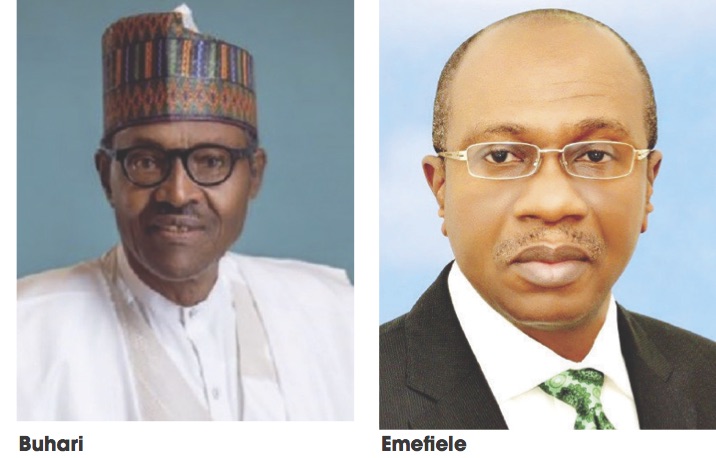
The Centre for the Promotion of Private Enterprise [CPPE] commends the ruling of the Supreme Court on the use of the old currency naira notes as legal tender. Hopefully, the President Buhari, the central Bank Governor and the Attorney General of the federation would comply with this court order in the interest of the rule of law, good order and public interest. We welcome the supreme court ruling as it protects the citizens from a policy which is, by all accounts, disruptive, repressive and draconian. It is also punitive, cruel and insensitive. Indeed, Nigerians deserve an apology from the promoters and proponents of the policy, especially the arbitrary and uninformed mopping up of cash in the economy.
The CBN currency redesign policy inflicted indescribable agony, suffering and distress on majority of Nigerian citizens. The trouble was not with the redesign, but the deliberate and unrestrained mopping up of cash in the economy.
……To date the CBN had mopped up about N2 trillion cash from the economy thereby paralyzing the retail sector, crippling the informal economy, stifling the agricultural value chain, immobilizing the transportation sector and disrupting the payment system in the economy.
It is true that the CBN has the right to redesign currency, but it does not have the right to dispossess the citizens of their cash. The choice of the mode of store of value is a fundamental right of citizens. The CBN has no right to impose that choice on citizens.
It is a flagrant violation of the rights of citizens for the CBN to withhold the cash of citizens under the guise of currency redesign. The CBN act does not give the CBN that right. The act cannot be superior to the constitution of the country. The CBN cannot request the citizens to bring their cash for a swap, only to deprive them access to it. A swap presupposes that whatever old notes was received by the banks must be replaced with new ones instantly. Otherwise, the period of the swap should be extended until the CBN is in position to do so. In many other climes, such swaps are done over twelve to twenty months, or even more, to minimize disruption.
The claim by the CBN that the economy has too much cash outside the banking system has no basis in economic theory, neither can it be supported by empirical evidence. As at December 2022, to total money supply was N52 trillion, cash component of money supply was N2.6 trillion, which was just 5%. Similarly, the country’s Gross Domestic Product [GDP] was N202 trillion, which gives a cash to GDP ratio of 1.3%. These ratios are some of the lowest around the world which shows that the Nigerian economy is not really a cash-dominant economy. Cashless transactions in 2022 was about N400 trillion in 2022, according to NIBSS. The truth is that nothing is broken. And we don’t fix what is not broken. Of course, we can do better, but not by crudely mopping up of cash in the economy.
The contention that the arbitrary mopping up of cash will curb inflation and enhance monetary policy effectiveness equally has no basis going by available data. It is also on record that about N15 trillion has been mopped up by the with the Cash Reserve Ratio [CRR].
…Indeed, the bigger threat to monetary policy effectiveness and inflation is the N22 trillion ways and means finances of the CBN.
The entire exercise was a needless disruption of economic activities, especially among the most vulnerable segments of the economy, unfortunately.