Follow Us on Google
• Lack of access to computers, electricity in rural areas’ll thwart process –Stakeholders
• FG, WAEC, NECO CBT plans ill-timed –Parents
From Cosmas Omegoh, Noah Ebije, Kaduna; Okey Sampson, Umuahia; Jude Chinedu, Enugu; Ighomuaye Lucky, Benin; Bamigbola Gbolagunte, Akure; Scholastica Hir, Makurdi; Tony John, Port Harcourt and Aniekan Aniekan, Calabar
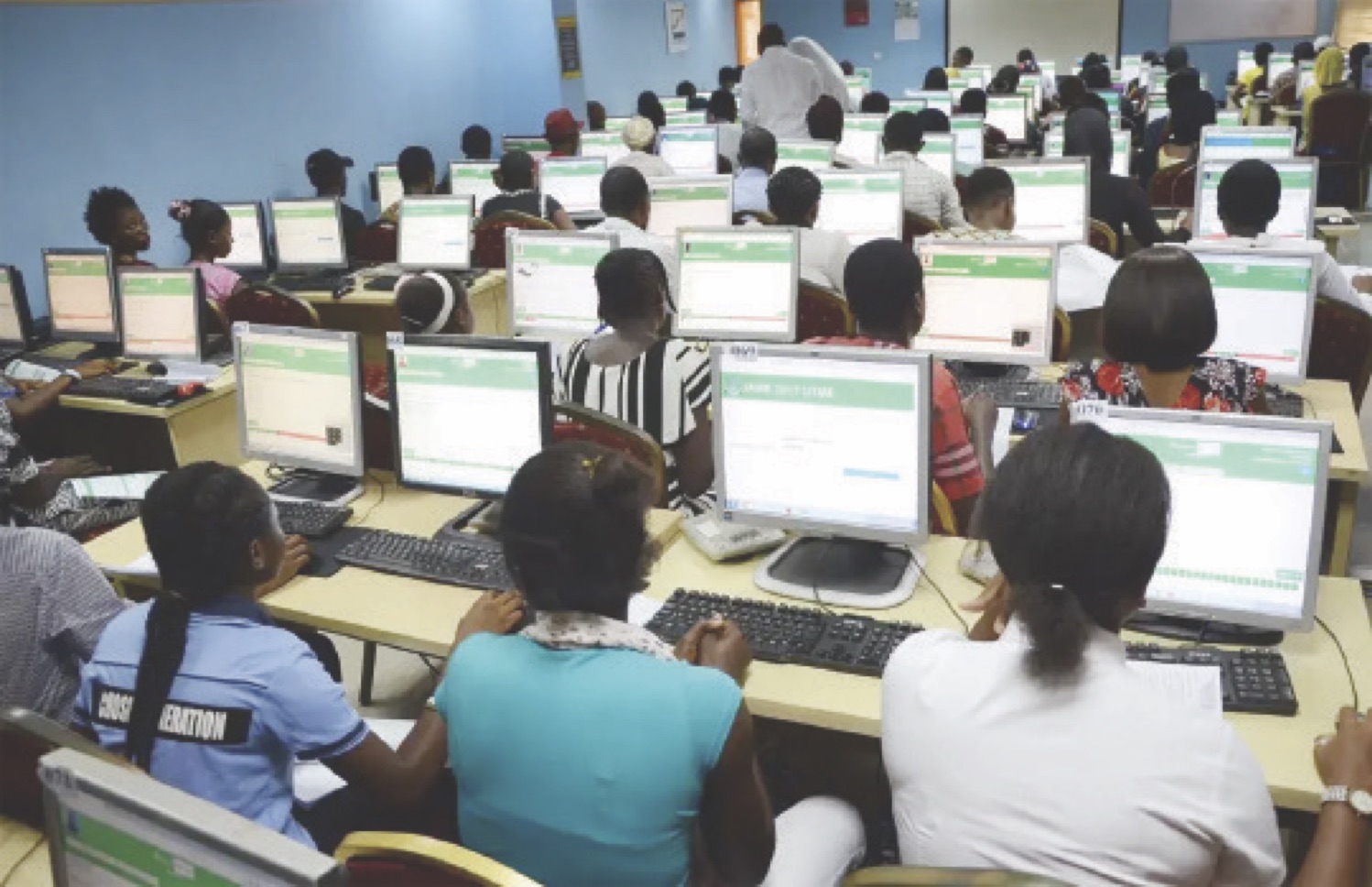
Beyond rhetoric, implementation of the proposed Computer-Based Testing (CBT) in schools faces a huge task with a cloud of uncertainty hovering over it.
Many stakeholders spoken to have expressed concerns that the Federal Government and the examination bodies’ CBT novelty might not work after all, given the peculiar circumstances that were probably not factored in. The reasons they gave are legion, ranging from lack of computers in schools to poor computer knowledge by students to power and network connectivity issues. And the summation of their feelings is that the idea is good but ill-timed. They expressed fears that the policy was not research-based and demanded more time, sensitsation, and government support, among other assistance to schools.

Meanwhile, both the West African Examinations Council (WAEC) and its National Examination Council (NECO) counterpart said they are gearing for the CBT role out next year.
Both bodies believe that the idea will further add the necessary icing on the cake of their drive to achieve a broad-based digital literacy in the new age and further strengthen the integrity of their examinations.
WAEC’s optimism
Early last week, for instance, WAEC’s Head of National Office, Dr Amos Dangut, explained that the idea, which kick-started in 2024 on a pilot basis with private candidates, had achieved what he described as “significant progress.” He therefore concluded that it was time to extend the gains to WAEC’s other examinations.
“We have conducted five exams already,” he said, “one for private candidates and one for school candidates, and by 2026, deployment will be massive.”
FG optimistic
Even the Federal Government, over the past months, has been in cloud nine following the CBT initiative – each time seizing every opportunity to double down on its determination to see the idea through.
Minister of Education, Dr Tunji Alausa has always been upbeat that the CBT is best for Nigerian schools.
Earlier, he had attributed the mass failure in English and Mathematics, a feature of the last WAEC’s examination, as part of the gains the idea brought – until he was proved otherwise.
Penultimate Tuesday, Dr Alausa reiterated his ministry’s obsession with the initiative, describing it as “historic milestone.”
“I had the honour of announcing a historic milestone in our education sector — the official transition of the West African Senior School Certificate Examination (WASSCE) to Computer-Based Testing (CBT).
“The adoption of computer-based examinations is a deliberate step to safeguard the credibility of our certificates and empower the Nigerian child with the skills needed for a knowledge-driven economy,” the minister further noted.
Dr Alausa wasted no time adding that the drive represents a part of his ministry’s broader reform to bolster the Federal Government’s renewed hope agenda.
Assurances of CBT workability
Further assuring of CBT, Dr Alausa had told parents, teachers, and students that “the Federal Ministry of Education will work closely with schools to ensure our learners are adequately prepared for this transition. Together, we will make this a smooth, successful, and transformative step forward.”
Earlier on July 22, 2025, Alausa first assured of the deployment of privately-owned Computer-Based Test centres and others belonging to public institutions during the conduct of the CBT examinations.
“WAEC and NECO exams are school-based exams being conducted at their schools. No, we will move away from that.
“It is going to be like JAMB exams are being conducted at CBT centres. We have thousands of CBT centres across the nation.
“Those are the centres that we are going to use. It’s not the case that students do not have the facilities, schools do not have the facilities.
“The adoption of computer-based examinations is a deliberate step to safeguard the credibility of our certificates and empower the Nigerian child with the skills needed for a knowledge-driven economy.”
On his part, WAEC boss, Dangut assured stakeholders that the body had over time, successfully conducted exams in remote areas without disruptions.
He was quoted as saying that candidates’ performances in those CBT examinations had proved to be “empirically better” than those of the paper-based examinations.
Our correspondent learnt that based on Dangut and Alausa’s presentations, the National Assembly pledged support for the CBT implementation next year.
Senator Ekong Samson, who is the Vice Chairman of the Senate Committee on Basic and Secondary Education, reportedly assured that the National Assembly would increase budgetary allocation to education apparently to facilitate the project role out.
Reality in states
In the light of assurance that all is set for next year’s CBT outing, our correspondents went to the grassroots to assess the readiness.
Finding in many states were a mixed grill. Many of those who spoke said the reality on ground did not reflect any readiness that CBT would be successful, citing the hiccups experienced by candidates during the last WAEC’s English Language examination.
Mixed reactions from Kaduna
In Kaduna State, a government official expressed optimism that the transition would phase out the traditional hand-written examination format, and replace it with secure, technology-driven assessments.
“In Kaduna metropolis and other places like Zaria and Kafanchan, schools are already taking steps to integrate ICT tools into the learning environments.
“WAEC will conduct pilot CBT exams before the full rollout, in order for students and schools to adjust.”
The official added that “public and rural schools will also receive support to meet CBT standards. Students are encouraged to begin practising on digital platforms.”
However, a concerned resident, Pastor Emmanuel Olorunmagba doubted the successful implementation of the CBT in schools.
“The plan to kick-start computer-based test from next year is not only wrongly timed, but non implementable in its entirety without further watering down the already watered-down final examination.
“The pertinent question is, ‘is Nigeria really ready for the CBT-based examinations for WAEC and NECO?’ The answer is capital no, considering that so many things have not been put in place to ensure smooth-running CBT exams.
“How many private and public secondary schools can provide adequate facilities in terms of computers and fast internet access for students to write the exams that will take almost one month, in which each student offers between eight and nine subject papers, while some subjects have Paper 1, Paper 2 and Paper 3?
“WAEC and NECO are not fully multiple- choice based like JAMB. Therefore, if the CBT system will be adopted, how will students answer theory questions like essay and how will the practical papers be handled?
“Another major issue to be considered is that even if the facilities are available for all WAEC and NECO-approved secondary schools, and provisions are made for theory and practical papers, it will still not be the best to completely adopt CBT by WAEC and NECO, because it will further negatively affect the writing ability of students as secondary school teachers will not play down on paper essays.
“In the light of the above, I want to appeal to the Minister of Education, Dr Tunji Alausa, to give this idea a second thought. Instead of conducting the WAEC and NECO exams to become fully computer-based from next year, the system should be made applicable to only the objective (multiple options) questions, while the theory and practical remain as they are.”
Confusion in Abia
In Abia State, stakeholders are confused following the announcement by WAEC and NECO. People don’t know the shape and form the examinations will take.
Before now, it was only JAMB that introduced the CBT-based format in the conduct of its examinations. But people have yet to come to terms with how the WAEC and NECO examinations would be done.
A staff of the State Education Management Board (SEMB) who didn’t want his name in print, said the Board had not been informed about the examinations’ format.
He urged that both WAEC and NECO have to do enough sensitisation for students, teachers and the public to know what is going on.
“There has been no formal communication from both examination bodies regarding the form the examinations will take.
“We know that JAMB is presently conducting CBT examinations. But are WAEC and NECO exams objectives? Many of them are theories.”
The SEMB staffer expressed worries over the fate of students in the rural areas.
“As a result of the lack of information and sensitisation from WAEC and NECO, one doesn’t know what will be the fate of students in the rural areas.”
A parent, Ndubuisi Okorie, said he was confused about how WAEC and NECO intended to go about their exams.
“I know that JAMB came up with CBT; that is succeeding because of the peculiar nature of their exam. But it is not so with WAEC and NECO exams taken across weeks.
“In the case of JAMB, candidates from areas where there are no facilities travel to the cities for their tests which is normally done in just a day.
“But WAEC and NECO exams last for weeks and months; it is yet to be known how the students will cope.”
Okorie said he would wait to see the best way both WAEC and NECO would handle problems likely to arise from the CBT.
He called on the officials to carry out enough sensitisation programmes to enable people, including students, to know their plans.
Investigations revealed that most secondary schools in the rural areas in Abia State don’t have computers or computer laboratories, neither are students in such schools computer literate.
Respondents in Edo flay planned action
A parent in Edo State, Mr Suyi Oyodele, said although the idea is noble, electricity challenge needs to be addressed first.
“You see, the problem we have in Nigeria is that, we treat ringworm while we leave leprosy,” the journalist said.
“We are talking about CBT. But we need to first address issues of power. Even when it looks like a challenge to people in the rural area, what about those in the urban centres who don’t even have power at all?”
He also expressed concerns about network connectivity, warning that, that too is a major setback.
“So you can imagine the fate of students in Uromi or in a village in Orhionmwon. These are the issues.”
Mr. Tony Abolo, another journalist, said the policy doesn’t serve the interest of those in the rural areas as many schools there don’t have access to electricity.
He warned the Federal Government to always make policies that will suit the generality of the people.
Enugu school proprietors doubt CBT
Private school owners in Enugu State said the CBT would leave many students, especially in rural areas, disadvantaged.
Pastor Godwin Ejiofor, President of the Proprietors Association of Private Schools (PAPS) in the South East, said most schools in the zone lack the facilities required to host CBTs. Ejiofor argued that the initiative was ill-timed given infrastructural realities across the country.
“We don’t have the facilities yet. The government that introduced the CBT should tell us how our students will participate.
“The shift to CBT doesn’t make sense and will be counterproductive. How can the CBT system work in Nigeria where most public schools don’t even have good buildings let alone computers to handle exams?
“In this country with epileptic power supply and poor network, is it where they want secondary school students to write WAEC and NECO CBT exams?
“This is just going to be a drain pipe for trillions of naira just like the INEC promise to electronically transmit election results gimmick.
“Nigeria leaders are fond of introducing new policies and programmes devoid of proper and adequate preparations and provisions. This often results in waste and frustrations,” he said.
He warned that computer literacy and access remain a major challenge to many students in the rural areas.
“We need financial and material support – money to build CBT centres/halls and computers.
“The CBT system of examination is good but its timing is wrong because of lack of the necessary computers and electricity.”
Similarly, the proprietor of Queens Model School, Enugu, said while some facilities exist for computer studies, scaling up for CBT would be difficult without government support.
“We have systems for computer studies; but the deployment of CBT for our students is not currently there. That means we will have to get more systems.”
He faulted policymakers for not conducting adequate research before approving the transition.
“My concern is that the policymakers clearly do not put all the necessary considerations in place before coming up with some decisions.
“Right policies are a product of research. In a situation where WAEC and NECO could not sponsor a study to find out the ratio of connected computers to students, that shows a policy that will not be sustainable.
“We need a subvention from the government. Adopting such a system without factoring in the struggles of private schools is simply ill-advised,” he said.
In Ondo, stakeholders kick
In Ondo, some stakeholders spoken to criticised the CBT idea, complaining about poor and erratic supply of electricity to power the computer systems.
Many communities in Ondo South Senatorial District it was learnt, have not had power supply in the past 10 years, even as no meaningful effort has been made to reconnect them to the national grid.
This is even as there is erratic supply of electricity in most parts of the state. It was learnt that many parts of Akure, the state capital, Ore in Odigbo Local Government Area; Okitipupa and Igbokoda, don’t have power supply.
Findings by our correspondent revealed that many secondary schools in the state do not have either electricity supply or even generators or solar energy to power computers where they have them.
The National Publicity Secretary National Parents Teachers Association of Nigeria (NAPTAN) Dr Ademola Ekundayo who punctured the WAEC and NECO plan, said the country was not yet ripe for CBT.
Ekundayo said: “Good as CBT is, I don’t think the time is ripe for such examination at WASCE level because of the situation of our schools. Many of the secondary schools lack the basic amenities. There’s no electricity in many of our schools and no source of generating power to conduct the examination.
“WAEC and NECO should therefore shelve the plan because it can’t work for now in our schools.
“Although CBT is faster, but the facilities are not there for the students and that is a major setback for WAEC.
“It won’t be convenient to take the students from one location to another to write exams. Parents will not find it easy to move their children and wards for the exam because not many centres have the needed facilities for the exams. I believe the time is not ripe for the introduction of CBT. Those concerned should give us some time to put necessary facilities in place before introducing CBT,” Ekundayo submitted.
He urged the government and proprietors of secondary schools to meet with the authorities of WAEC and NECO with a view to providing the necessary facilities needed for the takeoff of CBT in the secondary schools.
Lagos State: CBT a pipe dream
A female teacher in one of Lagos State’s school system laughed off the CBT project as a dream.
“I wonder how they want to realise that idea,” she said. “I hope both the government and the exam bodies have thought it through before giving out those assurances.
“Our school for instance doesn’t have the computers for the students who will be taking those examinations next year.
“Recall that school certificate exams are not all objectives. How would they write them? I’m yet to know. With the limited number of computers in the system, how would the students cope? Are we going to take them to centres in batches? And for how long?”
She too raised concerns about power supply.
“Will the government buy us power sets and fuel them? “That looks more like a dream,” she added.
Asked whether the project would succeed, the Chairman of Nigerian Union of Teachers (NUT) Lagos State chapter, Mr Akintoye Hassan, gave a yes-and-no answer.
“As an educator, I won’t say the idea will not work, after all, a journey of a thousand miles starts with a step. I look forward to seeing non-governmental bodies come out to supply the needed facilities to make it work.
“But it goes beyond that. The real issue is power supply to the schools and the evidence that it is not there is not far off.
“During the conduct of the last WAEC’s English Language examination which stretched into the nights, students wrote that paper with candle, torch and phone lights. What that tells everyone is that where there are computers and other gadgets, the electricity to power them might be non-existent. That is where the idea becomes a fluke,” he maintained.
In Benue, CBT impossible in many schools
A reliable source in the Benue State Ministry of Education who spoke to our correspondent on condition of anonymity because he has no powers to speak, said if the intended CBT is going to replace the manual exams, it would be impossible to hold in most parts of Benue.
According to the officer, “in some areas in the state particularly Tiv land, you don’t have roads that would make anybody travel there, no electricity; the teachers themselves are old fashioned. They have no singular knowledge about computers and internet arrangements.
“The students there are community-raised; the communal experience is what they have. Even when they are forced to take JAMB, looking at the computer alone scares them when they find themselves into town. Some are seeing computers for the first time; so I don’t think CBT would work in Benue schools.”
The source, who applauded the state Governor for embarking on e-governace and training of workers, noted that “even in the civil service, within the heart of town, majority of civil servants are not computer compliant.
“So CBT would be another topic of discussion. Maybe some schools will walk out because the community schools and some of the missionary schools in some localities may not even have the money to build a CBT centre of that magnitude.
“Even within Makurdi, you can only find full computers in government secondary Schools, but you won’t find enough computers in others. So it’s going to be a task but I don’t have authority to speak on such matters.”
He also argued that the private schools which collect huge school fees don’t have such facilities and may struggle or borrow to set up a place but by so doing, they would rather be killing the public schools which are already suffering pressure from private schools.
He advised the exam bodies to commence with those who are prepared and allow the manual exams to go on in schools that have no facilities yet.
“They have to give a grace period of about four to five years to enable others develop,” he added.
Concerns in Cross River
Pastor Abraham Osok, the Cross River State Chairman of the National Association of Proprietors of Private Schools, said his organization was not against the policy.
He however said they are concerned about how the government will reach out to local communities and the interior villages.
He added that JAMB examinations are different from WAEC examinations.
“JAMB is just an examination, a common examination that transits you into a university. It’s not a certificate based examination. How can you test somebody and find the person fit to be graded in English Language and then use objective alone to test that child?
He said he was looking forward to having a stakeholders’ meeting with the West African Examinations Council so that they would be clear on the modalities for the examination.
Raymond Morphy, the owner of Morphy Academy in Ogoja and Calabar said some of these policies could only be implemented in phases.
In his words, “You can start in the cities because it will be impossible for people in the rural areas to participate.
“ The federal government should do the right thing by providing those facilities. If you look at the challenge of coverage it’s less than 10 per cent, and the rural areas constitute 90 per cent of the state. So how do you go about it?”
In Rivers, stakeholders express pessimism
Parents and other stakeholders in Rivers State faulted the plan, describing the decision as wrong and unproductive. They argued that it would be turn out producing confusion and poor results, especially from secondary schools in the rural areas.
According to the Principal of Community Secondary C School, Bodo City, in Gokana Local Government Area of Rivers State, Chief Visung Jude, the intention is laudable, but noted that there were no facilities for its implementation.
He emphasized that most schools in the rural communities lack computers and poor learning environments.
He added that no school in the local government has computer facilities apart from one school funded by the Shell Petroleum Development Company.
Peter Kedei, a retired zonal education director, automatically, condemned the idea in its entirety.
“There is no ground to think about it. No such facility throughout the four local governments in Ogoni.
Mr. Ledornu Kemsi, a parent in Tai Local Government, faulted the idea.
“Government refuses to train teachers and pay them well to teach our pupils and students to spell things correctly. They now talk about working on computers when there is no knowledge of the elementary alphabets in education. They should discard the idea of computer examination.
Another parent, Mr. Ephraim Tormaka, laughed at the idea, saying it would lead to confusion.