Follow Us on Google

•Experts warn against premature rate cuts
By Chinwendu Obienyi
Nigerian businesses are facing severe pressure as commercial banks are currently pegging loan rates between 29 per cent and 36 per cent, a situation experts warn is stifling investment, slowing growth, and threatening jobs across the economy.
Manufacturers and small-to-medium enterprises (SMEs) have described the current lending environment as “unsustainable,” saying that high interest rates are preventing them from accessing working capital or financing expansion.
According to industry sources, the steep borrowing costs are driven by several factors: elevated inflation, the risk of loan defaults, high cost of funds, and the Central Bank of Nigeria’s (CBN) tight monetary policy stance.
Data from the CBN in early 2025 revealed that 75 per cent of businesses identified high interest rates as their most pressing operational constraint. Sources at tier-1 and tier-2 banks confirmed that commercial loan rates generally hover in the low- to mid-30% range, depending on the borrower’s profile. While some select customers may benefit from concessions, most businesses are left to navigate punishing repayment terms.
“Interest rates for our commercial loans are between 32 per cent and 35 per cent. However, for some special customers, we may approve 30 per cent”, a source at fidelity bank noted.
Similarly, a Providus Bank representative said commercial loan rates typically range between 29 per cent and 35 per cent, depending on the borrower’s risk profile. Globus Bank offers slightly better terms, between 29 per cent and 30 per cent, while UBA, Daily Sun learnt, pegged its rate at around 29 per cent, and was briefed that deals can be structured based on the project’s nature.
Some government-backed lending programs offer relief. Creditcorp personal loans, guaranteed by the federal government, carry interest rates of 24 per cent, while Ministry of Finance-backed mortgage loans are even cheaper at 9.75 per cent. However, these options are limited and not yet widely available.
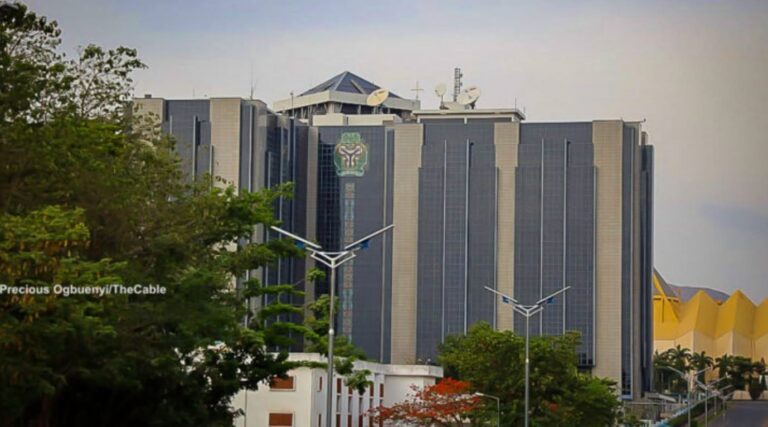
Apparently aware of this quagmire, the CBN Governor, Olayemi Cardoso, speaking during a fireside chat at the European Business Chamber forum, hinted that lending rates may decline in the coming months as inflation continues to ease.
Raising hopes for improved access to credit and stronger investment flows, Cardoso acknowledged that high lending rates have weighed on businesses but explained that the CBN’s priority has been to restore confidence and strengthen the system’s resilience.
We will protect the stability that has been re-established in the financial system with the utmost zeal,” the statement quoted him as saying.
Other News
He projected a future decline in interest rates, citing easing inflation and improved capital allocation efficiency as drivers.
“Our primary objective is to maintain that stability while simultaneously addressing inflation and ensuring that the financial system is sufficiently resilient to facilitate corporate lending and investment”, he said. However, manufacturers have pointed out that at the root of the high lending costs is the CBN’s tight monetary policy.
Specifically, inflation remains elevated, prompting the central bank to maintain the monetary Policy Rate (MPR) of 27.5 per cent and a Cash Reserve Ratio (CRR) of 50 per cent for commercial banks.
The CRR means that banks must keep half of their deposits with the CBN, reducing liquidity and the funds available for lending.
Describing interest rates above 30 per cent as “a death sentence” for businesses, the Chief Executive Officer, Center for Promotion of Private Enterprises, Muda Yusuf while highlighting the high cost of credit and short loan tenures as challenges for businesses, stated that the factors makes financing expansion nearly impossible.
“Short loan tenures which are typically one to two years are unsuitable for investments. Hence, you cannot support industrial growth with short-term funds. The cost and tenure mismatch is killing the enterprise,” Yusuf said.
Also, a recent report by CFG Advisory warned that the widening gap between deposit and lending rates is reducing credit to the real economy. With deposit rates around 5–7 per cent and loan rates exceeding 30 per cent, banks enjoy large margins while businesses struggle.
The advisory firm called on the CBN to explore targeted monetary easing, coordinate with fiscal policy, and implement reforms to attract long-term investment. But, the Chief Partner at SPM Professionals, Paul Alaje, has urged the CBN not to rush into relaxing interest rates as the inflation figures currently reported do not provide a stable basis for such a policy shift.
“I think the CBN is making progress and I hope the policies being churned out will be sustained. Relaxing interest rates should not be now. We need to wait a bit more, maybe a full year cycle before we can consider easing the interest rate or not”, Alaje said.
The stakes are high. SMEs, which provide over 80 per cent of employment in Nigeria, are most vulnerable to the high borrowing costs. Many businesses are unable to borrow, invest, or meet payroll, while larger corporates are beginning to delay capital expenditure projects or seek financing abroad at more favorable rates.
With the Nigerian economy still recovering from years of slow growth, currency volatility, and declining investment, business leaders are calling for a balanced approach, one that tames inflation without strangling credit and undermining private sector growth.