Follow Us on Google
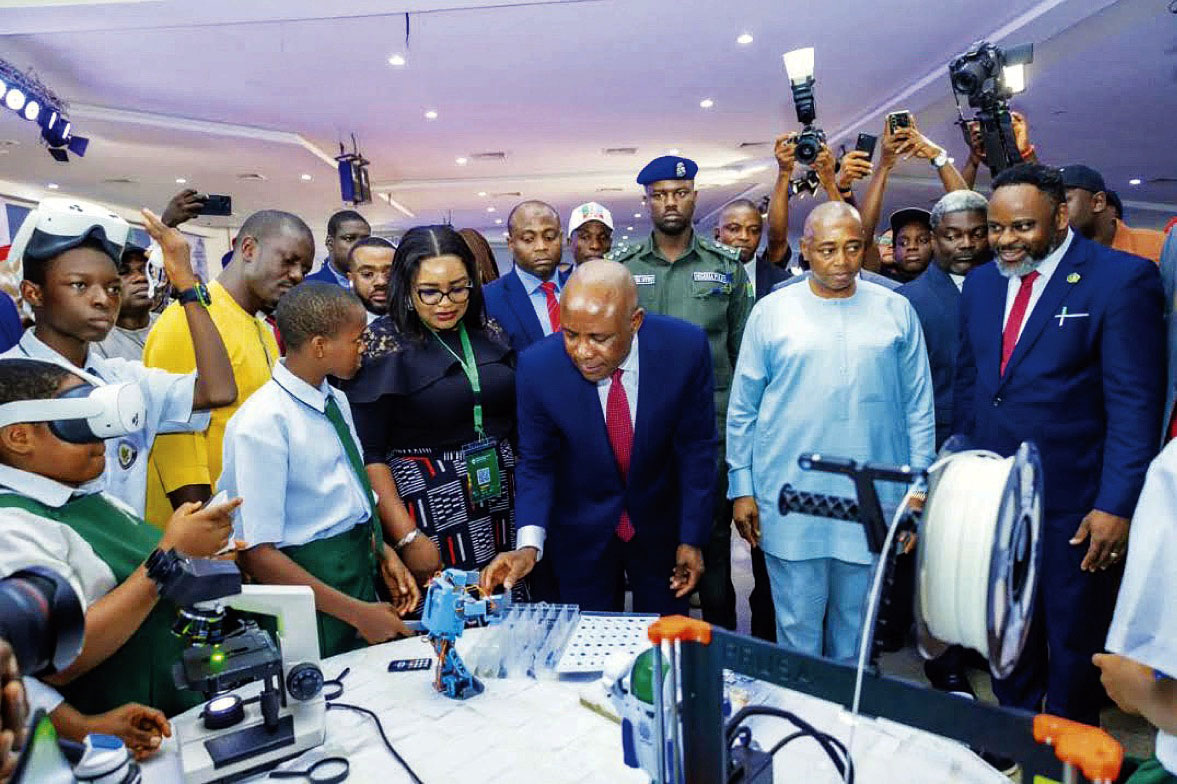
By Peter Mbah
(Continued from back page)
And perhaps it also answers something about what we mean by inclusion. The talent was always there; the intelligence was always there. What was missing was access.
Yet, distinguished guests, evident transformations do not necessarily erase doubts. I understand such doubts.
If you live in a community where the road is poor, where you need running water, where your immediate concern is feeding your family, a Smart Green School can sound like an elitist luxury.
If you are a teacher who has worked in one way for 20 years, transformation can sound suspiciously like somebody telling you that everything you know is obsolete.
And if you are responsible for public finances, committing one-third of a state budget to education raises a perfectly reasonable question: can we afford this?
I would turn that question around: can we afford not to? If we fix the road today but fail to educate the child who will maintain it tomorrow, how sustainable was our investment in the road? If we build factories but lack the skilled people capable of running increasingly sophisticated production systems, where is our own Industrial Revolution going to come from?
If Nigeria is to become a creation economy rather than a consumption economy — a knowledge economy able to compete, collaborate and contribute to the world — then we must equip our young people not simply to use what the world creates, but to research, design, engineer and create what the world needs.
And if millions of young people reach adulthood without the knowledge and capabilities to participate meaningfully in the economy, what exactly do we imagine the social cost of that will be?
I have never regarded our investment in education as discretionary spending. It is preventative investment in the future stability and prosperity of our society.
There is also something that’s unusual – politically – about education. Much of what governments build can be commissioned within a term of office. Education does not give you that satisfaction.
Some of the three-year-olds entering our schools today will not reach the height of their productive lives for another 20 years. I will not be Governor then. Most of us sitting in this hall will never know the full return on the investments we are making now.
I described this recently as a labour of love. We are investing enormous resources belonging to the people in outcomes that may fully reveal themselves only after you have left government.
But that is precisely what leadership sometimes requires. Our responsibility cannot end at the boundary of our tenure. A child’s education lasts far longer than the tenure of a governor or commissioner.
So, I return to the title of this address: “The Audacity of Enugu’s Education Transformation.” Yes. The turn should be that audacity and necessity are not opposites. The deeper you understand the necessity, the more audacious the response has to become.
I’d reshape it like this: yes, perhaps it took some audacity to commit a third of our budget to education. Perhaps it took audacity to attempt 260 Smart Green Schools simultaneously across every ward.
Perhaps it takes audacity to ask an entire education system—government, teachers, parents and children—to step beyond familiar methods and embrace something fundamentally different.
But audacity does not mean acting recklessly. Sometimes it means having the courage to recognise what is necessary — and then acting at the scale that necessity demands.
Because what was the alternative? Nigeria has one of the largest populations of young people on earth. We have enormous ambitions to become a creation economy rather than a consumption economy; a knowledge economy able to compete, collaborate and contribute to the world.
We want to eradicate poverty, create wealth and enable our young people to build meaningful futures here. How do we achieve any of those things without the knowledge base to research, design, produce and create? That is the connection we must make. And once we make it, audacity becomes necessity.
I believe Nigeria has reached the point where we must treat education as a national emergency. Not rhetorically, but in our budgets, our teacher development, our infrastructure, the standards we demand, and the partnerships we build between the Federal Government, states, development agencies, communities and the private sector.
Our future prosperity depends upon the knowledge and capabilities of our people, after all. And that means every Nigerian child, wherever they are born, must have access to an education capable of preparing them for the world they are entering.
Once we understand that, the question changes. It is no longer: can we afford to make this quantum leap? It becomes: What will happen to us if we do not?
Our demographic dividend could be extraordinary. But that future will not simply arrive. We have to build it. And if Enugu’s experience offers one lesson, I hope it is this: when the scale of the challenge demands a quantum leap, audacity is not a luxury. It is a necessity.
Thank you.
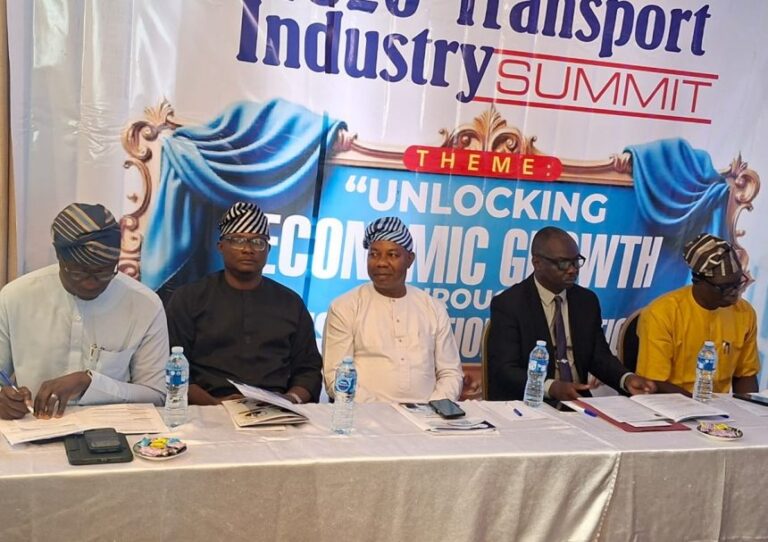
•_Mbah, Governor of Enugu State, delivered this keynote address at the 2026 Enugu State Education Summit themed “Transforming Education for the Future: Leadership, Innovation, Partnership, Financing and Sustainable Reform”