Follow Us on Google
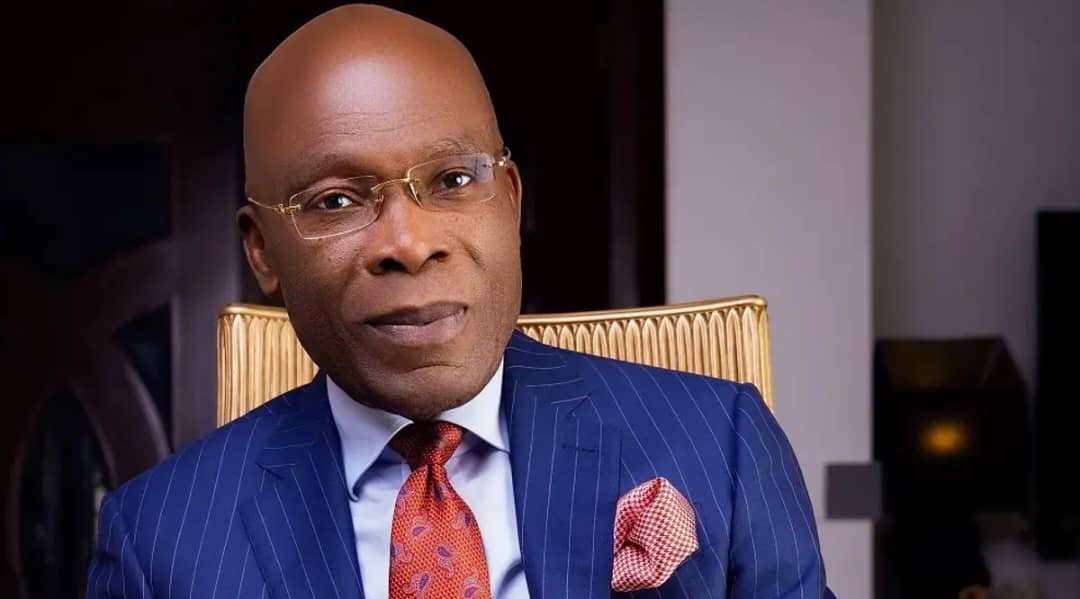
By Chinenye Anuforo
Seventy is an age that invites honesty.
Not the polite honesty of celebration speeches, but the deeper reckoning that asks what a life has truly altered—what has shifted because one individual refused to accept the limits of his time.
As Leo Stan Ekeh turns seventy, the temptation is to recount milestones: companies founded, markets entered, recognitions earned. Yet numbers rarely explain significance. The more compelling question is quieter and more difficult: what idea has his life insisted upon, again and again, despite the resistance of circumstance?
The answer, perhaps, is possibility.
Building in a Country That Doubts Builders
To attempt industry in Nigeria has never been a simple commercial decision. It is an argument with uncertainty—policy that changes tone without warning, infrastructure that withholds cooperation, capital that arrives cautiously and leaves quickly. Many ambitions have dissolved in this atmosphere, not for lack of brilliance, but for lack of endurance.
What distinguishes certain lives is not genius alone, but staying power—the stubborn refusal to abandon belief when evidence grows thin.
Across decades defined by technological upheaval and economic volatility, Ekeh chose persistence over spectacle. While others pursued quick visibility, he invested in slower architecture: distribution networks, institutional trust, technical capacity, and the patient widening of access to digital tools. These are not glamorous achievements. They do not trend. But they are the quiet machinery without which modern economies cannot breathe.
History, when it is finally written with calm hands, often favors such builders.
Technology as Social Equaliser
There is a particular irony in Africa’s relationship with technology. The continent consumes innovation at remarkable speed, yet ownership of the systems that produce it remains limited. Devices arrive finished. Platforms arrive foreign. Participation begins at the level of usage, not creation.
Ekeh’s long career can be read as resistance to that pattern—an insistence that proximity to technology must deepen into participation, and participation into confidence.
Confidence, after all, is the first currency of development. Before nations manufacture hardware or export software, they must first believe they are capable of doing so.
In this sense, the true significance of his work may lie less in commerce than in psychology: the normalization of Nigerian presence inside a sector once perceived as permanently external.
Such shifts are subtle. They rarely announce themselves. But they accumulate, and over time they redraw what younger generations consider possible.
Endurance in the Age of Speed
Modern entrepreneurship worships velocity. Scale quickly. Exit quickly. Begin again.
Longevity, by contrast, receives little applause. It is too patient for headlines.
Yet endurance may be the more radical achievement—especially in environments where survival itself is uncertain. To remain relevant through successive technological eras, shifting from one phase of the digital economy to another without surrendering relevance, requires a discipline deeper than ambition. It demands reinvention without loss of identity, adaptation without panic, vision without noise.
Other News
There is something instructive in such steadiness, particularly for a country often seduced by immediacy. Nations, like companies, are not transformed in moments of excitement but through long obedience to difficult visions.
Wealth and the Burden of Meaning
Milestone birthdays inevitably redirect attention from acquisition to legacy.
What remains when expansion slows?
What speaks when applause fades?
In societies marked by inequality, success is never morally neutral. It raises unavoidable questions about responsibility—how private achievement might translate into public good, how influence might outlive personality, how memory might judge power.
The most meaningful legacies are rarely monuments. They are systems that continue working—institutions strengthened, opportunities multiplied, knowledge transferred to hands that were never in the original room.
Whether measured through enterprise, mentorship, or philanthropy, the enduring value of a life is found in continuation: the evidence that something beneficial will proceed without the founder’s presence.
A Life as National Metaphor
It is difficult to observe seventy years of determined building in Nigeria without sensing metaphor.
The journey reflects the country itself—resilient yet interrupted, ambitious yet constrained, repeatedly tested yet persistently unwilling to surrender hope.
That persistence is Nigeria’s most under-acknowledged resource. Not oil. Not population. But the recurring decision, by ordinary and extraordinary citizens alike, to try again after disappointment.
Lives like Ekeh’s give that decision visible form. They remind a weary public that continuity is possible, that vision can survive turbulence, that time when partnered with discipline can still produce meaning.
What Seventy Really Celebrates
In the end, the significance of seventy is not longevity alone.
It is evidence of sustained relevanceproof that a life’s argument has not been silenced by circumstance.
For Leo Stan Ekeh, that argument has been consistent: that Nigerians can build, not merely import; participate, not merely observe; endure, not merely begin.
Such convictions rarely arrive with fanfare. They work slowly, shaping assumptions, expanding horizons, preparing futures their originators may never fully witness.
And perhaps that is the quiet definition of impact to have altered tomorrow in ways that make celebration feel almost secondary.
Seventy, then, is not simply a birthday.
It is a pause in a longer conversation between one man’s persistence and a nation’s unfinished hope.