Follow Us on Google
• We need help from Lagos, federal govts, they plead
By Kehinde Aderemi
As the year rushes toward its final days, there are indications that catfish, Tilapia and other fish produce might be scarce and very expensive this Yuletide season.
The reason for this that many of the fish farmers in Lagos State, especially those that have earthen ponds in largely waterlogged areas, are still nursing the wounds left by a relentless rainy season.
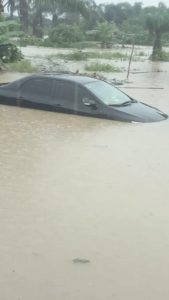
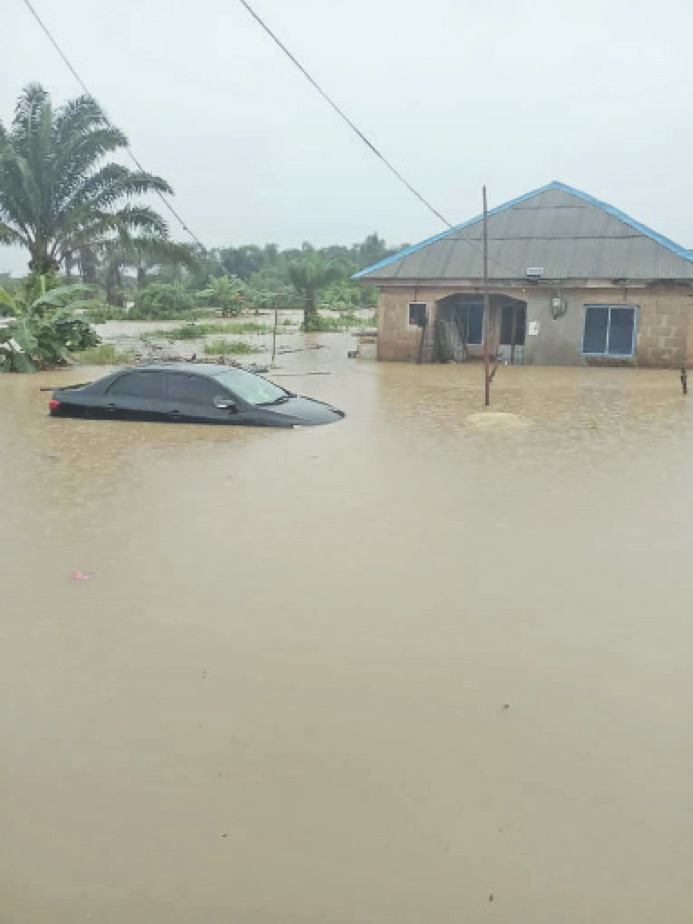
The downpours this year battered the city’s waterways and turned the thriving fish ponds into muddy graves, wiping out millions of naira and threatening the very survival of a community that feeds the capital’s tables.

From the sprawling community of Adamo in Ikorodu North LCDA, through Agunfoye in Igbogbo Baiyekun LCDA, to the wetlands of Ijede, Imota and beyond, farmers have been forced to recount the havoc that floodwaters unleashed on their livelihoods.
Their stories are of loss, resilience, and passionate appeals for help from the state and federal governments.
Narrating his experiences on the cases of flooding that once took over people’s ponds in Adamo area of Ikorodu, Pastor Gbenle Olanrewaju, a farmer who raises catfish, tilapia, poultry and crops, remembered the day the rain wreaked untold havoc on the people of the community.
“There has been an issue of flooding across Ikorodu. We have farmers that lost millions of naira as a result of this flooding. It has been a consistent occurrence.
“For nearly a decade, the flood menace has plagued the community, but this year’s rain was very brutal. It affected mostly those that have their earthen ponds in the waterlogged area of Adamo,”he said.
Olanrewaju described the earthen pond as a natural abode for fishes.
“An earthen pond is a simple, unlined depression dug into the ground, its walls built from the soil that is excavated.
“The natural clay and compacted earth are meant to hold water, making such ponds a common sight in rural and peri urban fish farming. Yet when rain overwhelms the surrounding land, these very ponds become death traps. The problems began with ceaseless downpours that repeatedly flooded the ponds.
“By the end of December this year, demand for fish will be higher than the supply and catfish, tilapia and other products could be scarce and expensive as we approach the Yuletide,” he stated.
According to him, the Lagos State government has made two attempts to intervene, sending officials to dredge a canal that feeds the Itokin waterway.
He regretted, however, that the effort has been hampered by a narrow passage on the express road leading to Itokin.
“The passage is too small to take the amount of water that will go to the other side. That is why even a small rain causes flooding in Adamo.
“This year’s rain was a serious one because it struck the waterlogged areas where many ponds sit, and it even affected many of the houses built alongside the farms.
“Their businesses ware gone. We have people who lost over N14 million, N10 million, and N8 million .It even paralysed the majority of the businesses in that area.
“The crisis also spilled beyond the farms. Buildings near the canals have been swamped, turning everyday life into a struggle.
“The problem we are faced with now is that it even affects houses. So, what we need to do is for the government to support us by dredging the canal. There was a day the Lagos State Commissioner for Agriculture sent his secretary to check the ponds.
“The farmers showed the officials the clogged canal, but they were told the project falls under federal jurisdiction.
“They said the projects cannot be executed by the state government alone because the Itokin road is a Federal road.
“If anything is going to be done, it will probably be a collaboration between the federal government and the state government. We don’t have to wait until it becomes a national disaster. If care is not taken, we don’t know what will happen next year. We don’t know the level of rain that will happen next year.
“Flooding is affecting us in Adamo, and this cut across the majority of places in Ikorodu.
“The last time it rained, there was a passage of water that comes before it gets to the canal, from Adamo to Araro.
“In my presence at Adamo Junction, the water carried about two people—a woman and a young man. It took the grace of God and the intervention of some swimmers to save them very close to the canal. Even motorists will not be able to pass. So, it affects virtually everybody,”
He explained also that the rain came with more force, noting that motorists were also stranded, traders lost their wares, and schoolchildren were unable to reach classrooms.
He said what the farmers need is government intervention.
“My advice is that we need government intervention. It’s not what the Community Development Association can do. It’s not what the state alone can do.
“We need the collaboration of the state government, the local government, and the federal government to please come to our aid. The National Emergency Management Agency (NEMA) should also please come to our aid. We need help. They need to help us to do something about all these other canals.”
For Mr Olusola Ibikunle, popularly known as B. Sugar in Adamo and its environs, his personal experiences on flooding in the past few years cannot be said to be rosy.
Other News
The Ondo-State born farmer said he was happy that despite all the challenges, he is still alive to tell the story.
“When I ventured into the fish farming business, the people that introduced me to the business didn’t tell me from the outset what it takes to survive the challenges of the business.
“That was about 15 years ago. So as time went on, I discovered that there was a difference between theory and practice. What they told me then was purely theoretical.
“But I later discovered that fish farming was like other businesses in the world where there are profits and there are losses.”
Ibikunle recalled that 10 years ago, the location where he and some other farmers had their ponds in Adamo, Ikorodu was spacious and good for the business, he regretted that some people later, for selfish reasons, blocked the passage and water could no longer pass through the normal channels.
“The only challenge we had then was that some people usually came around to steal fishes from the ponds. That was just in small quantities. What they did was to open the covering nets that we used to cover the ponds and made away with the fishes.
“Once we discovered that, we became more vigilant and set traps for the thieves. And since then, we’ve made significant progress in the business.
“But over time, again, some of the people that have their buildings in the area decided to create a kind of passage/ channels to prevent flooding. And we made several efforts together as farmers until heavy flooding took over the whole place.
“We have spent a lot of money to avoid this flooding by creating artificial channels for the passage of the water, but it didn’t work out.
“Many of my business colleagues and co-farmers have abandoned their ponds and stopped doing the business. We used to be more than 20 farmers that were using the ponds but today, we are less than five. The whole farm was destroyed and people have deserted the farm.
“I still remain in the business, not because I’m stronger than others, God has been my pillar. When you are doing something that you spent time and resources, and at the end of the day, flood would just come overnight and destroy everything, you could understand what I mean. It didn’t just announce to us; everything would just disappear.
“It discouraged a lot of us that we started then. A lot of us could not survive the travails.
“The first time I experienced flooding was in year 2020. I lost over N5 million. I still continued until another tragedy of flooding also happened in 2022. It almost tore me apart because I lost over N8 million.
“The one that happened lately was in August this year and I lost my entire business to flood and I am still facing the challenges till date.
“It was like a shock because I never had any premonition that it could rain at that period. It happened in August and I lost over N10 million.
“As we were making efforts to solve the problem, we discovered that some people for their selfish reasons usually block the passage that the water passes and that is why we need government’s support and intervention.
“Whenever it rains and the passage channels are blocked, the floodwaters would flow back to our farms and it would take over the entire ponds.
“That is the major problem we have today because whenever it rains and there is flooding, it takes away all the fishes at a go and that’s it. I have lost virtually all my capital and I don’t intend to go back to the ponds, except at the peak of the dry season.
“When the representative of the Lagos State Government came the other day, they assured us that they would see to it, but nothing has been done as we continue to count our losses.
“Both the state government and the federal government should help us out because it doesn’t make sense for the government to be importing catfish and tilapia from China.
“By December it would be difficult to get catfish, except from those that are not really affected by the flood. Those of us that are providing the product for that market in large quantities have lost everything to flooding and the only thing that can save our businesses is for the government to intervene and help us out through soft loans that are meant for farmers.
As the rains ease and the waters recede, the farmers are left to pick up the pieces of their lives.
They are counting their losses, repairing broken embankments, and hoping that a coordinated effort will prevent a repeat of this year’s disaster. Their resilience is obvious and palpable, but without swift, decisive action from the authorities, the next rainy season could once again wash away not just fish, but the very hope of a community that feeds a city.
A community leader in Adamo, who is also a farmer, Reverend Olushola Akinlade told the reporter that the permanent solution is for the government to build a bridge along Itokin road. According to him, the bridge would be able to accept all the waters that are coming from the streets and pass without causing any havoc.
“The water passing through the culvert at Itokin road came from over 200 streets in Adamo. The volume of water coming from the streets during a heavy rain is usually overwhelming and it can easily overpower the canal.
“The danger of the flood pushing the canal/ culvert along Itokin road out of the original location during heavy rain has been our major fear now as community leaders.
“It may happen anytime and if that happens, it will cut the entire road into two and commuters would not be able to move.
Reverend Akinlade urged the government to dredge the canal and build a bridge that could widen the passage, so water can flow freely to the other side.
“We are appealing to the Lagos State government. We need a permanent bridge here. There will always be flooding because the water that is supposed to pass usually recycles between Adamo and its environs and water could not pass to the other end of the road.
“Unfortunately, the water piles up and the whole of Adamo became flooded. The Ijaw people had a busy day in August when there was a heavy downpour that lasted for 13 hours.
“The water flooded houses and people could not move out. It didn’t only affect the fish farmers but also affected those that have their buildings in the area very close to the express road,” the cleric explained.
The story of Lagos’ flooded fish farms is a sad reminder of how climate induced extremes can cripple even the most industrious sectors.
It is a call to action for all levels of government to unite, dredge the canals, widen the passages, and safeguard the lives and livelihoods that lie in the shadow of the water’s edge before it is too late.