Follow Us on Google
By Ngozi Nwoke
It was a sweltering day in Lagos, the busy commercial hub of Nigeria, when Aisha Aliu, a mother of three living in the Costain area, stood in line at the street water tap, waiting under the scorching sun for her turn to fetch water for her family’s daily needs.

This was her third trip to the tap that day, and she knew it wouldn’t be her last. Water scarcity had become a way of life for Aisha and millions of Lagosians, who are forced to navigate the treacherous waters of water insecurity every day.
Clean water is the essential component of life, a fundamental human right that many Nigerians take for granted. But for Aliu and countless others, it’s a luxury they can’t afford.
The World Health Organisation estimates that access to clean water is essential for human survival, with at least 50 litres of water per person per day required for basic hygiene and food hygiene. Yet, in Lagos, the reality is starkly different.
Despite efforts by the government and international organisations to improve water access, many Lagos residents still struggle to get clean water.
The Lagos State Water Corporation, responsible for providing water to the city’s residents, has made strides in increasing access to piped water, but the reality on the ground tells a different story.
Many residents complain of irregular water supply, with some areas going for weeks without a drop of water.
For Aliu, the scarcity of water means she has to rely on local artisans who supply water at exorbitant prices. A 25-litre keg costs around N200, and she buys six to seven of the kegs daily, a significant chunk of her family’s budget. But she has no choice; it’s either buy water and have it supplied to your house or fetch it by yourself.
“I have no choice but to buy water to be supplied to my house. Fetching it myself means waking up at as early as 6am and also leaving the house by 4pm daily to join a long queue at the well, and even then, you’re not guaranteed to get any because of the long queue.
“With my household chores and taking care of the kids, I don’t have the time for that. It’s a tough life, but what can I do? My children need water to drink, to bathe, to cook. I would rather sacrifice other things than have them go without water.”
As she fills her buckets with water, she looks up at the sky, praying for rain. “Water is life,” she says, “Without it, we’re nothing.”
Her words echo the sentiments of millions of Nigerians who are crying out for a reliable and clean source of water. It’s time for the government and stakeholders to listen and act.
But not everyone is as fortunate. Toyin is a single mother of two who lives in a makeshift shack on Ijero Street around Iponri. Her water source suddenly became contaminated when it turned brown, a breeding ground for waterborne diseases. Then it stopped flowing completely.
“When we moved into this house, the caretaker assured me of regular water flowing inside the house. But a few months after we moved into the house, the water was no longer flowing. The caretaker said there’s no water in the ground, and tenants will pay money to drill the ground again for clean water. So I resorted to buying water until I can pay my share to drill the borehole.”
Toyin’s story is not unique. Many Lagosians are forced to rely on contaminated water sources, leading to a surge in waterborne diseases like cholera, typhoid, and diarrhoea.
But it’s not just the poor who are affected. Even those with access to piped water often find themselves with contaminated water flowing from their taps.
Mrs. Flora Obi, a middle-class resident of Lekki, says she’s always worried about the quality of her water. “Sometimes, the water is brown, and it smells terrible,” she says, wrinkling her nose in distaste. “We have to buy sachet water for cooking and bottled water for drinking, but they are extremely expensive and not sustainable.”
The scarcity of water has also given rise to a thriving water market, with local artisans and vendors supplying water to those who can afford it. The likes of Aliu, Toyin and Mrs Obi, are forced to pay exorbitant prices for water that’s often of questionable quality.
A 20-litre jerry can cost around ₦200, while a 1,000-litre tank costs around ₦5,000. It’s a lucrative business, but one that preys on the desperation of those who need water the most.
On the island of Lagos, the challenge of getting clean water is a daily struggle for residents. Despite being surrounded by water, many islanders are forced to rely on expensive and often contaminated water sources.
Kelvin Adam, a resident of Victoria Island, says he has spent thousands of naira on water in the past month alone. “The water from the tap is not safe for drinking, so we have to buy sachet water or rely on water vendors who bring it to our doorstep.”
He expressed concern over the increasing reliance on borehole drillers for access to groundwater in the community.
“Borehole drillers have become a crucial part of Lagos’ water landscape, with many residents relying on them for access to groundwater. However, their involvement has also raised concerns about the sustainability and safety of the water supply.”
According to Adam, many borehole drillers operate with little regulation, often drilling wells without proper testing or treatment, which can lead to contamination.
“In some cases, boreholes are drilled near septic tanks, waste dumps, or industrial sites, increasing the risk of water pollution. This unregulated drilling has contributed to the depletion of groundwater resources and increased the risk of waterborne diseases,” he warned.
The resident called on the authorities to take immediate action to regulate the borehole drilling industry and ensure that residents have access to clean and safe water.
The Lagos State Government has been urged to investigate the matter and take necessary measures to address the issue.
The scarcity of clean water has become a major concern for island residents, who are forced to prioritise their budgets to accommodate this basic necessity.
The story is the same on the mainland, where residents of densely populated areas like Ajegunle and Mushin struggle to access clean water.
Here, the water crisis is exacerbated by poor infrastructure and inadequate waste management. Residents are often forced to rely on contaminated streams and wells, which pose serious health risks.
The lack of access to clean water has become a ticking time bomb, waiting to unleash a public health crisis on the unsuspecting population.
The Lagos State Government has acknowledged the challenges and is working to improve water access.
Similarly, the Lagos State Water Corporation embarked on an ambitious project to increase water production and distribution, with plans to add 500 million litres of water to the system by 2025 which is one month gone without the project being achieved as residents still suffer unbearable water issues.
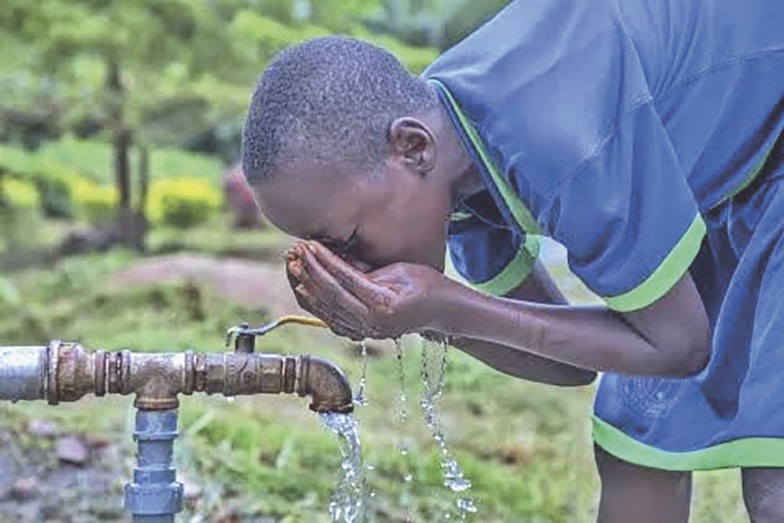
In the face of the water scarcity and unclean water crisis, children are disproportionately affected the most, as they are more susceptible to waterborne diseases like cholera and diarrhoea as their immune system is low.
They may miss school due to water-related illnesses or fetching water. They can suffer from malnutrition and stunted growth due to inadequate hydration and sanitation. They are often tasked with fetching water, risking their safety and education.
More than 1.42 billion people, including 450 million children, are living in areas of high or extremely high water vulnerability, according to new analysis released by the United Nations Children’s Fund (UNICEF).
This means that one in five children worldwide does not have enough water to meet their everyday needs. The figures in Nigeria are particularly worrying, with 26.5 million Nigerian children experiencing high or extremely high water vulnerability.
“The world’s water crisis is not coming – it is here, and children are its biggest victims. When wells dry up, children are the ones missing school to fetch water. When droughts diminish food supplies, children suffer from malnutrition and stunting.
“When floods hit, children fall ill from waterborne illnesses. When water is not available in Nigerian communities, children can not wash their hands to fight off diseases,” said Peter Hawkins, UNICEF Representative in Nigeria.
Consequently, poor access to improved water and sanitation in Nigeria remains a major contributing factor to high morbidity and mortality rates among children under five.
The use of contaminated drinking water and poor sanitary conditions result in increased vulnerability to water-borne diseases, including diarrhoea, which leads to deaths of more than 70,000 children under five annually.
Reacting to the water crisis, the Lagos State Government announced plans to increase its water supply to 100 million gallons daily by 2027 as part of efforts to address the state’s perennial water scarcity issue.
Commissioner for Environment and Water Resources, Tokunbo Wahab, disclosed this during an inspection tour of the Adiyan Water Works I and II, stating that the project is expected to significantly boost the state’s water supply capacity.
The Adiyan Water Works project involves the construction of a 320,000 cubic metres per day water treatment plant and the installation of an 8.1-kilometre pipeline to transport raw water to the treatment plant.
According to Wahab, the project is expected to be completed by the last quarter of 2027 and will provide pipe-borne water to the majority of households in Lagos.
The Lagos State Government has also allocated significant funds to the project, with over N16 billion allocated to the Lagos Water Corporation between 2019 and 2023.
However, despite these efforts, Lagos still faces a significant water shortage, with a daily demand of 540 million gallons, far exceeding the current production capacity.