Follow Us on Google
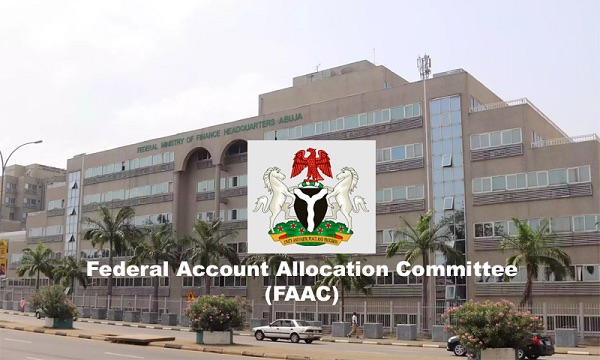
Lagos State has overtaken Nigeria’s major oil-producing states to emerge as the biggest beneficiary of Federation Account allocations in the first half of 2026, receiving N365.78 billion.
The figure represents a 54.39 per cent increase, or N128.86 billion, from the N236.92 billion the state received in the corresponding period of 2025.
The latest figures, based on an analysis of Federation Account Allocation Committee (FAAC) disbursements, show that Lagos moved from third position in the first half of 2025 to the top spot in the first six months of 2026.
Lagos’ performance is particularly significant because, unlike the major oil-producing states, it does not receive revenue from the 13 per cent derivation fund.
Instead, its huge share of the Federation Account was driven mainly by its strong contribution to Value Added Tax (VAT), its large economic base and its share of statutory revenue.
The state received N344.06 billion in net VAT allocation during the period, making VAT the major driver of its FAAC earnings. It also received N10.91 billion from the net statutory revenue pool.
The development highlights the growing importance of non-oil economic activity to Nigeria’s revenue-sharing system, with states that have large commercial and business centres increasingly benefiting from VAT and other federally collected revenues.
Delta State, which occupied the top position in the first half of 2025, slipped to second place with N331.43 billion.
Delta’s allocation increased from N299.96 billion in the same period last year, representing a 10.49 per cent rise.
However, the oil-producing state continued to benefit heavily from the 13 per cent derivation principle. It received N229.71 billion in derivation revenue during the period, the highest among the states.
Rivers State ranked third with N295.99 billion, up from N264.90 billion in the first half of 2025. Its allocation increased by N31.09 billion, representing an 11.74 per cent rise.
Akwa Ibom followed with N270.27 billion, compared with N230.99 billion a year earlier, while Bayelsa received N266.72 billion, up from N229.56 billion.
Together, the figures show that oil-producing states remain major beneficiaries of the Federation Account, although Lagos’ strong VAT contribution has enabled it to surpass them.
At the other end of the ranking, Kano received N152.57 billion, while Oyo recorded N139.09 billion.
Ondo received N113.04 billion, Jigawa N111.61 billion and Borno N109.65 billion.
Other News
The 10 leading states collectively received N2.16 trillion in net FAAC allocations during the first half of 2026, compared with N1.74 trillion in the corresponding period of 2025.
This represents an increase of N416.83 billion, or 23.97 per cent.
Across all 36 states, total net FAAC disbursements rose from N3.61 trillion in the first half of 2025 to N4.54 trillion in the first half of 2026, representing a 25.77 per cent increase.
The top 10 states therefore accounted for 47.47 per cent of all net FAAC allocations to the states during the period.
The figures also show the continuing concentration of Nigeria’s federally distributed revenue among a relatively small number of states.
The top 10 states accounted for 92.66 per cent of total derivation revenue, 53.25 per cent of net statutory disbursements, 44.02 per cent of net VAT disbursements and 41.04 per cent of Electronic Money Transfer Levy (EMTL) distributions.
The strong performance of Lagos comes as the state continues to dominate Nigeria’s economic activity, with a large concentration of companies, financial institutions, manufacturers, retailers and other businesses.
Its position also underscores the growing role of VAT in the revenue available for distribution to states.
Unlike derivation revenue, which is closely linked to mineral production, VAT receipts are influenced by the volume of economic transactions and consumption across the country.
The figures suggest that states with large and active economies can benefit substantially from the Federation Account even without oil production.
For oil-producing states, however, derivation remains a major component of their earnings.
For instance, Delta and Akwa Ibom each received more than N169 billion in derivation revenue during the six-month period, while Bayelsa received N169.26 billion. Ondo also received N21.73 billion from derivation.
The increase in FAAC receipts provides state governments with additional resources to fund infrastructure, salaries, social programmes and other public services.
However, the higher allocations also increase pressure on state governments to demonstrate better financial management and translate increased revenues into tangible improvements in the lives of residents.
The figures further underline the changing structure of Nigeria’s public revenue, where oil remains important but taxes, particularly VAT, are becoming increasingly significant in determining how much states receive from the Federation Account.