Follow Us on Google

I am going for cataract surgery.
It is a small operation, they tell me. The cloudy lens will be removed and replaced with a clear one. I will see better. Colours will return. The world may become sharper. But there is another kind of seeing that surgery cannot restore: the seeing of the past.
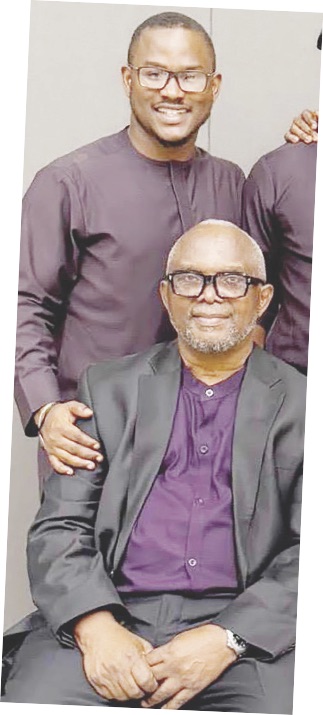
Recently, my twin son, Kehinde Awoyinfa, managing director of Triangle, a Lagos-based company that designs and installs high-end hi-fi audio systems in luxury homes and offices, came to my house on the occasion of his mother’s 70th birthday and did something I am still trying to forgive him for.
He took away my records. Almost 50 of them, if not more.
He said vinyl records are back in vogue. Just when we thought they had gone the way of the dinosaur, the old-fashioned black disc is enjoying a remarkable comeback. In an age when music is available at the touch of a button, vinyl is spinning its way back into fashion.
What is the attraction? Nostalgia, perhaps. There is something magical about pulling a record out of its sleeve, placing it on a turntable, lowering the needle and hearing that familiar crackle before the music begins. Unlike streaming, vinyl offers a physical connection with music: the album cover, the printed lyrics, the ritual of turning the record over to play the other side. It is an experience, not just a sound.
The compact disc, or CD, once displaced vinyl as the modern way to listen to music. Then came the digital revolution, with music reduced to invisible files and endless playlists. Now, vinyl is enjoying a second life, attracting old music lovers eager to revisit their past and younger listeners discovering the pleasure of owning records. Perhaps the past has refused to be buried after all. It is simply waiting for somebody to put the needle back on the record.
Now, back to my son’s story.
I watched him carry away album after album. I permitted him to do it. That is the part that still hurts. It was like watching somebody set fire to my library while I stood there holding the matchbox.
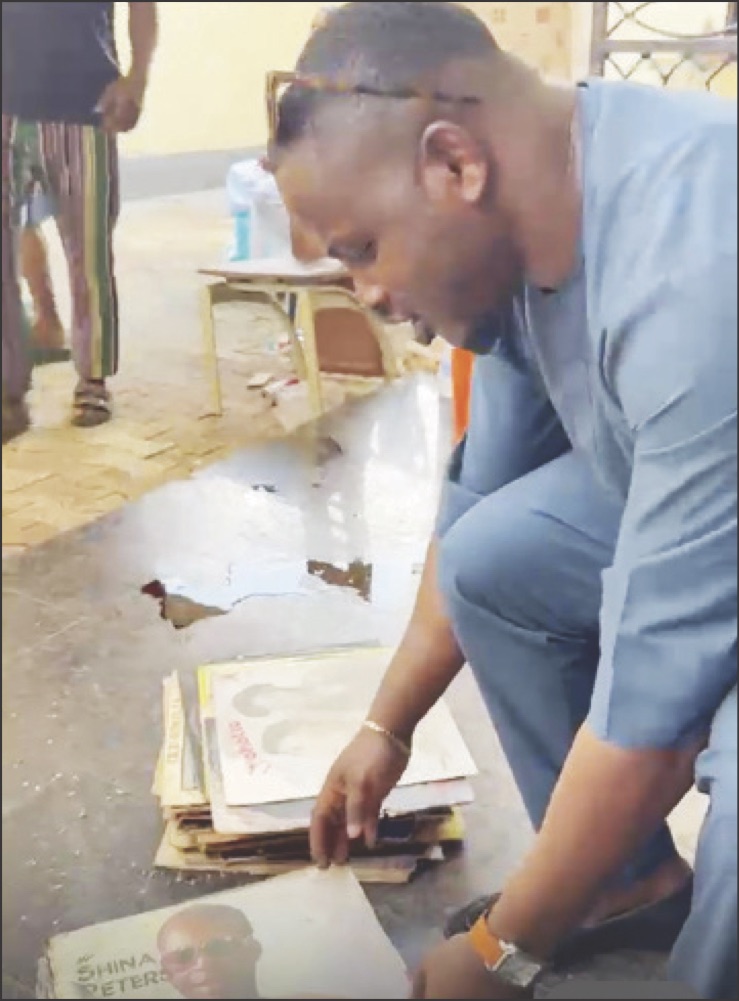
Only this was a library without books. It was a library of sound.
My old vinyl albums were not just pieces of black plastic. They were the soundtrack of my life. There was Michael Jackson. The Jackson 5. Diana Ross and The Supremes. Marvin Gaye. Stevie Wonder. Barry White. Lionel Richie. Sting and The Police. Scorpions. Funkadelic. And Bob Marley.
There was Majek Fashek, our own Bob Marley, whose voice seemed to rise out of the Nigerian soil and speak to the world. There was Shina Peters and Shinamania, the album that helped give juju music a new kind of electricity among young people.
There was King Sunny Ade’s Authority. There was Ebenezer Obey. There was Sonny Okosun. There was Fela’s Zombie. There was Kris Okotie. And there was the Jackson 5’s Skywriter.
Each album was a door. You opened the door, dropped the needle and entered another time. That is what my son probably did not fully understand.
He saw old records. I saw my youth. I saw rooms in which I had listened to music. I saw people who were still alive in my memory but had disappeared from the world. I saw old friendships, old loves, old ambitions and old disappointments. I saw myself. Even the albums I rarely played had stories attached to them.
And then there was Miles Davis. How could I forget Miles? I am a disc jockey. A Miles Davis man. A very big fan of this jazz trumpet genius. His music has followed me through different seasons of my life, from the coolness of Kind of Blue to the more adventurous sounds that came later.
Other News
More recently, I discovered another side of John Coltrane. A Love Supreme grabbed me because it had melody, structure and spirituality. You could feel the music breathing.
Then came Ascension. What was this? Chaos! At least that was my first reaction. It sounded as if Coltrane had opened the door and allowed an army of saxophones to rush into the room. No gentle melody to hold on to. No easy place to rest.
But I am still listening. Perhaps that is what old records teach us. You do not always understand a piece of music the first time. Sometimes you have to live with it.
My collection even contained a very special record: the late Julie Pip of Denyo fame. Julie was not merely another name in my collection. Her album carried three songs written by me. Imagine that. Three pieces of my own writing pressed into vinyl.
A journalist who spent his life writing for newspapers had somehow found another way of putting words into the world. My words had found their way onto records.
Those albums were not only music. They were evidence that I had lived, listened and created.
Now they are gone from my house. I keep thinking of the expression, “willing away your treasure while still alive.” That is what it felt like. I had not died. Nobody had inherited anything. I was still here. Yet I watched my son carry away almost 50 albums that had accompanied me through decades.
Perhaps Kehinde will someday understand. Perhaps when he reaches my age, he will look at something he has kept for 40 or 50 years and realise that its value has nothing to do with its market price. The value lies in the memories attached to it.
A son may look at an old record and see vinyl. A father may look at the same record and see his life.
And now I am going for cataract surgery. The doctor will remove the cloudiness from my eyes. I hope to come out seeing the world more clearly. But there is one thing I do not want my new eyes to miss. I do not want to forget the things I have already seen: the records, the music, the people, the places, the voices, the songs, the crackle of the needle finding its groove, the first notes coming out of the speakers.
Miles. Fela. Marley. Majek. Sunny Ade. Obey Baba Miliki. Shina Peters. Stevie Wonder. Marvin Gaye. Michael Jackson. Diana Ross. Barry White. Funkadelic. The Police. And Julie Pip, with three songs carrying my words.
Those were not simply records. They were chapters.
And somewhere in my son’s house, nearly 50 chapters of my life are now sitting in a pile.
Kehinde, my son, you may have taken the vinyl. But you did not take the music. You could not. The music is still inside me.
And perhaps that is the greatest thing about music. You can take away the record. You cannot take away the memory.