Follow Us on Google
By Chinenye Anuforo
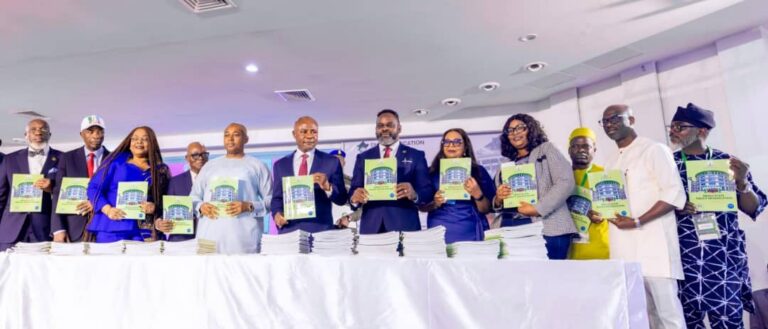
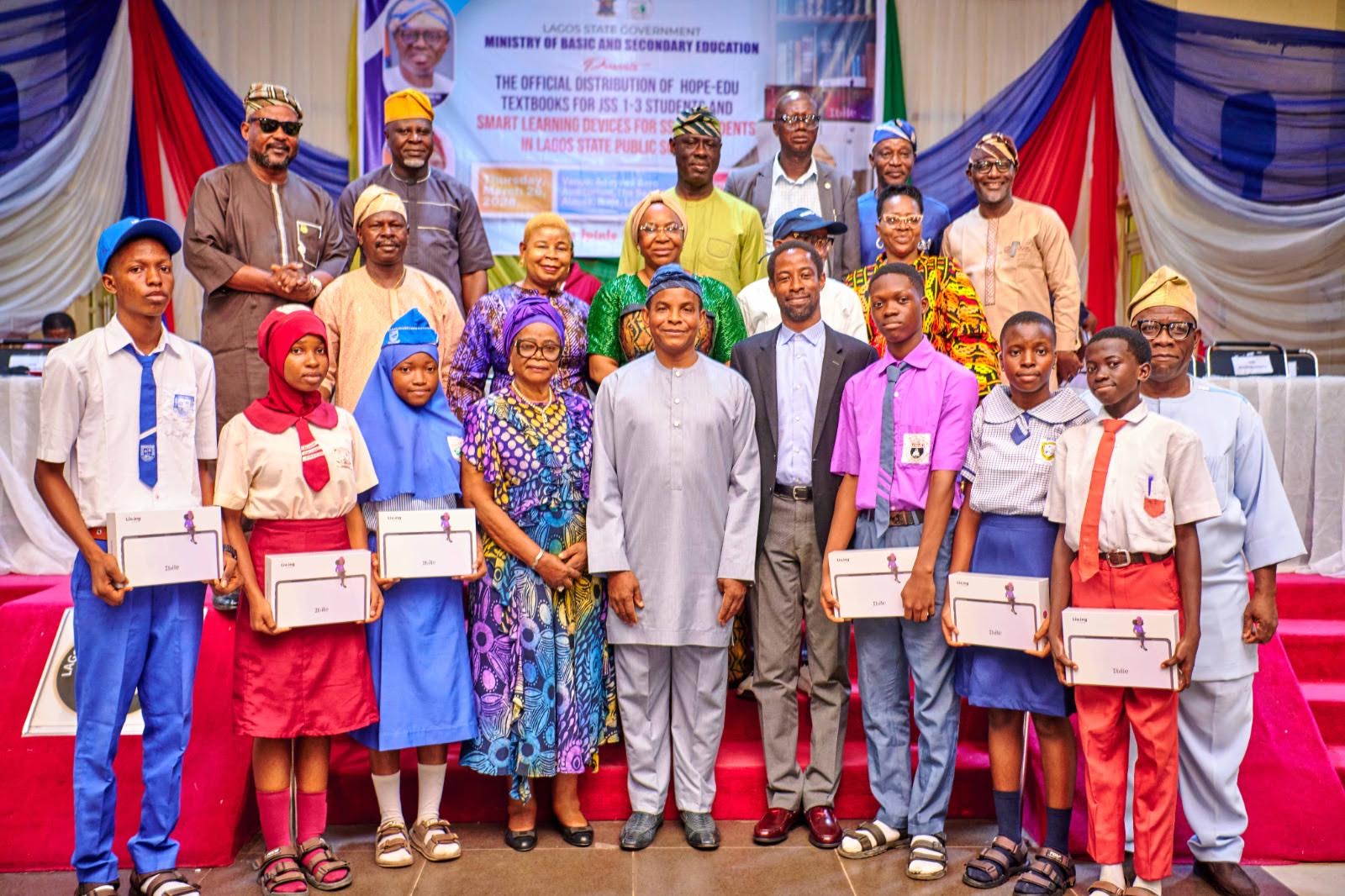
The Lagos State Government has scaled up its digital learning drive with the distribution of smart learning devices and core textbooks to students across the state, reinforcing its ambition to build a future-ready education system.
The initiative, driven by Governor Babajide Olusola Sanwo-Olu under the education and technology pillar of his T.H.E.M.E.S Plus agenda, marks a significant transition from emergency pandemic interventions to a structured, long-term reform of the state’s education sector.
At the centre of the rollout is the Ministry of Basic and Secondary Education, led by Commissioner Jamiu Tolani Alli-Balogun, which has intensified efforts to institutionalise digital learning while strengthening foundational literacy across public schools.
Thousands of “Hope Digital Learning Tablets” are now being distributed to public secondary school students, equipped with curriculum-aligned content including interactive lessons, instructional videos, mock examinations, and life skills materials. The devices, powered by Liv.ing data-enabled SIMs and the Roducate platform, are designed to ensure uninterrupted access to quality education both in and outside the classroom.
Despite the technology-driven approach, the government has retained a strong emphasis on the provision of simplified core textbooks, recognising their role in reinforcing comprehension and improving academic performance.
Other News
Education stakeholders say the initiative reflects a deliberate strategy to combine innovation with traditional learning tools, a balance seen as critical to sustainable educational development.
The impact of earlier interventions is already evident. Lagos recorded an 80 per cent pass rate in the West African Senior School Certificate Examination (WAEC) in 2021, with projections indicating further improvement as the programme expands.
With over 600,000 public secondary school students expected to benefit, the initiative also introduces performance-based incentives for students, teachers, and parents, while promoting inclusive learning through improved connectivity and community engagement.
Speaking on the development, Governor Sanwo-Olu said the programme goes beyond digital devices.
“We are enabling access, opportunity, and a future where every child can learn, grow, and succeed,” he said.
Analysts noted that the scale and structure of the programme position Lagos as a leading model for education reform in Nigeria, particularly as states grapple with aligning learning systems to the demands of a digital economy.