Follow Us on Google
With the submission of the All Progressives Congress (APC)’s final list of candidates to the Independent National Electoral Commission (INEC), the curtain has finally fallen on weeks of intense lobbying, protests, allegations of manipulation and backroom negotiations that trailed the party’s controversial primary elections in Lagos.
Administratively, the process is over. Politically, however, the consequences are only beginning to unfold. Barring court intervention or lawful substitution, the APC has settled its candidates for the 2027 general elections. But the bigger challenge confronting Nigeria’s most dominant state political machine is no longer candidate selection; it is reconciliation. The party must now heal the wounds inflicted by one of the most fiercely contested primary exercises in its recent history.
For a party that has governed Lagos uninterrupted since the return to democracy in 1999, maintaining internal cohesion has always been as important as defeating opposition parties. This time, however, the divisions exposed by the primaries appear deeper and more public than in previous election cycles.
Across the state, aggrieved aspirants openly challenged the outcome of the exercise.
Demonstrations erupted in several locations, while allegations of irregularities, delegate list manipulation, result alteration and imposition dominated political discussions. Party elders were repeatedly called upon to intervene before the disagreements escalated into a full blown crisis.
Perhaps the most striking outcome of the primaries was the scale of casualties among sitting lawmakers.
Out of the 40 members of the Lagos State House of Assembly, 14 failed to secure return tickets, while 24 incumbents survived the primaries and remain positioned for re-election, subject to victory at the general polls.
Among the most prominent casualties were the Majority Leader, Hon. Noheem Adams, the Chief Whip, Hon. Fatai Mojeed, and the Deputy Chief Whip, Hon. Setonji David. Several other experienced lawmakers also failed to make the final list. They include Desmond Elliot (Surulere Constituency I), Gbolahan Ogunleye (Ikorodu Constituency I), Lanre Afini (Lagos Island I), Stephen Ogundipe (Oshodi-Isolo I), Obafemi Saheed (Kosofe II), Bonu Solomon (Badagry II), Emmanuel Oloto (Ifako-Ijaiye II) and Jubreel Abdulkareem (Agege II).
The shake up was not limited to the State Assembly. Some members of the House of Representatives, including Hon. Kafilat Ogbara representing Kosofe Federal Constituency and Ganiu Adele Ayuba representing Alimosho Federal Constituency, among others, also failed to secure return tickets.
Taken together, the outcome represents one of the most significant legislative turnovers in Lagos since 1999. It signals not merely a change of faces but a major restructuring of the state’s political architecture and the gradual dismantling of alliances that had dominated the Assembly for years.
The primaries exposed an intense struggle for influence within the Lagos APC involving multiple power centres, including loyalists of President Bola Tinubu, supporters of Seyi Tinubu, the Chief of Staff to the President, Femi Gbajabiamila, Speaker Mudashiru Obasa, influential local government chairmen and the powerful Governance Advisory Council (GAC).
Far from being routine intra-party contests, the primaries became a test of political relevance among competing interests seeking to shape the future direction of Lagos politics.
They also reflected the lingering aftershocks of the 2025 Lagos Assembly leadership crisis, which exposed cracks within the state’s long established political structure.
For decades, Lagos APC politics has largely revolved around two dominant tendencies, the Mandate Movement and the Justice Forum. The outcome of the primaries suggests that the balance of influence may now be shifting, with the Justice Forum tendency and grassroots structures controlled by local government chairmen appearing to have gained considerable ground.
Across several constituencies, former council chairmen, younger politicians and first time aspirants displaced established lawmakers with surprising ease. In Kosofe, Alimosho, Oshodi-Isolo, Lagos Island, Badagry and several other areas, fierce contests highlighted the growing contest between entrenched political interests and an emerging generation of grassroots actors.
One clear lesson from the exercise is the increasing importance of local political structures. Many incumbents who had relied heavily on endorsements from influential party leaders discovered that such support alone was no longer sufficient.
Once elite backing weakened, many found themselves without strong ward level mobilisation capable of withstanding organised grassroots opposition.
The primaries therefore reinforced a new political reality in Lagos: incumbency is no longer a guarantee of survival. Political longevity now depends increasingly on maintaining strong relationships with local party structures, council leadership and the dominant caucuses that shape delegate mobilisation. No political figure perhaps illustrates this changing reality more than the Speaker, Mudashiru Obasa.
Although Obasa will not be returning to the Lagos State House of Assembly, having opted to contest for the House of Representatives ticket following his unsuccessful bid for the Lagos West Senatorial ticket, political observers remain focused on another development: the defeat of virtually all candidates widely believed to enjoy his support, particularly in Agege and surrounding areas.
To many analysts, the outcome represents a significant reduction of Obasa’s political influence. Others interpret it as evidence that no individual, regardless of status, is bigger than the collective interests and calculations within the Lagos APC. Whether viewed as political rebalancing or the natural evolution of party politics, the message appears unmistakable: influence within the party remains fluid and must continually be earned.
Other News
Opinions remain divided over whether the large scale replacement of lawmakers ultimately strengthens or weakens the party. Supporters argue that leadership renewal has become necessary after years of complaints about political stagnation. They believe the emergence of younger candidates could inject fresh ideas, improve representation and reconnect the party with grassroots aspirations. Critics, however, caution against sacrificing legislative experience in pursuit of political expediency. Effective lawmaking depends not only on popularity but also on institutional memory, procedural knowledge and committee experience.
The departure of numerous ranking legislators means the incoming Assembly could face a steep learning curve before attaining the level of effectiveness achieved by its predecessors. Equally significant was the unusually public nature of the grievances that followed the primaries.
Unlike previous election cycles, where disputes were largely resolved behind closed doors, dissatisfied aspirants openly challenged the process through protests and media engagements. Several groups insisted their demonstrations were not orchestrated by any political leader but reflected genuine concerns over the credibility and transparency of the exercise.
Whether those allegations were justified or not, the protests revealed underlying tensions that had long existed beneath the surface of the party’s impressive electoral record.
For every aspirant celebrating victory today, another influential party member is nursing disappointment. Many unsuccessful aspirants command formidable political structures, enjoy significant grassroots loyalty and possess considerable financial and organisational capacity. If their grievances are poorly managed, the consequences could extend beyond internal party disagreements to voter apathy, passive resistance, quiet sabotage or even defections that strengthen opposition parties. History has repeatedly shown that political parties rarely lose elections solely because of opposition strength. More often, they suffer from unresolved internal conflicts. This reality places enormous responsibility on the APC leadership.
Candidate selection may have ended, but reconciliation has become the party’s most urgent assignment. Winning elections requires far more than presenting candidates; it demands keeping disappointed stakeholders invested in the collective project. Fortunately for the party, its leadership appears conscious of this challenge.
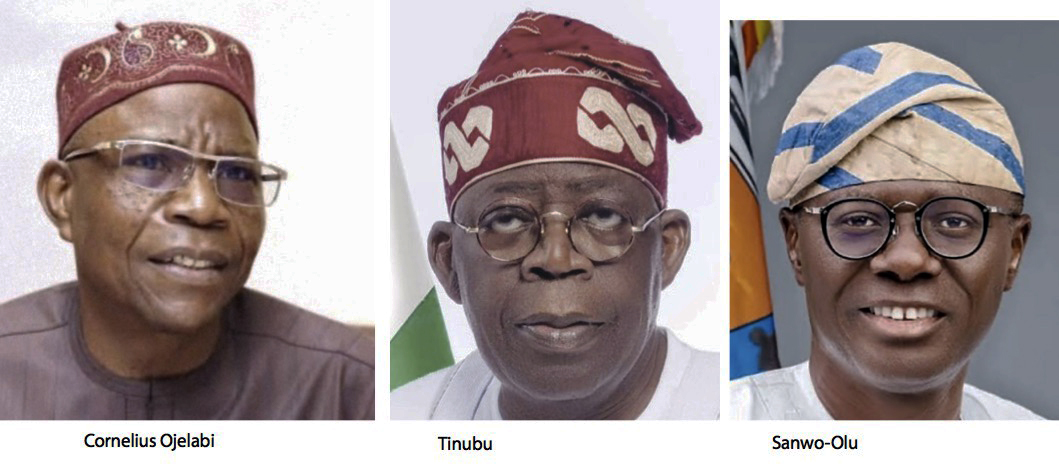
Recently, the Lagos APC Chairman, Pastor Cornelius Ojelabi, appealed to aggrieved members to accept the outcome of the primaries and work for the unity and progress of the party. Speaking while receiving APC members and supporters from Badagry Division at the party’s state secretariat in Acme, Ojelabi described the primaries as one of the most competitive in the history of the Lagos chapter.
According to him, the party provided aspirants with opportunities through both consensus and direct primary options, while insisting that every political contest inevitably produces winners and losers.
“The primaries have come and gone. Let us unite and move forward together. Those who may feel aggrieved should remember that this is our common house,” he urged.
He also expressed appreciation to President Bola Tinubu for what he described as leadership that continues to strengthen democratic processes within the party, while urging members to consolidate on the foundation already laid ahead of the general elections. Whether those appeals will be sufficient remains uncertain.
Politics is ultimately driven not only by persuasion but also by negotiation, accommodation and compromise. The coming months will reveal whether private reconciliation meetings, strategic appointments and renewed consultations can successfully rebuild trust among disappointed stakeholders.
The stakes are particularly high because Lagos remains the political base of President Tinubu and the APC’s strongest electoral fortress.
Consequently, every major political development within the state’s ruling party inevitably attracts national attention. How the Lagos APC manages post primary reconciliation will therefore serve as an important indicator of its organisational discipline and internal democratic culture ahead of the 2027 general elections.
The party enters the campaign season from a position of undeniable electoral strength, but strength alone does not guarantee victory. Unity, discipline and effective conflict management often determine whether dominant parties retain their advantage or gradually weaken from within. The submission of candidates’ names to INEC has closed one important chapter. Another, arguably more difficult, chapter has now begun.
The weeks ahead will witness fresh political realignments, renewed negotiations and strategic calculations as different interests seek accommodation within the party’s evolving power structure. These developments will determine whether the bitterness generated by the primaries gradually subsides or hardens into lasting divisions.
The die has indeed been cast.
Yet the APC’s electoral fortunes in Lagos will depend less on the names submitted to INEC than on its ability to convince aggrieved members that they remain valued stakeholders in the party’s future. If reconciliation succeeds, the APC may once again demonstrate why it has dominated Lagos politics for more than two decades. If it fails, the controversies surrounding the primaries could become the opposition’s most potent campaign message in 2027.
For now, the contest has moved beyond candidate selection. It is now a battle to rebuild trust, restore unity and convince every faction that the party’s collective victory is ultimately more important than individual ambition.
Whether influential losers, including Obasa and others, have genuinely accepted the new political reality remains one of the unanswered questions that will shape the road to 2027. The answer may ultimately determine not only the APC’s internal stability but also the character of the next electoral contest in Nigeria’s most politically strategic state.