Follow Us on Google
By Simeon Mpamugor
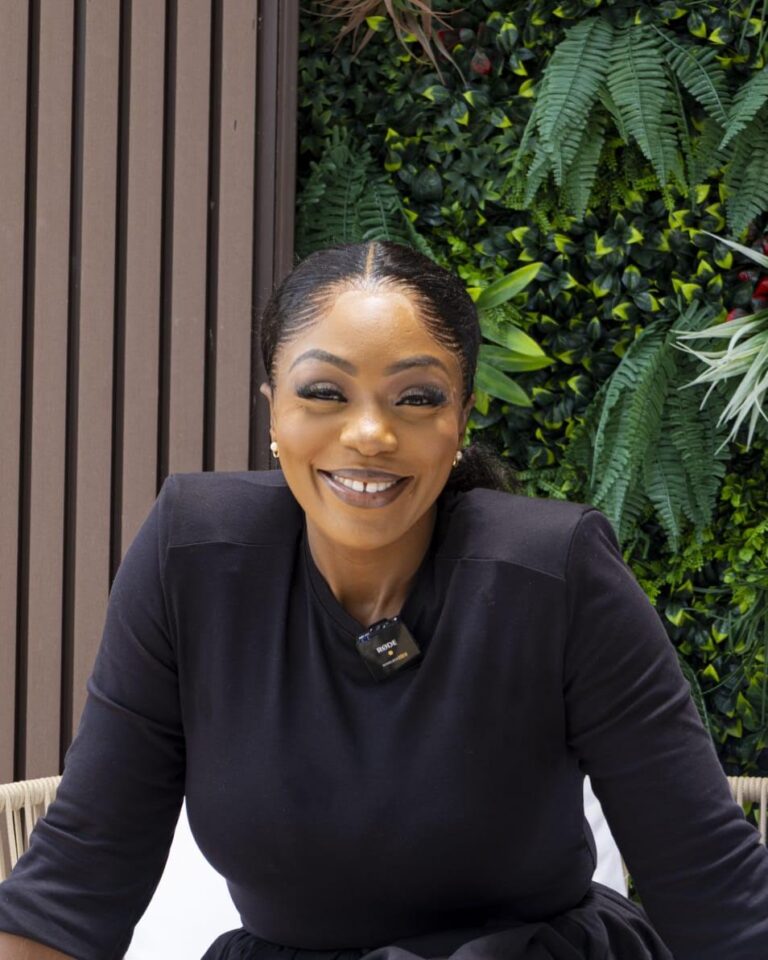
A UK- born-Nigerian lawyer, writer and social justice advocate, Konyere Adiele-Uzoma holds a professional doctorate degree in Peace and Conflict Resolution. With three decades of experience in her kitty while specializing in debt recovery, legal drafting and document review, Adiele-Uzoma proved her mettle when she successfully challenged the “one hair colour” rule which discriminated against the ethnic minority children in an educational institution in the UK.
In this interview, she recalled the major influences that her as a writer, Nigeria’s conflicts resolution mechanism especially in the use of Alternative Dispute Resolution (ADR) as a strategic instrument of decongesting the courts and other issues.
As a writer, what kind of issues naturally provokes or wins your storytelling and writing energy?
There are a wide variety of issues that provoke my innate reaction but I would say that issues which endear me the most are the ones that border on the effect of the circumstances of one’s upbringing. I strongly believe in the concept of “nurture” rather than “nature. At the core of most of my writings are covert – or sometimes overt- laddened views which establishes an under or over-toning desire to not only educate but genuinely motivate a generation into deviating from proven patterns that negatively harm. My persuasive need to inspire great success-filled stories, out of the shrouded uniqueness of our inner strength is where l draw my energy from. It is therefore safe to say that my energetic zeal to captivate and steady the full attention of an audience has always been derived from the naked thoughts of lusting for a dignified change in the attitudes of society. Writing creates an affirmed avenue for me to most decently present my thoughts in a unique formatted pattern that traces its poetic footprints back to me.
How did you develop the passion for writing?
It was clearly from developing a style of reading that no one had ever taught. I started reading from age three and a half by sounding out words and not paying attention to the traditional order of cramming alphabets in a chronological order. When it came to writing, l would say that it came from a desire to “show off” to my late father who would always make me write two essays a week when l was just eight years old. He was the most prolific writer l had ever known. Growing up, l could not remember ever seeing his fingers stay still. He didn’t have a typewriter, just his plain booklets and loads of pens. He was always writing one proposal or the other, imploring the government to create or implement one policy or a related one. His in-between breaks were spent on grilling me to use my imagination to create stories if l had no life stories to tell.
My late father grilled out the skills and profoundly styled my young mind to script. There again, l really cannot tell till today if my writing competence came from nature or nurture. Actually, it could be from the combination of both. All l remember now is that whenever l picked up my pen to write, it always felt like l had fallen so, desperately, deep into a pool of uncountable fast pacing words which seemed to crawl around on their knees, right in front of my plain sheets of paper, begging for a chance to be used. Till this day, whenever l pick up my laptop or phone to write, uncountable words still push each other into multiple competing contests, begging on their knees to be chosen.
What is the influence of your parents to the prolixity in your writing?
My parents, particularly my father is the reason l do what I do. It would be scripting the obvious to repetitively state that it is still the quest to “show off” to him that makes me want to do the most. I could never recall the one day that he ever praised me with the word “Perfect!,” for any of my essays
I am happy to admit that he did critically appraise my work and acknowledged his delight in reading all.
However, because there was always an odd comma “here” or “there” that l would have forgotten to insert or a better placed word that l could have used to exert the best flair in a sentence, l never got that exclamation, “Perfect!”, from him. It is, therefore, safe to say that l still write to impress out a whispering calm sound of “Perfect!” from where he is sitting in heaven. Until I hear that whisper, l guess l would still be doing the most to outdo my current depth of writing.
There might have been times where it may have seemed like the degree of prolixity in some of my writings had calmingly beckoned, especially as l was conscious of the facts but there again. My style still trickles down to the format of training that l underwent during my tutelage. Although my style and scope were clearly different from the way my late father wrote, there is no shadow of doubt about the fact that his prolific writing and verbal command of the English language remained my biggest influence.
Where do your stories normally derive its settings in and why?
The most brutally honest response is that my stories draw and derive its settings from the combination of every experience or plight that l have personally been profoundly impacted by or experienced. It is also influenced by events or incidents which l have had cause to believe that has either impacted or altered the cause of someone else’s life. In all of these, it is important to note that fulfillment, for me, would be an unhinged ability to be that writer who brought the untold stories of the morbidly voiceless and the “literacy-un-endowed” members of our society to light.
What are some of the social upbraiding you would naturally like to use your writing to advocate for and change?
I could script a year’s worth of unchained views in trying to do articulated justice to this question but suffice my response to say that it is my heartfelt vision to be amongst the passionate many – or even “few many”- who would want to positively impact the world.
That compelling desire to be part of a positive wave is what truly inspires my writings. Did you know that it takes the vocalized passion of one person to commence a change in attitudes or, at least, stir behavioral patterns in the right direction? If l can streamline my long list of “wants” through the power of scripted advocacy, l would say that it is the protection of the rights of children that spurs me. l have always believed that the quality of children that we raise today shall determine the quality of adults that we shall be confined with tomorrow.
We have lost faith in a better today with the considerable fraction of adults that we presently have in our society.
Even so, my view does not conceive that the children of this current generation cannot actualize our faith of a better tomorrow. My entrenched opinion is that we need to make the necessitated haste that is required to change their mindsets. Once again, my founded view is that whilst children are fragile, they are quite interestingly very absorbance of fresh ideas, meaning that a concerted conscious positive re-education of their conscious and subconscious minds will work towards a win. l know that if we tarry, there shall get there. This is the society that we have been so desirous of.
The Supreme Court of Nigeria was reported to have passed a judgment some time ago abolishing disinheritance of women. What are your thoughts about the abolishment?
It was the best day ever, particularly, in view of what it would have meant for all my lgbo late grand and great grandmothers, aunties and sisters – related or not – who were so viciously met by the patriarchal fury of a misogynistic society. There was, absolutely, no reason why legitimate children of a traditionally blessed union would have been denied their rights of inheritance on the basis of being members of the fairer gender. If anything, that ruling by the Supreme Court came years too late, but as late as it did come, my feelings of exhilaration still remain predictably unparalleled.
What is your take on Nigeria’s conflicts resolution mechanism especially in the use of Alternative Dispute Resolution (ADR) as a strategic instrument of decongesting the court of cases and inmates in the prisons?
It is my view that the conflict resolution avenues in Nigeria is chronically flawed for reasons ranging from the interference of the processes of the judiciary and the crippling backlog of cases which can partially be attributed to obsolete or outdated systems. ADR, although commendable, clearly does not hold the magic wand to making the backlogs and unwarranted bureaucracy disappear. Nigeria would need a much more robust approach, starting from committing to the implementation of a fast track system that groups cases into categories.
In the UK, cases are grouped into small, intermediate and complex claims. This categorization is ideally to fast track cases into being dealt with expediently. Nigeria has similarly enacted Laws. The Administration of Criminal Justice Act 2015 is one of such provisions that is good willed but ineffectively inclined as the aim has been far from being achieved. The impact of the multiple challenges has further marred its purpose of implementation.
A near prototype system of classification into non-complex and complex cases, just like the system that is practiced in the United Kingdom, should not just be adopted but strenuously be felt to have been adopted. Although it is worth noting that the introduction of this pattern would not always guarantee a complete overhaul, it is equally worth noting that some feel-able relief in the decongestion of court cases and the number of inmates in our prisons would be achieved if the judiciary dedicates more in fundamentally funding rehabilitation rather than doubling down in its punitive aims.
Most importantly, it would need to fund enlightenment programs to ensure: robust enforcement, both public and institutional awareness of the joint benefits of implementation, including the area of funding, and information and training which would work to reboot appalling cultural attitudes towards justice.
What roles do you think the development of the creative or visual art can play as instruments of peace building?
I would say that Art knows neither colour nor gender. In my opinion, Art is blinded with love, like a bride is blinded by the intoxicating love of her groom. Without a shadow of doubt, unparalleled peace and healing can be derived from a unity of purpose by the Arts community whose mission should be to create exhibitions, develop scripts into dramas, documentaries and docu-series to send a message that goes beyond the differences, in order to promote and foster a singular uncompromising message of unity.
Women are usually more at the receiving end of the stick when one is talking about domestic violence. What is your impression about it?
From the rock of ages, women have been so disproportionately domestically violated both through verbal, emotional, psychological and physical abuse for the number one reason of being physically weaker.
I would, honestly, want to witness a society that is most compassionate and committed to ending violence against women. In 2023 Femicide, which is an act of murder committed against a female by an intimate partner, rapidly accounted for 60% of the percentage of women who were killed worldwide. This figure represents approximately one-third of the entire homicide cases against women. It equates to 140 deaths of women and children in toxic settings, per day. This statistic is sorely heartbreaking and one that heightens my zeal to use my talent of speech and script to campaign for the implementation and enforcement of necessitated laws to protect women.