Follow Us on Google

Kalahari Red goats are a distinct breed, despite the belief that they are simply solid red Boer goats or Savanna goats.
Origin: This commercial breed was developed from native South African and Namibian landraces and improved red Boer goats.
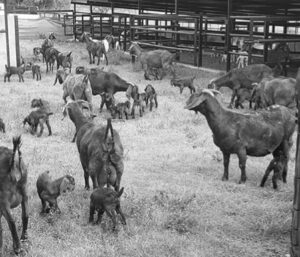
History: Goats reached South Africa about 2000 years ago, and many localized landraces have arisen. These tough little goats have excellent survival skills, disease resistance, and make the most of sparse vegetation. Their coats have varied patterns of brown and white markings, often speckled or pied.
If you’re looking for an economical meat animal or are interested in making a little extra money, consider raising Kalahari red goats. They are natural browsers, consuming a variety of plants, shrubs, and trees. Providing access to quality pasture or browse is crucial for their overall health and growth. In areas with limited grazing resources, farmers can supplement with hay or other roughage sources.
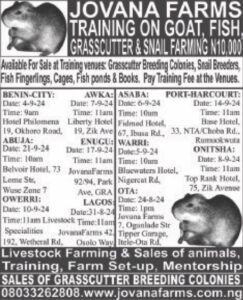
DON’T MISS OUT THE 7TH INTERNATIONAL MODERN COMMERCIAL 4-IN-1 LIVESTOCK FARM MANAGEMENT MASTERCLASS IN 24- NIGERIAN CITIES AND ONLINE.
COMPRISING: GOAT, GRASSCUTTER, FISH AND SNAIL FARMING
Grab the opportunity to gain insights on these critical areas
(1) How to start Livestock farming
(2) Packaging and processing
(3) Handling and transportation management
(4) Land and Infrastructure Design
(5) Outsourcing Quality foundation Breeds
(6) Health System
(7) Nutrition and Feed Formulation
(8) Overall farm management
(9) Comprehensive Breeding and Revenue Projections
(10) Marketing Strategies
Training fee: N10,000, covers the 4-IN-1 courses. Payable at the training venues on training day. Contact us: 080 33262 808 www.jovanafarms.com.ng
Additional Module on Goat Farming Using the Following Breeds- Boer, Savanna White, Kalahari Red (KR), Sokoto Red (SR), West African Dwarf (WAD) and Sahelian White (SW).
AVAILABLE FOR SALE AT THE TRAINING VENUES
Quality breeding colonies of Grasscutters, Fish fingerlings and Snail breeders, Cages, Tarpaulin fish Ponds and Books.
This is a comprehensive course that will teach you all of the aspects of farming with Grasscutters, Goats, Fish and Snails. On completion of the course, you will receive a certificate of participation.
CAN’T ATTEND? JOIN OUR ONLINE TRAINING CLASS: N20,000 OR BUY OUR SELF-TUTORIAL BOOKS: N15,000.
Below are the training Schedules and Venues
(1). ABUJA: Date: 21-09-24, Time:10am, Venue: Belvoir Hotel, 73, Lome Str, Wuse Zone 7
(2) SAGAMU: Date: 3-09-24, Time: 9am, Sotad Hotel, Venue: Sagamu- Benin Rd, Express Junction Bus-Stop
(3) BENIN-CITY: Date: 4-09-24, Time: 9am, Venue: Hotel Philomena, 19, Okhoro Rd.
(4) WARRI: Date:5-09-24, Time:10am, Venue: Bluewaters Hotel, Nigercat Road, Tanker Park, Ekpan, near WARRI
(5) LAGOS: Date: 31-8-24, Time: 11am, Venue: Jovana Demonstration Farm, 42, Osolo Way, off Airport Rd, Ajao Estate
(6) ONITSHA: Date: 8-09-24, Time:11am, Venue: Top Rank Hotel, 75 Zik Avenue.
(7) AWKA: Date: 7-9-24, Time: 11am, Venue: Liberty Hotel, 19 Zik Avenue.
(8) OWERRI: Date: 10-9-24, Time: 11am, Venue: Livestock Specialties, 192 Wetheral Rd.
(9) ASABA: Date: 6-9-24, Time: 10am, Fidmed Hotels, 67, Ibusa Rd.
(10) ENUGU: Date: 17-9-24, Time: 11am, Venue: Jovana Farms, 92/94 Park Ave, GRA.
(11) PORT-HARCOURT: Date: 14-9-24, Time: 10am, Venue: Base Hotel, 33 NTA/CHOBA Rd, Rumuokwuta.
(12) OTA: Date: 9-11-24, Time: 1pm, Venue: Jovana Farms, 7 Ogunlade Str, Tipper Garage, Itele- Ota Rd
(13) EKWULOBIA: Date: 15-9-24, Time: 1pm, Venue: Orthom Palace Hotel, Stadium Rd
(14) ABA: Date: 11-09-24, Time: 11am, Venue: Abia Hotel, 10 Owerri Road
(15) UMUAHIA: Date: 12-09-24, Time: 10am, Venue: Seabia Hotel, 55 Aba Road.
(16) UYO: Date: 13-09-24, Time:10am, Venue: Samlaw Hotel, Ebet Aya Str, off IBB Avenue
(17) NSUKKA: Date:18-09-24, Time:10am, Venue: New Carolina Hotel, 1, Obollo Road, Obukpa
(18) LOKOJA: 19-09-24, Time: 9am, Venue: Kogi Hotel, Opposite Govt House
(19) GWAGWALADA: Date: 20-09-24, Time: 10am, Venue: Atlas Hotel, Secretariat Rd
(20) NNEWI: Date: 26-09-24, Time:11am, Venue: Seymour Hotel, 42 Nnewi- Nnobi Road
(21) IBADAN: Date: 1-11-24, Time:1pm, Venue: Genesis Suites, Challenge-Molete Road, By Fire Station.
(22) AKURE: Date: 30-10-24, Time: 9am, Venue: Metropolitan Guest House, No1, Albert Lane Gbogi, off Oyemekun Rd, behind WEMA Bank, Cathedral Bus-Stop
(23) OSHOGBO: Date: 31-10-24, Time: 10am, Venue: NUJ Press Centre, Iwo Road
(24) ABEOKUTA: Date: 2-11-24, Time: 11am, Venue: Ariya Hotel, 45, Tinubu Str, Ita-Eko, Ibara
THE WORLD HARDEST GOAT
Description: The long, deep body has a medium-to-large frame and strong legs. The short, glossy hair bears little undercoat during winter. The pigmented skin is loose and supple. Dark round horns curve backwards behind broad pendulous ears, soft brown eyes, and a slightly roman nose.
Coloring: The solid body color shades from light to dark red-brown. As their ancestors were patterned white and brown, white patches sometimes recur in offspring.
Weight: Mature doe 165 lb. (75 kg); mature buck 250 lb. (115 kg); kids at six months average 66 lb. (30 kg).
Popular Use: Meat and skins.
Productivity: Kids are fast-growing and yield tender, flavorsome, low-fat meat. Does are fertile and prolific, normally bearing twins of equal weight. Although peak fertility occurs in fall, they can breed several times a year, raising three litters over two years. Young females can breed from six months of age if their diet is high in nutrition, but early breeding can disrupt growth and future performance.
Temperament: Kalahari Reds are known to be calm, gentle, and make excellent mothers, both in their care of young and their protective instincts of flocking well and hiding their kids.
Adaptability: They are well adapted to free ranging in the arid to semi-arid savanna in SA and the Kalahari Desert. Their strong legs allow them to roam far to seek out varied vegetation. They kid and raise their young out on the veld without human intervention. Their coloring acts as great camouflage against the red soil of their native land. They have natural ability to conceal themselves a useful deterrent to theft as well as predation.
The Kalahari red goat’s low input costs are what drive the profitability of farming with the breed. This is what the commercial producer is looking for. The trend toward stall-feeding will result in substandard genetics becoming more prevalent in the breed, to its detriment.
In Nigeria, Jovana integrated farms and other farmers import Kalahari red goats as commercial production units or as part of cross-breeding programs with indigenous goats to improve the quality of their flocks.