Follow Us on Google
By Lawrence Agbo
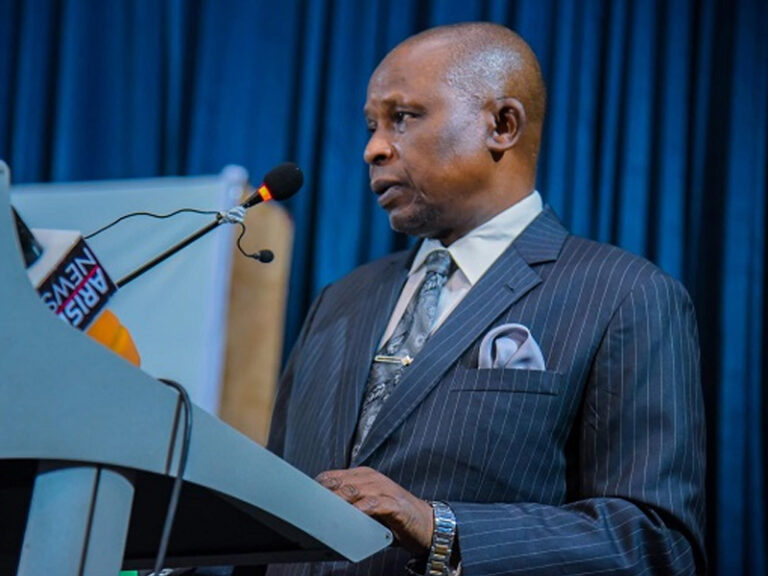
The recent attack in Jos, according to retired Wing Commander and security specialist Musa Salmanu, was the result of a complex interaction between religious, ethnic, political, and economic forces.
Speaking on the recurring violence in the Plateau region, Salmanu noted that disputes over resources, political influence, and historical tensions between settlers and indigenes have repeatedly fueled clashes.
“The case with the Plateau is a mix of many things. It’s a mix of religion, ethnicity, and economic and political issues, all entangled to create a deep gap of mistrust between communities and expand those fault lines,” he said.
Salmanu also highlighted lapses in intelligence and response as key contributors to the attacks, stressing that the issue is not a lack of weaponry.
“When such things happen, the first thing you look at is whether there were signals. Were there lapses in terms of intelligence gathering or reaction? What were the tell-tale signs that something was amiss that someone did not pick up?” he explained.
Other News
“When there is such an event, there is definitely a failure of intelligence. What I’m seeing in terms of security failure is the ability to get information, process it, and react. Regarding being better armed, I believe our armed forces are well-equipped to handle these types of security challenges,” he stated.
He warned that measures like curfews and motorcycle bans are often more symbolic than truly preventive.
“So there are measures, when such an incident happens, there are measures that are symbolic; there are those that actually have teeth. So let’s take a look at the immediate measures: impose a curfew, impose a ban on motorcycles, and so on. Because there is perhaps the identification that these people came on motorbikes, so you want to say now—first of all, curfew. Curfew is very disturbing because people suffer when there is a curfew. But the whole idea is that when you restrict movement when such incidents happen, tempers rise,” he said.
Salmanu emphasised that state governments must move beyond rhetoric to implement effective strategies. “State governments have to, in my view, ensure that they walk the talk,” he said.
He further cautioned against immediately labelling perpetrators as “terrorists,” noting that many violent incidents arise from local communal disputes where neighbours are involved.
“We always start labeling and say ‘terrorists.’ It gives it an identity that we don’t even know who it is sometimes. But some of these communal crises are done neighbor to neighbor. They know each other,” he concluded.