Follow Us on Google
By Maduka Nweke
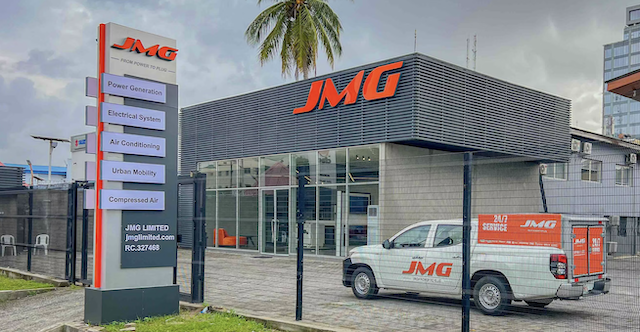
JMG Limited, a provider of integrated electromechanical solutions in Nigeria, has unveiled a lease-to-own mechanism designed to help businesses and households overcome the crippling effects of Nigeria’s unreliable electricity supply. The initiative, announced during the commemoration of the International Day of Clean Energy, reinforces JMG’s leadership in the country’s clean energy transition while highlighting the tangible impact of its solar and hybrid solutions across key sectors of the economy.
The event, held at JMG’s head office in Lagos, provided an opportunity for the company’s management to showcase how clean energy is no longer a distant ambition but a practical, reliable, and economically viable solution already transforming businesses and institutions nationwide. Through the lease-to-own model, customers can pay for systems in flexible installments, monthly, weekly, daily, or in structures agreed upon with management, making access to renewable energy more affordable and achievable.
Speaking at the event, Mr. Rabih Jammal, Chief Commercial Officer at JMG, emphasized the urgent need for Nigeria to accelerate adoption of renewable energy solutions. “Clean energy is no longer a future concept; it is happening now, and it is working,” he said. “At JMG, we are not just advocating for renewables; we are delivering them. From our 150-kilowatt solar installation at our Victoria Island headquarters to multiple large-scale deployments nationwide, we have proven that clean energy works technically, commercially, and financially. It reduces power costs, enables communities, and enhances competitiveness. As more countries move toward sustainability, clean energy has become an economic imperative for Nigeria.”
Jammal described the International Day of Clean Energy as a timely reminder of the need to accelerate the transition, while reinforcing JMG’s commitment to Nigeria’s energy transformation through investments in technology, partnerships, people, and knowledge. He highlighted that JMG has moved beyond advocacy to deployment, citing installations at the Anambra State Government House, NIPCO fuel stations, Rack Centre, and other facilities as evidence of its growing renewable energy footprint.
Providing technical insight into JMG’s clean energy architecture, Product Manager Mr. Raymond Nwose explained the scale and sophistication of the solar hybrid system powering the company’s head office. “Our facility is equipped with three 50-kilowatt high-voltage hybrid inverters operating in parallel, supported by three battery racks containing a total of 36 high-voltage lithium battery modules, each with 5.12 kilowatt-hours, delivering 184 kilowatt-hours of storage capacity,” he said.
Nwose outlined JMG’s range of service models, including Outright Purchase, Lease-to-Own with installments of up to 84 months, and Power-as-a-Service (PaaS), which provide customers with reliable, clean energy without requiring a large upfront investment. “These options are especially critical for small and medium-scale enterprises seeking cost-efficient and uninterrupted power while maintaining financial flexibility,” he added. He also noted that JMG engineers are strategically positioned across Lagos, Ibadan, Abuja, Kano, and Port Harcourt to provide prompt installation, maintenance, and nationwide technical support.
On the generation side, Nwose revealed that the rooftop solar installation comprises 200 units of 575-watt panels, plus 60 additional 40-watt panels, producing a combined 153 kilowatt-peak of solar power. “All loads in this facility are powered by this solar system, significantly reducing our energy costs,” he said. He further outlined that JMG operates across six business divisions—conventional power generation, renewable power, electrical infrastructure, HVAC systems, elevators and escalators, and air compressors—all supported by ISO certifications in quality management (ISO 9001), environmental management (ISO 14001), and occupational health and safety (ISO 45001), reflecting the company’s commitment to excellence, safety, and environmental responsibility.
Nwose highlighted that the mission of JMG Solar, a key division of the group, is to deliver uninterrupted, clean, and intelligently managed energy that lowers operating costs while improving efficiency. “We don’t just provide power; we put the power in the hands of our customers to control and reduce their costs,” he said.
stressing that affordability is as important as reliability. He aligned the company’s strategy with the global context, noting that the United Nations’ designation of January 26 as the International Day of Clean Energy underscores the urgency of accelerating access to affordable, reliable, and sustainable energy worldwide. “For us at JMG, clean energy is not a future aspiration; it is a present commitment,” Nwose said.
Highlighting some of the company’s flagship deployments, Nwose cited a 250-kilowatt hybrid inverter system with 220 kilowatt-peak solar capacity and a 2.4 megawatt-hour battery bank at a mining site in Ebonyi State, which offsets an estimated 125 tonnes of carbon dioxide emissions annually. At Ketu Primary Health Centre in Lagos, JMG installed a 10-kilowatt solar system to power critical medical equipment, part of the company’s corporate social responsibility initiatives.
Other notable projects include a 125-kilowatt solar system for Northern Engineering, capable of offsetting nearly 48 tonnes of CO₂ annually, and multiple solar deployments at NIPCO filling stations, including the Lakowe station in Ibeju-Lekki, where diesel usage has reportedly dropped to zero. At the Anambra State Government House, a 400-kilowatt hybrid system with over 400 kilowatt-peak solar capacity has reduced carbon emissions by an estimated 228 tonnes per year. At its Lagos headquarters, JMG initially deployed a 100-kilowatt system, later upgraded to 150 kilowatts as energy demand grew, demonstrating the scalability of its solutions. “We don’t just preach; we practice what we preach,” Nwose said.
With the lease-to-own mechanism now available, JMG said it is lowering barriers for businesses and individuals seeking sustainable energy. By allowing flexible payment plans, the company hopes to make clean energy accessible to a wider audience, driving both cost savings and environmental benefits.