Follow Us on Google
By Vera Wisdom-Bassey
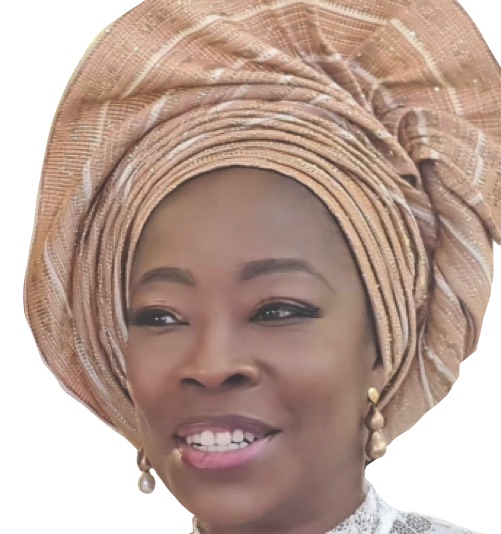
Mrs Ayoola Akinyele has been an educator for over 30 years and has spent much of that time mentoring teachers. So, when she describes herself as a “teacher of teachers” that is a claim that she eminently qualifies to make and back up with her solid track record.
Akinyele is a dyed-in-the-wool Akokite produced by the University of Lagos, who has three degrees from the respected tertiary institution. She spoke with Sunday Sun. Excerpts:
Please, give us a snapshot of yourself?
I like to call myself an expert educator. I am a school leader and a teacher of teachers. If I was to do a one-minute speech that is what I would say.
When you say that you are an expert educator and teacher of teachers, how do you mean?
In my over 30 years experience, I have worked with some of the finest educators there are today. I have a rare privilege of being in a leadership position where I have mentored and shaped younger teachers and today I see them in the industry doing exploits. I am extremely grateful for that opportunity that life gave me to be part of their story, that is why I call myself a teacher of teachers.
What effort are you making to ensure that they are doing what you taught them? Is there any way you are able to keep track of them?
Some of them are doing better than I am doing now, because they are younger and more vibrant. They have taken the building blocks and built fantastic and excellent careers. They always have access to me; some of them call me when there is a situation in the school or in leadership or parents and they are not quite sure of how to handle such situation. We talk together about it and come up with a strategy on how to deal with it. And you know, I am regularly in touch with them and I call them and they call me and we talk about professional goals, and discuss how the schools are doing and how they are doing personally. The social media platforms give us ample opportunity to interact. And I am very, very proud of them and I am very grateful that I have been part of that journey.
Are we doing well in the education sector?
That is a very broad question. Are we doing well? I think we can do better; what that means is that we are doing well, but there is a lot of room for improvement. The private sector is not where it was some years ago. I believe the development in the private sector is not even, some states are ahead of others. There is a realisation that we can do better. The journey to improvement begins from that moment of realisation.
What have you learnt as an educationist?
A lot of things. I have learnt that children are largely the same and they are governed largely by governmental milestones and nurture. Children will behave almost the same way by instinct in a given situation. It is the reaction to the situation that moulds a child into the direction you want the child to go. That is one fundamental thing I have learnt. I have worked in various schools, both in Nigeria and abroad – in expensive private schools and state government schools. I found out that four-year-old children here are just the same like their age mates in America, and they will do the same thing. But what is different is how the environment nurtures them; they react according to natural instinct. For me it helps to work with children better, work with staff to develop an understanding of children, that children are the same everywhere. By design they will react the same way, what we can control is how we nurture them into the adults we want them to be. That along the line of child development, I have learnt that not all teachers are passionate about the job. Many are doing it to keep body and soul together, but some start out being passionate. Teachers are categories: the few that passionate about it and got into teaching; those that did not get other jobs and got into teaching, those that thought they were passionate, got into it but realised that it wasn’t paying bills. The category of the teaching staff determines how you work with them and how you can motivate them to get more out of them.
I have learnt that parents all over the world are emotional about their children, and because a child is any parent’s most priced possession, the one thing parents consider most important in their lives is the child. Whether Japanese, Chinese, or Nigerians, it does not matter; everybody believes that the child is the ultimate thing. There is something about just being a parent; to a large extent they are emotional about their reactions. So having that in mind, helps you to understand where the parents are coming from and to provide better care, and satisfactorily resolve conflicts when they arise. That is some of the fundamental principles I have learnt.
What can you say about curriculum?
I believe every nation’s curriculum is designed for their own workforce, not for another country’s workforce. It is the responsibility and obligation of every country to design its curriculum, to ensure that the graduates being produced serve the purpose of the country. That’s the fundamental thing I have learnt.
What would you say are the challenges facing Nigerian education?
Corruption has been a bane of the country, and this has deeply affected the funding of education in the country. It is saddening that governments at both the federal and state levels are not properly funding the education sector. It is not considered as a strategic national security investment.
As a nation, we have never had a leadership that has the willpower to deal with corruption in the public sector. I have heard colleagues go into the public education system and come out to say that there was corruption, which is stunting growth. It is the corrupt ones in the system that would tell you, who is coming from outside “this is how we do it here.” You see that everyone is there to make their own cut.
Of course there is corruption in the developed world but it is not as rampant and overbearing as it is here and in other Third World countries. In the developed world, they have built strong institutions to fight corruption. Our nation must find a better way of fighting corruption.
Teachers training is better. It is happening everywhere. The cost of training has become so cheap now. With just N2,000 you can change yourself. So, the training is there, it may not be top-notch, but to start there is online training, person to person. You can do an online course and get a certificate.
The quality of teachers is also a challenge.
What can you say about moral decadence in the society?
The primary cause of the moral decadence in the society is the love for money. The ordinate pursuit of money is the reason some young people will ask you why they should go to school when they can do Yahoo Yahoo deals and make money. You go to school to earn a degree. Money is not the reason , you go to school. The individual should learn to be content. We that are not the millionaires and billionaires are in the majority. Until we learn to be content, and thankful while working, the nation is not going to change. In our small little circle we celebrate wealth we cannot be explained. We disdain people that are living within their means. The society is not going anywhere that way, that is the truth. We must all learn to be content. We must also protect value, we must work together, but for me the parents have the greater duty, because during the formative years of a child, the parents serve as the moral compass for their children. It has to be the children, everything place I have worked, i have worked with four year old, the fact that I can always read them like book. I am so very grateful that I have always been part of their journey. I remember a girl I taught her how to write the four letters and her name. Today she is a lawyer, and one day I saw her and asked her do you know who taught you how to write your name. she could not remember. but then I told her. such, when I retire I am going back to the classroom.
How would you be remembered after 10 years?
I want people to think of me and smile, because of all the reforms and impact I made.