Follow Us on Google
From Aidoghie Paulinus, Abuja
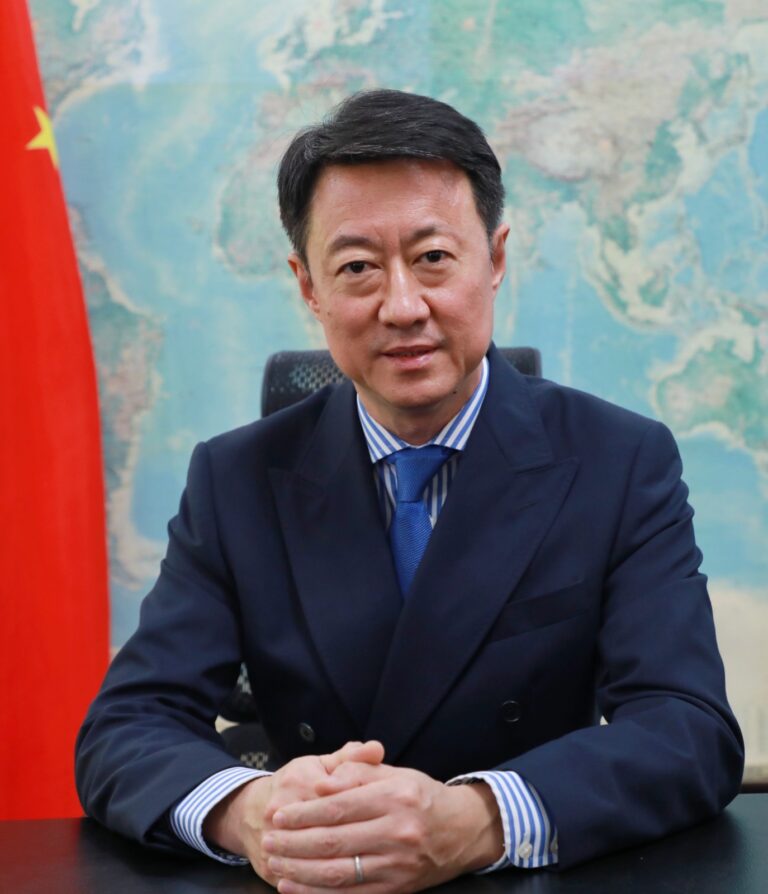
The Chinese Ambassador to Nigeria, Yu Dunhai, has said that just three and a half months after, the benefits of zero-tariff policy for 53 African countries are already clearly visible.
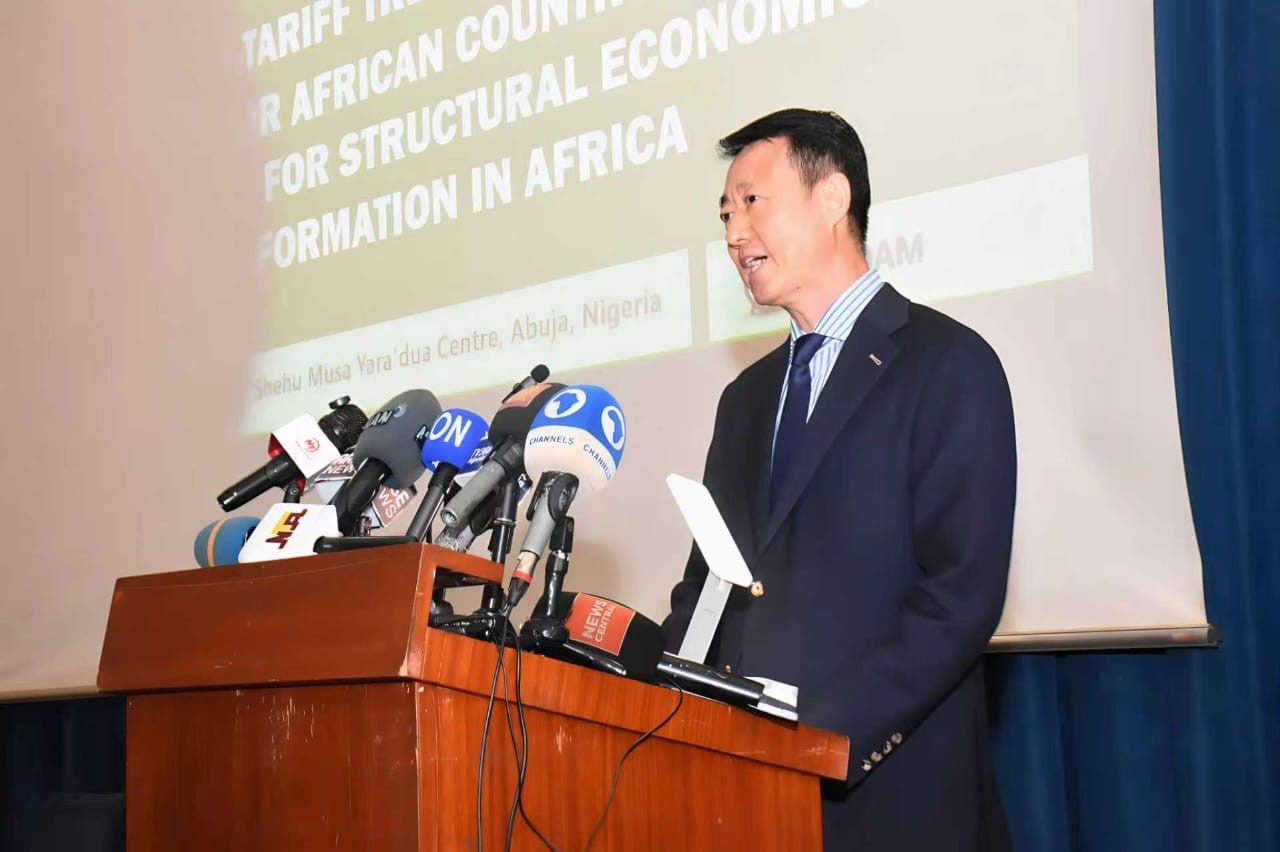
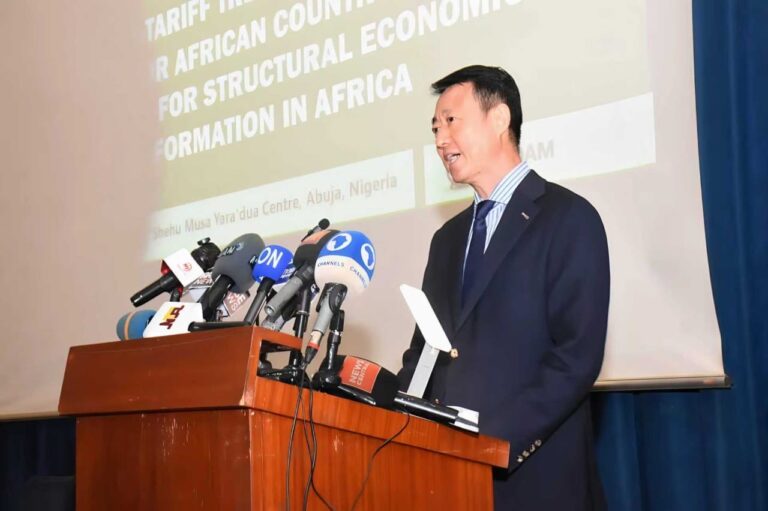
Yu stated this at the Seminar on China’s Zero-Tariff Measures and Africa’s Economic Structural Transformation organised by the Centre for China Studies (CCS) in Abuja.
The Chinese Ambassador recalled that on February 14, 2026, Chinese President Xi Jinping, announced that beginning from May 1, 2026, China would grant zero-tariff treatment to all 53 African nations with diplomatic relations with China.
He also said that the major initiative marked a strategic milestone in building a high-level China-Africa community with a shared future and advancing the joint vision for modernization between China and Nigeria.
“Just three and a half months after taking effect, the policy’s benefits are already clearly visible. In the first half of 2026, China-Africa trade hit a historic high of $207 billion. From May to June alone, Chinese imports from Africa reached $29 billion—a 24 percent year-on-year increase. Estimates show that the zero-tariff policy has boosted overall African exports to China by roughly six percent. Nigeria’s performance has been especially striking: total bilateral trade reached $18 billion in the first half of the year, up 35 percent year-on-year, while Chinese imports from Nigeria surged 80 percent to $2.3 billion, with monthly growth exceeding 40 percent in both May and June,” Yu said.
The Chinese envoy further said the world is undergoing profound shifts unseen in a century.
He stated that geopolitical tensions continued to disrupt global supply chains, while unilateralism and protectionism threaten the international multilateral trading system.
African economies, the envoy noted, have long faced structural disadvantages such as delayed industrialization, incomplete manufacturing systems, and infrastructure bottlenecks, leaving many caught in a cycle of resource abundance alongside economic lag.
“In the post-pandemic era, shrinking global demand and slowing capital flows have added further pressure. What Africa needs today is stable, open access to international markets to power its long-term recovery.
“China remains firmly guided by the principles of sincerity, real results, amity, and good faith, alongside a commitment to shared benefits. We do not interfere in internal affairs, we respect Africa’s independent path, and we are committed to helping address core development bottlenecks. This zero-tariff measure represents a major upgrade to China’s preferential policies, opening our market of 1.4 billion consumers without political conditions or market-access barriers. It creates a modern institutional bridge for practical, mutually beneficial cooperation.
“This policy marks a milestone for Africa’s economic development, China-Africa ties, and global trade governance.
“For Africa, paired with our “Green Channel 2.0” for agricultural goods, it directly lowers export costs, solves access challenges, and helps high-value resources reach China’s vast market—enabling Africa to reduce reliance on unprocessed commodities,” the Chinese envoy also said.
He added that for China-Africa cooperation, it shifts the partnership between China and Nigeria from traditional aid and raw material trading toward structural integration, value-addition, and shared industrial development.
“For global governance, it rejects trade bullying, injects positive momentum into the multilateral trading system, and sets a powerful example for equitable participation in global markets.
“As Africa’s most populous country and a key regional economy, Nigeria is a cornerstone partner for China on the continent. Our nations share deep political trust, robust economic ties, and a rich history of practical cooperation. As a flagship partner, Nigeria is positioned to be a primary beneficiary of this zero-tariff policy. Since it took effect, we have seen immediate, concrete results in three key areas:
“First, it has sharply reduced trading costs and energized business activity. Following our recent agreement on export protocols for Nigerian wild aquatic products, market access issues are being resolved in one package. Tariff eliminations ranging from three percent to 10 percent have delivered immediate savings across key exports: every 100 tons of sesame exported saves $11,000 in costs; Nigeria’s annual export of 7,000 tons of cattle bone granules saves nearly $450,000; and on day one of the policy, a single shipment of 23,000 tons of Nigerian liquefied propane with $300,000 in tax savings.
“Second, it is expanding trade volumes while upgrading trade structure. Deliveries of Nigerian specialty products to China are rising steadily, with zero-tariff orders clearing major Chinese ports daily. At the same time, exports of high-value Chinese products—such as solar equipment and power infrastructure—are supporting Nigeria’s efforts to address energy gaps and modernize its industrial foundation, creating a more balanced and diversified trading relationship.
“Third, it is empowering Nigeria’s industrial transformation and supporting local livelihoods. Local businesses are leveraging zero tariffs to invest in domestic processing and move up the value chain. Expanding trade flows are also stimulating related sectors—warehousing, logistics, and regional transport—creating employment for young people and building sustainable, self-reliant momentum for Nigeria’s economy.
“To ensure these benefits are enduring and aligned with WTO rules, establishing a formal Agreement on Economic Partnership for Shared Development with China is the only long-term solution. To date, 38 African countries have signed framework agreements with China to advance early-harvest negotiations. China looks forward to finalizing these arrangements with more partners, including Nigeria, to turn temporary preferences into institutional guarantees,” he further said.
To ensure the zero-tariff policy delivered maximum impact in Nigeria and across the continent, Yu suggested four key priorities.
“First, continuously improve product quality and supply chain stability. Meeting Chinese market standards and ensuring reliable supply volumes are essential for long-term success. China is ready to provide technical support for standardized production to help Nigerian products earn recognition and market share.
“Second, expand local processing and industrial differentiation. China is eager to build joint industrial demonstration parks with Nigeria partners, offering equipment, technology, and training to process raw materials locally, boost employment, and add value before export.
“Third, integrate trade with long-term investment and strengthen institutional alignment. Tariff-free market access provides a strong foundation for attracting investment. Building on our framework agreements, China aims to accelerate negotiations on trade facilitation, investment protection, and quarantine standards to offer a stable institutional environment for investors.
“Fourth, strengthen policy outreach and create platforms for cooperation. We encourage stake holders to hold policy workshops to help local businesses navigate zero-tariff procedures. We warmly invite Nigerian SMEs to leverage platforms like the China International Import Expo, the Canton Fair, and the China-Africa Economic and Trade Expo to connect directly with Chinese buyers,” he stated.
The Chinese Ambassador added that China’s zero-tariff policy is a long-term strategic commitment rooted in mutual respect and shared benefits.
“The Chinese Embassy in Nigeria will fully support the seamless implementation of this policy, helping high-quality Nigerian products reach Chinese consumers while bringing Chinese technology, equipment, and expertise to support Nigeria’s industrial goals.
“This year marks the 70th anniversary of China-Africa diplomatic relations and the 55th anniversary of China-Nigeria ties. Over the decades, our friendship has withstood every test. By successfully implementing this zero-tariff policy, we will elevate China-Nigeria cooperation to new heights, and build an even stronger China-Africa community with a shared future. China remains fully committed to working hand in hand with Nigeria and all African nations to turn these shared opportunities into lasting prosperity,” he concluded.
In her remarks, the Minister of Foreign Affairs, Bianca Odumegwu-Ojukwu, said the decision by China to expand preferential market access to African countries presented a significant opportunity for strengthening Africa-China economic relations and promoting greater integration of African economies into global value chain.
Odumegwu-Ojukwu who was represented by the Permanent Secretary, Ministry of Foreign Affairs, Dunoma Umar Ahmed, also said for Nigeria, however, the central question is not simply how much Africa can export to China, but what Africa will produce, how it will produce it, and how much value will be retained within African economies.
“This is where the vision of our President, His Excellency President Bola Ahmed Tinubu becomes particularly relevant.
“The President has consistently emphasized that Nigeria must move beyond an economic model that relies predominantly on the export of unprocessed commodities. His directive to international investors is clear. Nigeria welcomes investment, but such investment must increasingly establish manufacturing capacity, develop industrial value chains, and create jobs rather than merely extract and export our raw materials.
“This principle is fundamental to Nigeria’s economic transformation agenda. Our natural resources must become the starting point, not the end point, of economic activity. Crude oil should support petrochemical and downstream industries.
“Agricultural commodities should feed agro-processing and manufacturing. Soil minerals should stimulate mineral processing and industrial production. And our abundant human capital should be integrated into technology, innovation, and knowledge-based industries,” Odumegwu-Ojukwu said.
The Minister also said Nigerians
must transition from exporting resources to exporting value.
She added that China’s zero tariff treatment for African countries can provide an important platform for achieving the objective, while also saying that preferential access to the Chinese market can expand opportunities for African producers, stimulate exports, and attract investment.
In his remarks, the Director, Centre for China Studies, Charles Onunaiju, said what has culminated to China’s zero treatment on 100 tariff lines for 53 African countries with diplomatic ties with China has steadily evolved since 2003 when China proposed and later began to officially implement zero-tariffs for Africa’s least developed countries, initially covering 194 tariff lines across 25 African countries.
“Between 2022 and 2024, China granted zero-tariff to 98 percent of tariff lines to exports from 27 African countries in four batches, covering more than 8000 tariff lines. In September 2024 president Xi Jinping announced at the summit on the forum of China-Africa cooperation (FOCAC) in Beijing that China would extend zero tariff treatment of 100 percent of tariff lines for all least developed countries, with which it has diplomatic relations including 33 African countries,” Onunaiju said.