Follow Us on Google
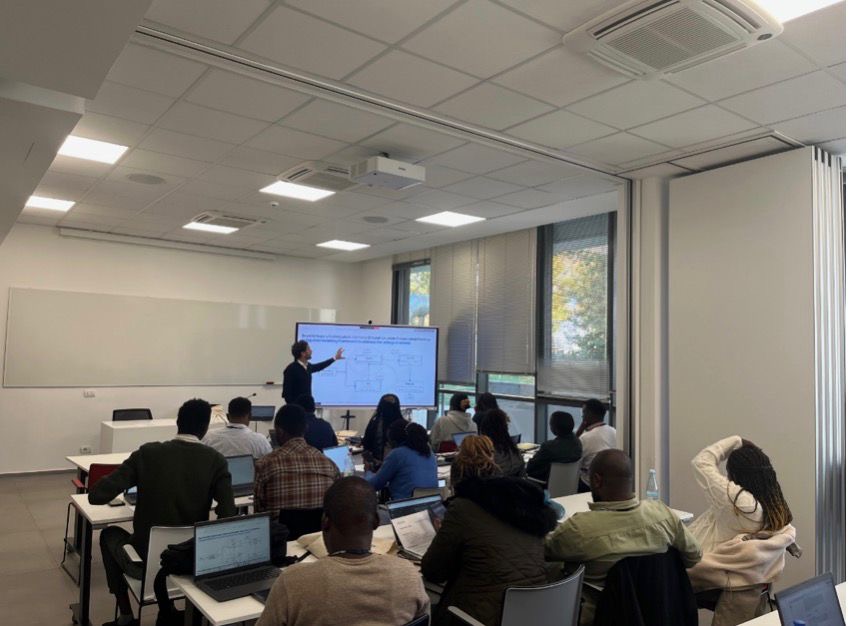
Italy is strengthening its science diplomacy footprint in Africa through a university-led initiative designed to reshape how knowledge is produced, shared, and applied across the continent.
At the heart of this effort is the Science Hubs for Advanced Research and Education with Africa (SHARE_Africa), a transnational programme bringing together African and European institutions to train early-career researchers and forge more balanced academic partnerships.
The initiative signals a broader strategic shift by Italy and the European Union to position research collaboration as a tool for tackling global challenges, while redressing long-standing imbalances in Africa–Europe academic relations. Despite a growing number of universities and scholars across the continent, Africa contributes only a fraction of global scientific output – a gap widely attributed to chronic underfunding, weak infrastructure, and limited integration into international research systems.
SHARE_Africa is delivered through the Italian Higher Education with Africa Foundation, a platform established in 2019 with backing from the Italian government to coordinate academic partnerships with African institutions. Its founding universities – the University of Bologna, University of Florence, Politecnico di Milano, University of Naples Federico II, University of Padua and Sapienza University of Rome – form the backbone of the programme.
Funded under the European Union’s Next Generation EU instrument, and aligned with Italy’s National Recovery and Resilience Plan, the project aims to move beyond ad hoc collaborations towards structured, long-term academic integration.
Unlike traditional exchange programmes, SHARE_Africa emphasises the co-creation of knowledge through peer-to-peer engagement. Its model blends virtual and in-person learning, joint curriculum design, and interdisciplinary research training tailored to Africa’s development priorities.
The programme is built around six specialised Blended Executive Programmes, each targeting a critical sector: energy, agriculture, water management, health, business sustainability, and cultural heritage.
A course on Strategic Energy Planning, led by Politecnico di Milano, examines Africa’s evolving role in the global energy transition, particularly as geopolitical tensions reshape energy markets. Participants are trained to navigate the paradox of resource abundance alongside energy poverty – a contradiction that continues to define much of the continent’s energy landscape.
Meanwhile, a programme on Innovative Technologies for Sustainable Water Management, delivered by the University of Naples Federico II, focuses on practical solutions to water scarcity and resource resilience, an increasingly urgent issue across several African regions.
Other News
In the health sector, the University of Padua’s One Health programme adopts a cross-disciplinary approach, linking human, animal, and environmental health in response to emerging global risks. Other courses, led by the University of Bologna and the University of Florence, address food systems and sustainable business practices, equipping researchers with analytical tools to tackle food insecurity and economic transition challenges.
What sets SHARE_Africa apart is its focus on early-career academics – a deliberate strategy aimed at embedding long-term change within African institutions. By targeting researchers at formative stages, the programme seeks to strengthen local capacity while reducing reliance on external expertise.
To date, more than 120 researchers from countries including Nigeria, Kenya, Ethiopia, Tanzania, and Côte d’Ivoire have taken part, forming a growing network of scholars engaged in cross-border collaboration.
The initiative aligns with key international frameworks, including the European Commission’s research and innovation strategy and the African Union’s Agenda 2063, both of which emphasise human capital development and innovation-driven growth.
Observers note that such programmes represent a departure from historically unequal academic partnerships, in which African institutions often played peripheral roles. SHARE_Africa promotes a more reciprocal model, with African universities actively shaping research priorities and outcomes.
Broader economic implications are also at play. Strengthening research capacity is increasingly seen as critical to Africa’s ability to compete in knowledge-driven sectors, from renewable energy to biotechnology and digital innovation.
Yet challenges remain. Sustaining the gains of initiatives like SHARE_Africa will depend on continued investment, policy alignment, and the ability of African institutions to integrate new skills into their teaching and research systems.
The Italian Higher Education with Africa Foundation has signalled plans to build on the programme by developing multi-level academic curricula with African partners, aiming to institutionalise the collaboration.