Follow Us on Google
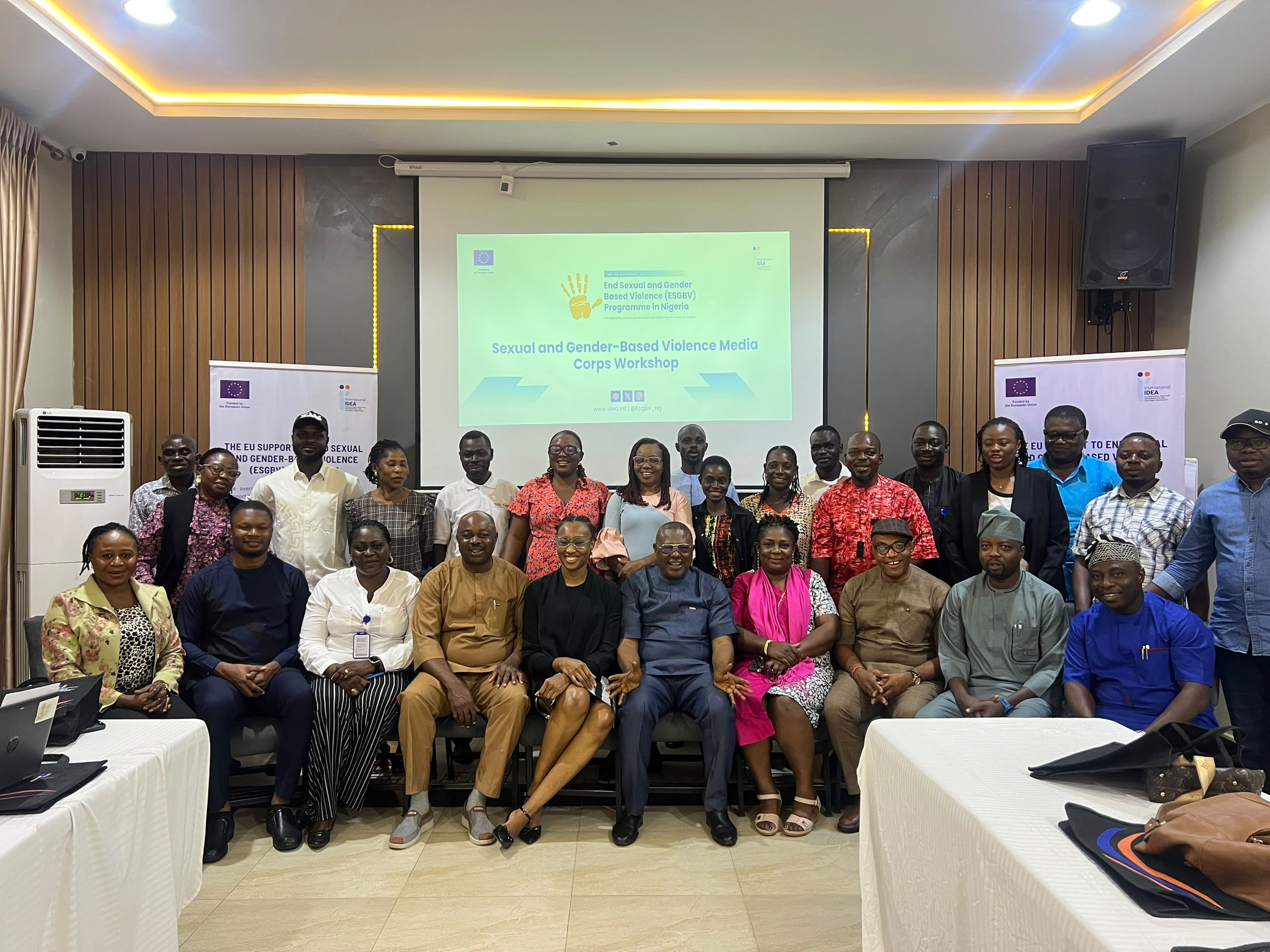
The International Institute for Democracy and Electoral Assistance (IDEA), in collaboration with the National Agency for the Prohibition of Trafficking in Persons (NAPTIP), with support from the European Union Support to End Sexual and Gender-Based Violence (ESGBV) Programme, has commenced a two-day Sexual and Gender-Based Violence (SGBV) Media Corps training workshop in Benue State.
The initiative, “European Union Support to End Sexual and Gender-Based Violence (ESGBV) Programme”, is implemented by the International Institute for Democracy and Electoral Assistance (IDEA) to strengthen the prevention of and response to SGBV by supporting stronger legal and policy frameworks, expanding access to survivor-centred services, and promoting social norms change across its implementation states.
The objective of the training, which is holding in the FCT, Benue, Kaduna and Oyo states, is to strengthen public engagement on SGBV by improving the quality, ethics and coordination of media and community-based communication.
The training also aims to shift SGBV reporting and public discourse from sensationalist, fragmented coverage to a more professional, survivor-centred, evidence-based and action-oriented approach that promotes prevention, expands access to trusted information, strengthens referral pathways and supports positive social norm change.
It also aims at enhancing community-level information-sharing structures relevant to SGBV prevention and response, including opportunities related to technology-facilitated gender-based violence (TF-SGBV), in the FCT, Benue, Kaduna and Oyo states.
Welcoming participants to the training, the Director-General of NAPTIP, Binta Bello, urged media practitioners to play a leading role in the fight against SGBV by amplifying survivors’ voices, exposing perpetrators and promoting accountability.
Bello, who was represented by the Head of the Press and Public Relations Unit, Mr Adekoye Vincent, commended the media for its support to NAPTIP, particularly in the implementation of the Violence Against Persons (Prohibition) Act under the End Sexual and Gender-Based Violence Project.
She described SGBV as one of the most pervasive human rights violations in Nigeria, noting that women, children, men and other vulnerable persons are subjected to rape, domestic violence, sexual exploitation, harmful traditional practices, emotional abuse, economic deprivation and online harassment, saying fear, stigma, intimidation, cultural barriers and lack of confidence in the justice system had caused many incidents to go unreported, thereby allowing perpetrators to continue their activities.
She said the agency remained committed to investigating and prosecuting offenders, rescuing victims and providing care and rehabilitation for survivors, adding that NAPTIP had secured more than 40 convictions in SGBV-related cases, including three life imprisonment sentences for rapists.
Other News
The agency pledged to continue working with partners to ensure perpetrators are brought to justice and called on the media to use its influence to expose violations and strengthen the fight against gender-based violence.
Also speaking, the Civil Society and Community Mobilization Specialist, ESGBV Programme, International IDEA, said the European ESGBV Programme, implemented by International IDEA in partnership with NAPTIP, was deliberately designed after extensive consultations with federal and state stakeholders.
The programme targets Oyo, Benue and Kaduna states, selected based on the prevalence of SGBV and opportunities to create meaningful change. She said it builds on existing initiatives, particularly the Rule of Law and Anti-Corruption (ROLAC) Programme and the UN Spotlight Initiative, rather than creating parallel structures.
According to her, the programme has three key result areas, including strengthening laws and policies, supporting the implementation of the VAPP law and other policies aimed at reducing SGBV, improving access to services for survivors, including expanding Sexual Assault Referral Centres (SARCs) in target states, as well as promoting positive social norms and strengthening community capacity, working with civil society organisations, community groups and traditional/community structures to address SGBV.
While stressing that laws alone cannot end SGBV if people are unaware of them or do not understand that certain acts constitute criminal offences, she said the media are therefore important in taking information, awareness and behavioural-change messages to grassroots communities.
The newly selected SGBV Media Corps in Benue therefore has a major responsibility to influence public understanding, challenge harmful social norms and promote positive behavioural change through responsible reporting.
The Director-General of Radio Benue, Mr Terseer Mzuulga, said the fight against SGBV requires a holistic, grassroots approach involving the media, religious institutions and community leaders.
He called for GBV awareness messages to be taken to churches, communities and grassroots audiences, where religious and traditional leaders can help influence attitudes.
He noted that stigma and harmful cultural practices still prevent survivors from speaking out against abuse, pledging Radio Benue’s partnership in the campaign against GBV through interactive programmes to increase sensitisation and awareness.