Follow Us on Google
By Lawrence Agbo
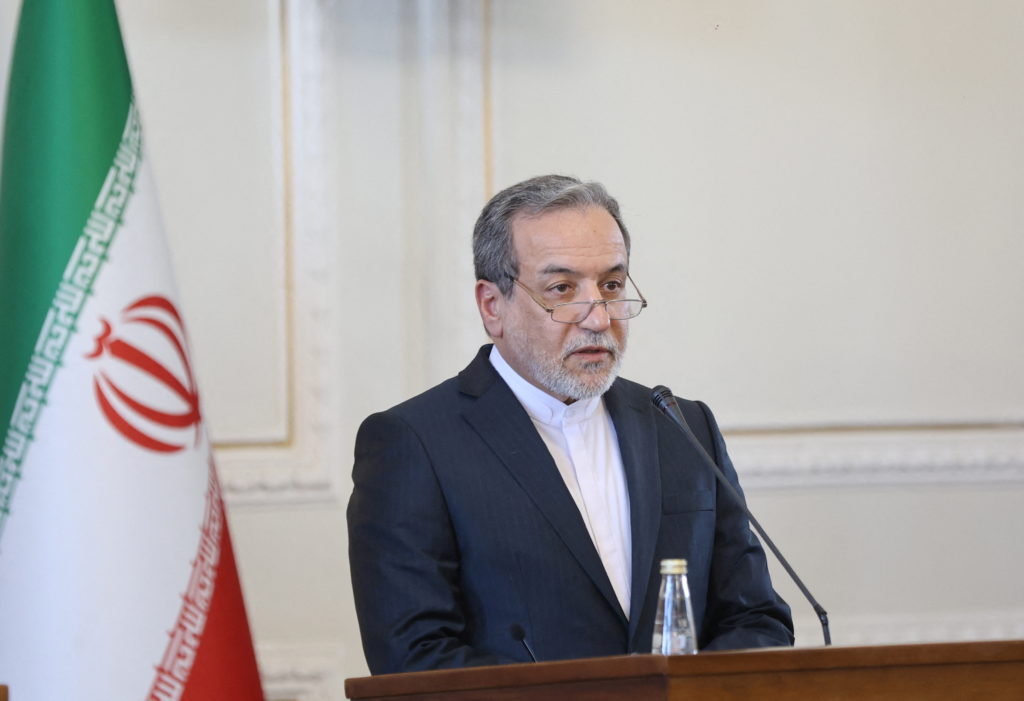
Iran’s Foreign Minister, Abbas Araghchi, has insisted that the people of Iran, not the United States, will determine the country’s next supreme leader, calling on US President Donald Trump to apologize for the ongoing war between the two nations.
Speaking on NBC’s “Meet the Press” on Sunday, Araghchi stressed that leadership decisions in Iran are strictly an internal matter and warned against foreign interference.
“We allow nobody to interfere in our domestic affairs. This is up to the Iranian people to elect their new leader,” he said.
His remarks came after Trump reiterated on ABC News that the United States should influence who succeeds Iran’s late supreme leader, Ali Khamenei, who died during the initial phase of the US-Israeli military assault on Iran.
“He’s going to have to get approval from us. If he doesn’t get approval from us he’s not going to last long,” Trump said.
Araghchi declined to speculate on who might succeed Khamenei. However, Iranian state media reported that the clerical body responsible for selecting the supreme leader had already voted and that an announcement could come soon.
Some clerics have suggested that Khamenei’s son, Mojtaba Khamenei, may be chosen, though Trump has previously dismissed that possibility.
Other News
Araghchi noted that the final decision rests with the Assembly of Experts, the powerful clerical council tasked with selecting Iran’s supreme leader.
“We have to wait for the Assembly of Experts to convene and vote for the new supreme leader, and the one who is elected by them,” he said.
The Iranian diplomat also called on Trump to apologize for the conflict, accusing the United States of initiating the war and causing widespread destruction.
“Trump should apologize to the people of the region and the Iranian people for the killings and destruction they have done against us,” Araghchi said.
He defended Iran’s missile strikes that have hit neighbouring Gulf countries during the conflict, saying the attacks were aimed at US military bases located in those nations.
“It is Americans who started this war against us, attacking us, and we are defending ourselves,” Araghchi said. “Our missiles cannot reach US soil, so what we can do is attack American bases and installations around us.”
Trump has warned that Iran’s missile capabilities could eventually threaten the United States. However, a US intelligence assessment as recently as 2025 concluded that Tehran does not yet possess intercontinental ballistic missiles and may not develop such weapons until around 2035.