Follow Us on Google
By Chinwendu Obienyi
With hardly any of its six geo-political zones spared from one form of insecurity or the other, Africa’s most populous country and erstwhile bulwark of stability in West Africa, Nigeria was practically under the gun on all fronts.
The dispersed and rising insecurity in the country despite the best of efforts of gallant members of the security forces and increased budgetary provisions, clearly played very high in the minds of politicians and voters before the landmark 2023 elections.
With a new government now fully in place with President Bola Tinubu-at the helm of the administration, it is clear that what Nigerians need now is the conducive environment that would make businesses to thrive with the global investors who fled the country at the peak of political volatility encounrage to return.
This was amplified by the President last month in France during the recent France Africa economic summit in Paris when Tinubu told the world that Nigeria was ready for business.
At home, Nigeria with unemployment rate of over 33 per cent, inflation at 22.4 per cent and Naira exchanging for close to N800 per US$1, all eyes are on Mallam Nuhu Ribadu to create a conducive environment for more businesses to open up to soak the teeming unemployed youth in the country. As a country in dire need of investments, a lot of expectation are on him the executive arm of government to unlock the potential of the economy.
While many believe that the one month so far spent by the new administration was too short for any one to do an objective evalution of the impact of the decisions and policy options, it can at least give an idea of where it is headed, as the morning could as well be a pointer to what the day holds in stock.
Not withstanding, many have also argued that one-month of the Bola Tinubu administration in office has far been dottedwith pragmatic solutions and ideas, policy decisions and breath-taking actions at a fast pace such that some have nicknamed the President “Baba Go-fast”. ,
The Nigerian stock market for instance which was lacking in confidence prior to and post 2023 elections has now become awash with positive investor’ sentiment and given the title; TinuBULL.
There are, however, other aspects of the administration where the leadership has demonstrated good capacity.
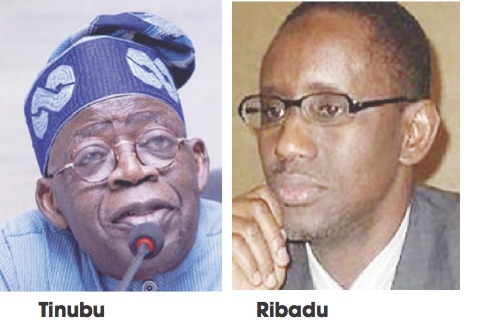
One of such pragmatic steps was in the appointment of the retired Assistant Inspector General of Police, Mallam Nuhu Ribadu, as Nigeria’s National Security Adviser, after taking over from Maj-Gen Babagana Monguno (retired).
Ribadu’s achievements
A trained lawyer and fearless crime fighter, many believe that Nigeria needs the former anti graft czar, to win the battle of restoring the nation’s waning investor confidence in the country at time of this high level of uncertainty.
Ribadu is widely known to have carved a niche for himself as someone with high score on patriotic, passion for hard work, honest, courage and compassionate about service to fatherland.
He became a household name in Nigeria and beyond on account of his outstanding public service record and personal integrity when he pioneered the Economic and Financial Crimes Commission (EFCC), as its Executive Chairman.
The remarkable thing about him was his contribution to the anti-corruption crusade which included; his selflessness, resilience and exemplary conduct in his spirited fight against the cankerworm. With uncommon commitment and dedication to duty, he worked assiduously to clean the Augean stable created by graft and fraud.
He courageously brought to book hundreds of fraudsters, scores of high profile looters and economic saboteurs in spite of temptation, booby traps and threats to life. In three years, the EFCC, under his leadership, built the now most celebrated Crimes Training and Research Institute in the West African region. The agency also recorded over 200 criminal convictions under his leadership.
In acknowledgement of these achievements, Ribadu was promoted to the rank of Assistant Inspector General of Police (AIG), in March 2007. The African Union (AU) put him on its advisory board on anti-corruption matters; and he was invited to join the advisory board of the Friends of the World Bank/UNODC initiative on Stolen Asset Recovery.
Ribadu is a recipient of several awards as a police officer, prosecutor and chairman of the EFCC. He received the Inspector General of Police Awards in 1997, 1998 and 2000, and the Special Commendation of the President in 2005, for the successful prosecution of several advanced fee fraud cases, banking fraud and sundry economic crimes. He was also specially commended by the Accountant General of the Federation for successfully prosecuting some corrupt public servants in 1999.
It is believed that with him at the commanding height of the nation’s security architecture, indications are that the fleeing investors would gradually be making a return back to the economy after the confusion of the 2023 general elections forced many to take a flight out of the country.
Since 2004, and largely on account of his sterling performance as the anti corruption chief, several newspapers and magazines in Nigeria have repeatedly voted Ribadu as Man of the Year, in recognition of his outstanding achievements as a committed crusader against corruption and other related crimes.
In 2008, Mr Ribadu completed the senior executive course of the Nigeria Institute of Policy and Strategic Studies where he was conferred with the Membership of the National Institute, MNI. In June 2010, Mr Ribadu was awarded the Doctor of Laws (honoris causa) by the Babcock University, Ogun State, in recognition of his “resolute courage” as well as his “fierce stance against corruption in the face of sponsored disgrace and certain death that has resulted into positive changes and global acclaim hitherto considered impossible.”
In his quest for higher call to service, Ribadu has since 2010, been involved in active politics.
NSA appointment
He was named NSA today, 19 June, 2023, days after he was appointed the security adviser, security, to the president. His appointment has understandably moved not a few eyebrows and this is because Nigeria is a country accustomed to having retired military officers appointed as the NSA, although there have been a few retired police officers appointed too in the past.
Ironically, police officers who had served as NSA, such as Gambo Jimeta and Ismaila Gwarzo, served military regimes. But civilian administrations since 1999 have appointed only retired military officers.
This is perhaps due to the erroneous belief that security is the exclusive preserve of the military, police and other law enforcement agencies. This is not true. While it may well be admitted that the security challenges confronting Nigeria are largely insurgencies that would require military engagement, the Nigerian military is adequately equipped with the manpower to handle these challenges.
What perhaps was needed is an executive coordination centre, something the office of the NSA is set to provide.
For instance, in the United Kingdom, all the six persons who have been appointed the NSA since 2010 have been career diplomats or civil servants. The current NSA, Sir Timothy Earle Barrow, is a civil servant who became a diplomat and served as the British Ambassador to the European Union, before his current appointment as NSA.
In the United States, which our democracy is modelled after, many of the people appointed have had no military training. Condoleezza Rice was a university scholar when President George Bush appointed her NSA from 2001 to 2005. The man who took over the office after her tenure was Stephen John Hadley, a lawyer and civil servant. Jacob Jeremiah Sullivan, who’s the current NSA, was also a civil servant before his appointment.
Hence, the role of the NSA is changing especially as we are now in a technologically-driven world. Governments are looking for intelligent men and women whose resumés show capabilities in peacebuilding, intelligence gathering and analysis, alongside developmental issues and, in the case of Nigeria, an advocate of inclusiveness – Ribadu clearly fits the bill.
But more importantly, Nigeria is at a point in its history when it needs men and women who believe in the country and see the importance of every section, tribe and religion to the overall wellbeing of the country. This is where Ribadu excels. The international community is also going to be very comfortable with someone like Ribadu who is not unknown to the global security architecture. That is an asset for the country.
Expectations
It is safe to say that there are high expectations from Nigerians and the international community for Ribadu and the security chief to not only curb insecurity and restore calm in the country, but to rebuild the damaged reputation of the Nigerian defense structure which will in turn attract investments (FDIs) back into the country.
It is sad to know that Nigeria is no longer that country that attracts multinational investments than any other country in the African continent. For instance, Nigeria almost doubled its stock of foreign investments between 1967 when it accounted for about 17 per cent of all foreign investments in Africa and 1972 when it became the 5th most important foreign investment destination in the developing world after Brazil, Venezuela, Mexico and Argentina.
However, the Nigerian story is very disturbing. This story is compounded by insecurity in the last 8-10 years. Within this period, human security has been violated, most citizens especially in the northern states and a few of the southern states have not been protected against threats.
Thus, with all these atrocities, do we expect investments to rise at the state level? Certainly not! Investors do not pursue insecurity. Rather, investors pursue capital where they are sure of return on investment.
There is a cost to insecurity. The level of insecurity in many states of the country is so high that it has discouraged investors to invest in an atmosphere of chaos and confusion. According to a data report from the Nigerian Exchange Limited (NGX), the country’s foreign portfolio deficit fell by N14.5 billion between the first eight months of 2021.
Further data from the National Bureau of Statistics (NBS) for Q1 to Q4 2022, revealed that foreign investors shunned Kano, Rivers, Ogun, and 24 other Nigerian states as foreign investments fell by 20.47 per cent ($1.37 billion) from $6.7 billion in 2021 to $5.33 billion in 2022.
The data also revealed that foreign investments in the country’s commercial capital- Lagos fell by 37.94 per cent from $5.82 billion to $3.61 billion year-on-year. Despite this fall, Lagos attracted 67.82 per cent ($3.61 billion) of the total investments in 2022.
Granted that many firms were impacted negatively due to the outbreak of the COVID-19 pandemic, however, the next challenge bedeviling the economy is insecurity. Economic experts who spoke while reacting to the appointment of Ribadu, said foreign investors do not want to invest in a business climate where the value of their returns would have depreciated in the future due to the devaluation of the Naira and where there is chaos.
They also noted that the high cost of electricity, inefficient ports and rail systems are seriously undermining economic growth in Nigeria and its quest for FDIs.
In a tweet on his page, Shehu Sani, a lawmaker and economic expert, said, “The appointment of Nuhu Ribadu as the new NSA is commendable. The challenge before him is addressing our security challenges and since he is not entirely new to the terrain, his leadership under the Tinubu-led government will not dialogue with bandits. We expect a better and new approach towards solving the enigma called “insecurity”.
For his part, Managing Director, APT Securities, Mallam Kurfi Garba, said, “What does a country with double digit inflation rate, high fiscal deficit and low growth do to increase the FDI inflows as well as bring the economy under control? Will the Federal Government be willing to implement an interest rate cut or deploy a subsidy framework to the manufacturing sector to ease its burden in order to reflect a positive growth in the industry? Your guess is as good as mine but investments would only thrive in an environment where there is peace and security”.