Follow Us on Google

Nigeria is at war and the military is in danger. The signs are evident everywhere. Insurgents, bandits, kidnappers and sundry criminals are running riot in parts of the country. People are kidnapped. Nigerians are killed in their numbers. Communities are ravaged and sacked. Schoolchildren are abducted and held captive in the most horrendous conditions. Military personnel are killed. The country is bleeding.
In a country where Boko Haram terrorists are operating and leaving blood at their trail, where militias of the Islamic State West African Province (ISWAP), where bandits are unrelenting in their mindless havoc, the situation is nothing other than war. It is clear that the war we have has left scars, visible and invisible. Some of the scars are etched into landscapes devastated by bombs and bullets. Others are buried in the memories of soldiers who have spent years confronting death in Sambisa and Kanuri forests as well as troubled communities.
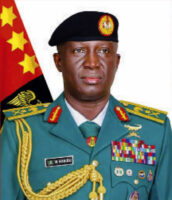
One of the most devastating aspects is the fact that top military officers are killed now like chickens. Colonels in the army, Brigadier-Generals, Generals and brigade commanders have lost their lives in ambushes and frontal confrontations. In the last couple of years, several senior military officers fighting insurgency, terrorism, banditry and other asymmetric threats have met their deaths. Others have been retired because their juniors were appointed to positions of Chief of Army Staff, Chief of Naval Staff and Chief of Air Staff. Whether it is by death at the war front or military retirement, the military loses and the country becomes vulnerable, with the people helpless.
Nations at war like Nigeria do not merely depend on weapons, fighter jets and military hardware for survival. They depend, even more critically, on experience, institutional memory, strategic thinking and tested leadership. In prolonged conflicts, battle-tested Generals become repositories of hard-earned national security wisdom. Losing them suddenly, in death or retirement, can weaken a country in ways that are not immediately visible. Nigeria today faces precisely this danger.
When senior commanders fall on the battlefield, a nation loses far more than uniforms and titles. Experience, strategy, institutional memory, morale and leadership that cannot be quickly replaced are lost. That is why the increasing loss of high-ranking officers in conflict zones should alarm Nigeria and the leadership. These deaths signal deeper problems. It may be as a result of sabotage. It may indicate intelligence failure, poor coordination, weak air support, inadequate equipment and dangerous exposure of commanders to direct combat situations.
Whatever it is, while bravery is admirable, military leadership should not become expendable. Generals and senior commanders are expected to lead wars strategically, not merely to die heroically. Their deaths create a dangerous vacuum within the armed forces. Of course, when senior military officers are killed, younger officers suddenly inherit responsibilities for which many may not yet be fully prepared. Operational continuity becomes threatened. Carefully designed strategies may collapse midway. Troops that relied on familiar commanders for confidence and inspiration may become psychologically shaken.
Senior officers carry invaluable knowledge accumulated over years of counter-insurgency operations, peacekeeping missions and command responsibilities. They understand the terrain, the tactics of insurgents, the strengths and weaknesses of troops and the political complexities surrounding conflicts. There are grave implications of losing them on battlefields. When such officers are lost, nations lose intellectual assets that cannot be produced overnight through promotions or emergency appointments. There is erosion of institutional memory.
The financial implications are also enormous. Training military officers to senior ranks costs governments billions. From military academies to specialised international courses, intelligence training and operational exposure, countries spend huge resources developing strategic commanders. Losing such officers in mindless insurgency and banditry wars means losing years of investment, expertise and leadership development.
More troubling is the political and psychological effect on the nation itself. Citizens draw confidence from the strength and competence of their military leadership. Repeated deaths of top officers can create public anxiety and diminish confidence in the ability of the state to manage insecurity. Families of soldiers become fearful. Recruitment may suffer and international allies may begin to question the stability of security operations.
Our war tactics against terrorists should be looked at again. Sending top officers to the war front has to be reviewed. In modern military powers, commanders and troops are protected through advanced technology, superior surveillance systems and carefully coordinated operational protocols. Tactical leadership can still be exercised without unnecessarily exposing the highest-ranking officers to deadly ambushes. Nigeria must, therefore, invest heavily in intelligence gathering, drones, communication systems, mine-resistant vehicles and air support that reduce the vulnerability of senior commanders.
Other News
This does not mean military leaders should hide far away from the battlefield. One knows that soldiers draw inspiration from commanders who share risks with them. However, there must be a careful balance between courage and strategic preservation of military leadership. Nigeria cannot afford to lose too many of its finest military minds in a conflict that may last for more years.
The war against terrorism is not won merely through firepower. It is won through planning, intelligence, coordination, resilience and experienced leadership. When top military officers fall repeatedly, the consequences go beyond personal tragedy. It weakens operational capacity, threatens national security and prolongs instability. Every fallen senior officer represents not only a family plunged into grief but also a painful depletion of national military strength. The Nigerian military must, therefore, treat the protection of their experienced commanders as a strategic necessity.
At a time when experienced officers are being killed at war, it is also worrisome that the military is losing top military officers to appointments of their juniors to head of Army, Navy, Air Force and even the police. There is a nexus between senior officers being killed by insurgents and them being retired abruptly with the appointment of their juniors to head the military.
Granted that the Constitution gives the President discretion to appoint service chiefs and, in doing this, the President is expected to ensure loyalty, balance regional representation, bring in officers perceived as less entangled in the military’s internal politics and those he can trust. However, that power should be exercised in such a way that it does not lead to the depletion of the engine room of the military.
The Nigerian Army has repeatedly lost Lieutenant Generals and Major Generals to retirement triggered by the appointment of their junior officers as service chiefs. We saw this under former President Muhammadu Buhari. We have seen it in the President Bola Ahmed Tinubu government. The practice is legal and rooted in military tradition that a senior cannot serve under a junior.
However, the strategic impact is brutal. Senior officers are not ordinary combatants. They are the architects of operations, custodians of intelligence, mentors of younger officers and symbols of national strength. Years are invested in grooming them through rigorous training, battlefield exposure and strategic assignments. Their value lies not only in what they know, but in the wisdom acquired from surviving complex security situations. When senior officers are retired prematurely because their juniors have been appointed as heads, this takes a toll on the military and the nation.
When a General retires, sources often go quiet. Sources wait to see if the new officer is competent, discreet, and committed. Until trust is rebuilt, the military fights blind. Insurgents understand this lag and exploit it with coordinated campaigns. Every time a top military officer exits mid-war, the insurgents gain time, intelligence, and confidence without spending resources.
If Nigeria intends to win the war on terror, it must decide whether the politics of military appointments is worth the price paid in the bush. What appears on the surface as routine military restructuring carry enormous national security consequences. We must know that when a senior General leaves service, Nigeria does not merely lose a uniformed officer. The country loses years of operational knowledge accumulated through direct battlefield experience.
There are ways to strike a balance. Presidents should see the military as professional institution and not a political party. Therefore, trust in the officers’ loyalty, irrespective of the tribe, should be there. The conversation should, therefore, move beyond personalities or ethnic balancing. It should focus on national interest. If a President must appoint juniors to top positions, in the midst of senior officers, the government could consider creating a post-command track, where retiring Generals can be moved into strategic advisory, and active roles, where rank conflict doesn’t matter. This is important. One can see that happening now, with President Bola Tinubu appointing Lt. Gen Christopher Musa, former Chief of Army Staff as Minister of Defence and most recently, General Adeyinka Famadewa as Special Adviser on Homeland Security.
The government should also consider implementing staggered appointments, which sidestep mass retirements, by first elevating officers to be appointed to the same seniority group. This will reduce the number of exits per appointment.
Countries engaged in long-term conflicts strive to preserve experienced military leadership structures to ensure strategic consistency. Veterans of difficult campaigns are retained as advisers, trainers, intelligence coordinators, or strategic commanders even when leadership changes occur. If Nigeria can hire mercenaries to fight its wars, what stops us from using retired but not tired military officers to do the same?