Follow Us on Google
By Fred Itua, Abuja; Noah Ebije, Kaduna; and Olanrewaju Lawal, Birnin Kebbi
More than a year after the Supreme Court’s landmark judgment granting financial autonomy to Nigeria’s 774 local government councils, the picture across the seven states of the North West geopolitical zone remains as varied as the terrain itself. In some states, officials insist the judgment has been fully implemented. In others, local government chairmen speak of autonomy that exists only on paper, while state governments continue to route funds through joint accounts long after the Supreme Court ordered otherwise.
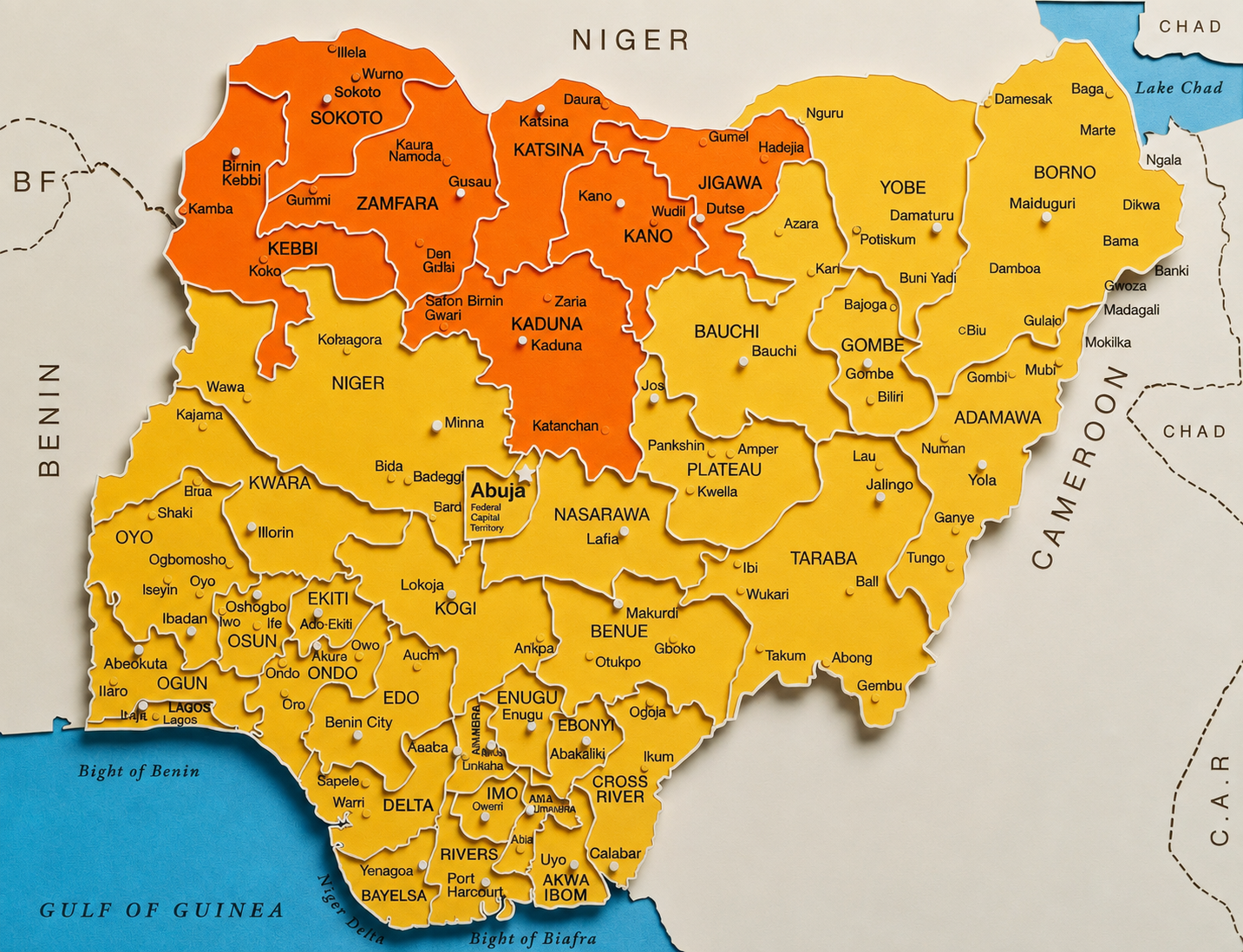
This report examines how Kaduna, Kebbi, Katsina, Sokoto, Zamfara, Jigawa and Kano have each responded to the July 11, 2024 verdict, which held that state governments have no constitutional authority to withhold or control funds meant for councils.
Kaduna: Official assurances meet persistent scrutiny
In Kaduna State, the implementation of the ruling continues to generate debate, with government officials insisting that councils now operate independently while critics maintain that state influence has not completely disappeared. Efforts to obtain official comments from the leadership of the Kaduna State chapter of the Association of Local Government of Nigeria and the state’s Ministry of Local Government and Chieftaincy Affairs were unsuccessful, with telephone calls and text messages going unanswered.
Governor Uba Sani has repeatedly stated that his administration supports local government autonomy, saying elected council chairmen have been empowered to execute projects that directly affect their communities. According to the governor, local governments are expected to manage basic education, primary healthcare, rural roads, sanitation and other grassroots programmes without interference. The state chapter of ALGON has defended the implementation, saying councils independently process salary payments through electronic platforms and settle pensions and other statutory obligations directly.
Yet, civil society organisations and governance experts continue to question whether financial autonomy has translated into genuine administrative independence. Analysts argue that true autonomy goes beyond receiving money directly from Abuja and should extend to unrestricted authority over budgeting, procurement, personnel management and project execution. Although no publicly verified evidence has established that Kaduna State is withholding allocations, critics maintain that concerns persist about informal control.
In what many observers regard as a step towards compliance, the Kaduna State House of Assembly repealed laws establishing metropolitan authorities that had previously exercised some local government functions. A 2024 academic study on local government autonomy and rural development in the state found that political interference and the joint account system had historically constrained grassroots development, and recommended stronger constitutional safeguards.
Kebbi: A rare case of unreserved confidence
Kebbi presents one of the few unambiguous accounts of compliance in the zone. The Chairman of ALGON in Kebbi State, Muhammad Dahiru Nayaya Ambursa, who doubles as Chairman of Birnin Kebbi Local Government, has affirmed that councils in the state are fully enjoying financial and administrative autonomy under Governor Nasir Idris. He credited the governor’s commitment to protecting workers’ rights and privileges, saying that in Kebbi, autonomy makes little practical difference because councils already had full access to their finances.
Even so, Ambursa has not been uncritical. He has warned that six local government councils in the state will struggle to pay workers’ salaries without state assistance, and that autonomy must be implemented with sensitivity to the disparities in financial capacity across councils. He noted that a meeting of local government chairmen in Katsina revealed that several councils in Katsina, Zamfara and Sokoto face similar salary difficulties.
A Clerk of the Kebbi State House of Assembly, Alhaji Suleiman Samaki, separately confirmed that local government financial autonomy is firmly in place in the state.
Katsina: Official optimism alongside appeals for more
Katsina State has arguably produced the most consistently upbeat official narrative in the zone. The acting Chairman of ALGON in Katsina, Rabo Tambaya Danja, who also chairs Danja Local Government Area, has commended Governor Dikko Umaru Radda’s administration for what he described as complete financial autonomy, contrasting Katsina favourably with states where chairmen complain of gubernatorial interference. He has argued that the autonomy extends beyond fund disbursement to independent decision-making in project execution.
A state commissioner has separately maintained that local governments in Katsina operate with full autonomy, attributing improved finances to increased Federation Account allocations following the removal of the fuel subsidy and the floating of the naira. He disclosed that the state had set aside billions of naira in Joint Account Allocation Committee savings to cushion delays in federal disbursements, and insisted that councils control their funds once agreed statutory deductions, covering salaries, teachers’ pay and pension obligations, are made.
A Special Adviser overseeing local government reform in the state has described an overhaul of the budgeting process, in which teams visited each council to prepare budgets line by line with chairmen, councillors and revenue officers, and has predicted that councils will rank among the most functional in Nigeria by the end of the 2026 financial year.
Not every voice from Katsina has been purely celebratory. The Chairman of the state’s Heads of Local Government Forum, Mukhtar Aminu Bakori, praised the governor for granting autonomy but also appealed for the release of funds to allow councils to procure official vehicles for directors and called for the revival of overseas training programmes for officials, a reminder that even in a state held up as a model, council administrators still have unmet demands. Katsina has also been repeatedly cited, alongside Kebbi, Zamfara and Sokoto, as one of the states where councils are grappling with salary sustainability under the new arrangement.
Sokoto: A gap between policy and practice
Sokoto offers one of the starkest contrasts between official language and grassroots experience in the North West. A senior ALGON official in the state, speaking on condition of anonymity, said autonomy existed only on paper and that councils still lacked direct access to their allocations, describing the arrangement as unchanged from the old pattern. He said officials were reluctant to speak publicly about the situation for fear of repercussions. The state ALGON chairman was unreachable when contacted, with calls and messages undelivered.
Other News
In an earlier account, the ALGON chairman in Sokoto, Abdullahi Kalenjeni, acknowledged that the state had not yet complied with a directive from the Office of the Accountant General of the Federation to open accounts with the Central Bank of Nigeria for direct disbursement, though he said the paperwork was being completed. He was notably evasive when pressed on the reasons for the delay, saying only that activities at the grassroots level had slowed considerably because councils still relied on federal allocations to fund programmes that reach rural populations.
Separately, efforts by reporters to obtain comment from both ALGON and government officials in Sokoto on the broader compliance question were unsuccessful, echoing the pattern of official silence seen in Kaduna.
Zamfara: Accusations of deliberate foot dragging
Zamfara State has generated some of the sharpest public criticism of any state in the zone. The state chairman of the Nigeria Union of Local Government Employees, Ahmed Isah, has accused governors, including Zamfara’s, of deliberately delaying implementation out of self interest. A lawyer and former chairman of the Zamfara State branch of the Nigerian Bar Association, Bello Galadi, condemned the non-implementation of the ruling and questioned why the state had failed to act more than a year after the Supreme Court’s decision.
Zamfara has also featured prominently in reports of salary distress at the council level. Kebbi’s ALGON chairman cited a meeting of chairmen in Katsina where representatives from Zamfara, alongside Katsina and Sokoto, described councils struggling to meet salary obligations under the new funding arrangement. Put together, the legal and labour criticism from within Zamfara and the corroborating accounts from neighbouring states suggest that, unlike Kebbi or Katsina, Zamfara’s local government establishment has not offered a unified public defence of the state’s compliance record.
Jigawa: Official harmony clouded by a dissolution
Jigawa presents a more complicated picture than its officials tend to acknowledge. Jigawa state chairman of ALGON, Sibu Abdullahi, who also chairs Dutse Local Government, expressed confidence that the state government respects the Supreme Court’s ruling and was already releasing funds to enable councils to function. A separate senior official at the Jigawa ALGON secretariat, speaking anonymously, insisted the state government had no intention of retaining or managing council funds. Professor Salim Abdulrraman, the
ALGON chairman for Gwaram Local Government and a former Academic Staff Union of Universities leader, has gone further, arguing that Jigawa’s councils enjoyed financial autonomy even before the Supreme Court judgment, crediting Governor Umar Namadi for never tampering with local government funds.
However, this harmonious narrative sits uneasily alongside a significant episode in the state’s recent local government history. In June 2024, weeks before the Supreme Court judgment, the Jigawa State Government dissolved the elected council chairmen of all 27 local governments, after the state House of Assembly had earlier amended local government law to extend the timeline for fresh council elections and provide for caretaker committees.
Critics of local government administration nationally have pointed to such dissolutions and the appointment of caretaker committees as a mechanism through which governors retain effective control over councils regardless of what financial autonomy rules say on paper. Efforts to reach the leadership of NULGE in Jigawa for comment on the broader autonomy question were unsuccessful, with a senior staff member declining to speak on the issue.
Kano: Legislation in progress, silence from key voices
Kano, the zone’s most populous state with 44 local government councils, has taken a distinctly legislative approach. Governor Abba Kabir Yusuf has backed a bill intended to grant full financial and administrative autonomy to all 44 councils, with the state Executive Council approving its transmission to the House of Assembly. A statement from the governor’s office explained that the reform would let councils manage their resources directly and execute projects without the delays associated with the old joint account arrangement.
Yet, the state’s own local government leadership has been notably quiet on how autonomy is functioning in practice. The Kano ALGON chairperson, Sa’adatu Soja, and the state NULGE chairman, Abdullahi Gwarzo, did not respond to calls seeking comment on the state of compliance, mirroring the silence recorded in Kaduna and Sokoto. Kano has also seen internal controversy over the handling of local government funds at a higher level of state government.
The state’s former Deputy Governor, Aminu Abdussalam Gwarzo, who had earlier served as Commissioner for Local Government and Chieftaincy Affairs, faced an impeachment notice over allegations including financial impropriety tied to a billion naira allocation for water and drugs across the 44 councils, sourced from the state and local government joint account. Though his political movement produced documents suggesting the release had been approved by the governor, the episode illustrates how funds nominally meant for councils can still become entangled in disputes at the state level, even as legislative reform for full autonomy proceeds.
A zone of contrasts
The seven accounts resist a single verdict on whether the Supreme Court’s judgment has been honoured in the North West. Kebbi and Katsina present the most confident official narratives, though even there, local voices flag salary sustainability problems and unmet demands for logistics and training support. Kaduna and Kano show governments taking visible legislative or administrative steps toward compliance while their own local government associations decline to discuss the details on record.
Sokoto and Zamfara show the widest gap between stated policy and grassroots reality, with anonymous officials and union leaders describing autonomy that exists chiefly as an announcement rather than a lived reality. Jigawa sits somewhere in between, with confident official statements sitting alongside a dissolution of elected council leadership that predates, but has not been squarely reconciled with, the state’s claims of non-interference.
For residents across the zone, governance experts argue that the ultimate test of autonomy will not be whether allocations reach council accounts directly, but whether communities see tangible improvements in healthcare, education, rural roads, sanitation and other grassroots services. More than two years after the ruling, that verdict remains, in every one of the seven states, still to be delivered.