Follow Us on Google
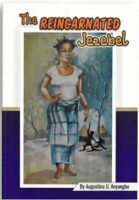
By Damiete Braide
In an era where literature increasingly serves as both a mirror and a conscience of society, Nigerian-born novelist Augustina Ugonna Mbah nee Anyaegbu is carving a distinctive place for herself as a writer whose narratives extend beyond entertainment to offer penetrating insights into culture, gender relations, social justice, and the complexities of contemporary African life.
In her novel titled: “ The Reincarnated Jezebel,” Augustina mirrors a story of two characters: Dan Eze and Nnenna Ugoani who are deeply in love with each other and plans to tie the nuptials. But the plan is facing roadblocks caused by identify crisis. One: Nnenna is an outcaste (Osu), a descendant of an ancestor who had taken refuge in Onuani shrine, while Dan is a freeborn, (Nwadiala).
The novel is set in Umuana village. On hearing that Nnenna is an Osu, Mr Eze and his wife vowed over their dead body will they live to see the Dan and Nnenna get married. Their faces that were once expectant and cheerful stiffened as though the sun had suddenly dimmed behind a storm cloud.
Dan wondered why such should matter more than a person’s character. He was defiant, insisting he must marry Nnenna. To him Nnenna is kind, respectful, virtuous and capable of making a good wife. But Mr Eze and his wife were not perturbed by those qualities as they plan to get Dan a wife before he defiles the land.
He convoked a meeting of the elders of the village, who believe that if Dan goes ahead to marry Nnenna, the consequences will not stop with him but also affect his children, lineage and household. Read the resolution of the elders and trap set by Mrs Eze to get Dan to sleep with another lady, Chioma in order to get her pregnant, so that he could abandon Nnenna. Read it up, and the role Dan’s elder sister, Rose played by getting a copy of the book.
The book extols the importance of market days in Igboland with particular reference to Nkwo which ranks high among the people of Umuana. The day is marked with foodstuffs sold at cheaper prices, banters, and gossips among the market women in the market. One of such market gossips was spread by Mama Chioma. It was about Dan’s planned marriage to Nnenna. She discussed with Mrs Eze, and both conspired to use Chioma as a bait to trap Dan inorder to stop him from marrying Nnenna, because abinitio, Mrs Eze never wanted Dan to marry Nnenna. Instead she preferred Dan to marry Chioma. So bringing them together and Dan Impregnating her traditionally binds them together as husband and wife. You can get more on that and how Dan handled the situation in chapter 2 and 3 of the book.
Chapter 4 mirrors Dan escape from the trap set to abort his marriage to Nnenna, Mrs Eze’s feigned ignorance of the plan. Dan felt disappointed that his parents could use Chioma as a bait to trap him to marry her. How did his Mother, Mrs Eze, and his elder sister Rose feel when the information leaked? Read it up in the book by getting a copy.
Mr. and Mrs Eze visited Mr Ugoani family unnoticed. On seeing them Mrs Ugoani thought they’d come for the ‘Iju ese Nwanyi,’ (Background check) on Nnenna without knowing it was to warn her daughter to stay away from their son, Dan, because according to them she is not eligible, not suitable and certainly not his type.”
Meanwhile Mrs Eze uses the opportunity of the visit to size the family up in terms of their surroundings. Regrettably, She could not understand what his son sees in Nnenna to make him fall for her cheaply as everything she sees about her family rankled her. For Mr Eze, he could not imagine the kind of charm Nnenna used to turn Dan’s head completely. “Nnenna is about to bring calamity upon our household,” Mr Eze emphasized. The vituperation jolted Mr Eze. Read how the visit unfurled the true story of Osu label on Mr Ugoani family in chapter 5.
Mr Ugoani, who seems to cause the oppressive heaviness, curled silently at the edge of the yard. He decides to let Nnenna know that she is actually an Osu caste. “A child who learns the truth from outside the home, feels deeply betrayed twice,” he intoned. Although, this was not enough to change Nnenna’s mind as she affirms unequivocally that Dan is the man she intends to settle down with.
Mr and Mrs Ugoani pleaded to her to forget about Dan. For Nnenna, it wouldn’t be an easy task as she is deeply in love with Dan. And it appears there is nothing anyone can do about it. Read the impact of the warning to Nnenna and her family and how they managed the situation in chapters 6 and 7 of the book.
While Mr Eze ruminates the
circumstances before him, his wife lay on her raffia mat with rage burning in her chest. Not against her husband, but against Nnenna Ugoani. “That girl will scatter this household if she is not stopped,” she thought with quiet venom, rising abruptly, adjusting her wrapper with brisk, irritable movements and stepped outside to confront her husband over his silence on the matter.
Apparently in tacit support of his son marrying Nnenna, Mr Eze intoned: “They are human beings. And our son is not a goat to be tethered where it doesn’t choose to graze.” Read Mrs Eze’s reaction to the approval of his son marrying Nnenna, Chioma’s sudden appearance at her compound, pretentious emotions shared and the joy it elicited in the heart of Mrs Ugoani in the 8 chapter of the book.
Enter Iju ese Nwanyi (Background check on Nnenna) ceremony. It is a ceremony when words would become witnesses and intention will step out of the shadows. “Be calm,” Mrs Ugoani cautioned Nnenna noticing her unease as Dan walked in dressed neatly to simple native attire, with humility evident in every line of his posture, with his father and Mazi Okpanku, following behind. They were received by Mr Ugoani who presented them with kolanut, prayers spoken, and libation poured for the ancestors as tradition requires. Mr Eze addressed the gathering apologizing to the Ugoani household for the disgrace they caused during their last warning visit.
Dan rose to his feet and respectfully explained to Mr Ugoani and family the purpose of the visit. In turn he was counseled on the demands of marriage by Mr Ugoani. It was Afor market day ushering in the preparatioun for the wine carrying ceremony. Afor is not the main market day but a day set aside for communual life, visits, ceremonies, reconciliation and matters of the heart.
The event suffered a set back when Dan’s mother couldn’t bring the goat meat so that the women of the bride family could use it to prepare meat sauce, thereby dismantling the marriage tradition and custom of the people. Get a copy of the book and read it up in chapter 10 as well as how this provoked another rage between Ugoani’s and Eze’s family, with Rose in the centrestage, as well as how she was denigrated by Tochi, the younger brother to Nnenna. Also how Ugoani household saved the situation calmly without the marriage been put on hold.
Nnenna assumed his wifely duties, attentive and committed to his husband’s needs, and the keeping of a clean and orderly home without complaint, but this got a drawback as Mrs Eze could not give her a shed of warmth. She dispised, threatened and contemptuously derided her and her food. Yet she pretended to her husband that everyone is alright. Read up how the intervention of Dan provided graveyard kind of peace, the reaction of the family and Rose malignancy behavior towards Nnenna in chapter 11.
Two years after the marriage, no child to show for the marriage. Mr Eze’s compound remained silent and devoid of laughter of a child, which is vital in Igbo homes. He prayed deligently, asking Chukwu to bless his family with a child. For Nnenna every day without a child felt like walking barefoot in a hot stone. The pressure is almost unbearable, weighing on her soul.
Other News
Her mother-in-law and stepsister-in-law Rose has continued to treat her with derision, calling her: “Blunt Blade,” with Dan occasionally interjecting; “My wife is not barren.” For Mr Eze, it’s too early to do that even though Nnenna has suffered miscarriages twice, with each happening after three months, a situation she could never explained. Read how Dan handled the situation without telling her wife by getting yourself a copy of the book.
Mr Eze summoned his kinsmen the evening after returning from Ukwa village where he went to consult Adamma, the revered prophetess of whom it was said her words walked hand in hand with the spirit. The agenda is to present to the invited guests the issue of Dan’s childlessness, and the repeated miscarriages, which Dan reproached his father for hiding all this while. But what did Adamma uncovered? Find out by getting a copy and read.
The unthinkable happened in chapter 14. It was the tragic death of Dan, which throws Mr Eze’s compound in lamentations. It happened shortly after Adanma’s prophetic declaration. It was seen as gravely wrong because Dan is the only son of Mr and Mrs Eze. Could it be a spiritual manipulation? Rread it up and the rituals Nnenna was subjected to, without considering she was already bleeding in her heart with the death of her husband. The rituals wery like second death. Check it out by getting a copy.
It was however a happy turning point for Mr Eze and Mr Ugoani in chapters 15, 16 and 17: Nnenna who was blamed for the calamities of Eze’s family was taken to the dreaded evil forest with the intention to get ride of her through the connivance of Mrs Eze, Rose and the Seer Agbala, was declared innocent by the spirit of the forest. Even before the messengers of Agbala detailed to eliminate her was on there way to the forest where she was tied on a tree, her younger brother Tochi, had intervened to saved his life.
In the 16 chapter, the earth goddess of order and justice swept away the lives of Mrs Eze, Rose, Agbala and her accomplices, in a mystical way for being behind the tragedies that befell Ugoani’s and Eze’s family.
In the 17 chapter Nnenna Eze became pregnant and gave birth to a baby boy. Her father-in-law Mr Eze named the child after his late son, while Nnenna named the boy Casie mu obi. My comforter.
Augustina Ugonna Mbah’s The Reincarnated Jezebel is indeed a significant contribution to contemporary African fiction. It combines social realism, Igbo cultural traditions, and gender-centered critique to explore enduring questions of power, identity, and justice.
The novel belongs to a growing body of African literature that interrogates the relationship between tradition and modernity. It is rooted in Igbo cosmology and community life while addressing contemporary concerns such as patriarchy, social exclusion, and moral accountability. By presenting culture as a living and contested force rather than a static heritage, Mbah has joined in an important literary conversation taking place across contemporary African fiction. It engagement with indigenous belief systems and social realities reflects a broader trend in African literature where writers reclaim local histories and worldviews while examining their implications for present-day society.
It should be pointed out that one of the novel’s strongest contributions lies in its examination of gender and power. The character of Mrs. Eze demonstrates that oppression is not always exercised directly by men; women can also become agents who reinforce patriarchal structures. This complexity moves the discussion beyond simple male-versus-female binaries to highlight how social systems perpetuate inequality.
It equally explores: the limitations imposed on personal freedom by communal expectations, the role of cultural traditions in shaping individual destinies, the misuse of spiritual and social authority, the questions of social exclusion and communal justice and the tension between inherited customs and evolving ethical values
By engaging with the Osu caste system and other forms of discrimination, the author contributes meaningfully to debates about social justice and the need to challenge inherited prejudices within African societies. Such concerns align with broader themes in Nigerian literature, which critique oppressive cultural practices while preserving respect for cultural identity.
The novel adopts a straightforward narrative style, which makes complex social issues accessible. The story begins with a familiar romance but gradually expands into a broader examination of community power structures and moral responsibility. This layered development is one of its strengths.
On the temptation to characterize the novel, Mbah avoids simplistic portrayals of good and evil. Mrs. Eze, for instance, is not merely a villain but a product of the social environment that legitimizes her actions. This psychological depth enhances the novel’s realism.
How about the dialogue? Although detailed studies of the dialogue are limited, it’s worthy of note that Mbah’s use of culturally grounded expressions and Igbo idioms, help create authentic voices and social settings, While the novel’s pacing is somewhat uneven,. cultural ceremonies and traditional practices are described in considerable detail, enriching the Umuana setting but occasionally slowing narrative momentum. Nonetheless these sections contribute significantly to the novel’s cultural authenticity. Her literary voice is distinguished by strong grounding in Igbo cultural realities.
On the accessibility to the prose, we have moral inquiry without excessive preaching, integration of traditional beliefs with contemporary social concerns and sensitivity to the complexities of womanhood and communal life. Rather than relying on experimental techniques, she focuses on clear storytelling and ethical reflection, making her work accessible to a broad readership while still engaging with serious social issues.
The Reincarnated Jezebel has a great potential impact on readers and literary discourse. It may encourage readers to:
re-examine assumptions about cultural traditions, reflect on the consequences of discrimination and exclusion, consider how power operates within families and communities, as well as question the use of religion and spirituality as instruments of social control.
In literary discourse spectrum, the novel contributes to ongoing debates about feminism, womanhood, indigenous knowledge systems, and social transformation in Africa. Its focus on accountability and ethical change makes it particularly relevant to contemporary discussions about cultural reform.
It’s comparable with such African works like Things Fall Apart by Chinua Achebe. Like Achebe’s classic, The Reincarnated Jezebel is deeply rooted in Igbo culture and examines the relationship between individuals and communal expectations. However, Mbah places greater emphasis on gender, politics and women’s experiences within traditional structures.
The second work it’s comparable to is Bride Price by Buchi Emecheta. Both
novels critique cultural practices that restrict personal freedom, particularly in relation to women and marriage. Emecheta’s work focuses on the conflict between love and tradition, while Mbah expands the discussion to include power, spirituality, and communal justice.
We also have Freshwater by Akwaeke Emezi.Both works draw from Igbo cosmology and indigenous belief systems. While Freshwater uses spirituality to explore identity and gender fluidity, Reincarnated Jezebel employs spiritual and cultural frameworks to examine social authority, morality, and gendered power relations.
On the whole The Reincarnated Jezebel by Augustina Ugonna Mbah who is also a poet stands as a socially engaged novel that uses culturally grounded storytelling to examine gender, tradition, power, and justice. Its greatest strengths lie in its thematic relevance, nuanced treatment of authority and womanhood, and its commitment to exploring difficult social questions within an authentically Igbo context. While its pacing occasionally slows under the weight of cultural detail, the novel makes a meaningful contribution to contemporary African literary conversations and has the potential to stimulate important discussions among readers, scholars, and critics.