Follow Us on Google

By Wilfred Eya
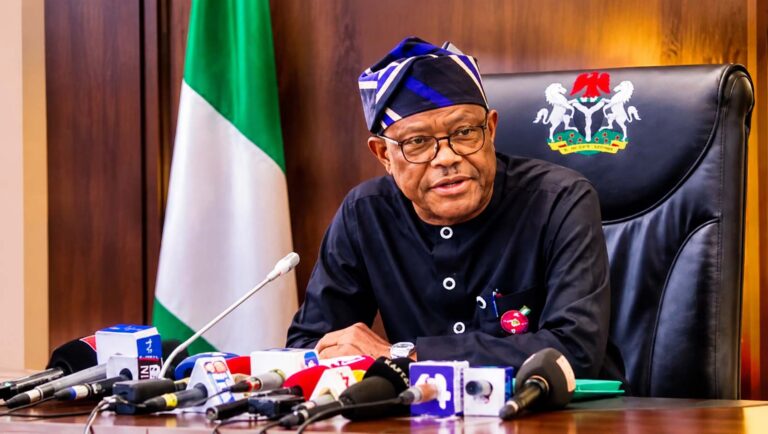
The Enugu State Governor-elect, Dr. Peter Mbah has said he will hit the ground running from Day One and assured that he would keep his campaign promises to people of the Coal City state. In an interactive session with Political Editors in Lagos, he spoke extensively on various issues especially his resolve to think out of the box to take Enugu to the next level
How were you able to scale through opposition’s hurdle to emerge victorious in the governorship election?
We did something that was unique; something that was peculiar. In the past, the way the campaign was done was that the governorship candidate would have a tour of the local government areas for rallies. But we took a different view, we felt that we should get granular; we wanted to reach out to the grassroots. And beyond reaching out to the grassroots, we wanted to get to understand their pain-points. So, we went on a tour of the 68 development centres and had town hall meetings with the people at the grassroots and relevant community based organisations as well as professional bodies.
That afforded us the opportunity to sell our message of hope, message of exponential growth, message of disrupting the status quo to the people. We also began to unpack what we mean by ‘tomorrow is here.’ We began to explain to them what tomorrow holds for them. We also engaged them constructively. But beyond engaging them constructively, the town hall meetings also afforded us the opportunity to listen to them; have them talk to us about their pains, their challenges and their difficulties. So, it wasn’t a report through a third party; it was me hearing from them.
Another opportunity it afforded us was that we documented the various potentials each local government in the state has. As you already know from my manifesto, we are trying to unlock our rural economy and we have an integrated rural development plan for the state. So, it was an opportunity for us to identify the various potentials of the local governments, particularly the development centres. We also took a bold view of what Enugu State can achieve in the next four to eight years under our leadership, and obviously, that resonated with the people.
Of course, we had naysayers, we also had some critics, whom we welcomed frankly because what we were basically telling them is unprecedented; something you cannot look at the past and see how it connects to what we were saying. If you look at the growth pattern in the last four years; it has largely been marginal. But here we are saying that we are going to grow the economy from the $4.4 billion level to $30 billion within the next eight years.
We also told Ndi Enugu that we are going to achieve a zero per cent rate poverty head count index. That also is unprecedented. We are saying that by 2031, there will be zero poverty in Enugu; there will be eradication and not reduction of poverty. This means that we are no longer going to have people under extreme or abject poverty or living below the poverty line.
And we were also unique in our strategic objectives because it is one thing having a laudable vision of growing the economy and lifting people out of poverty but another thing to be able to explain to them how you are going to achieve it. That was how we started talking about disrupting the current revenue model, which obviously focuses on receipt of money from Abuja and coming back to Enugu to spend it and that money not being able to intervene optimally across sectors of our economy.
So, we explained to them how we intend to deploy a critical alternative financing so that we can begin to generate funds from other sources. We also know that if we are going to go at the level that we have proposed, the growth will not just come from the public sector. It has to come from constructive investments, the private sector. So, the private sector is going to play a critical role and that’s business.
As I always say to my team, businesses are not Father Christmas; they want returns on their investments. So, you are going to engage with them; explain to them how you intend to de-risk their investment; how you intend to provide key enablers – infrastructure, security, physical environment, policy on taxation, ease of obtaining construction permit, ease of obtaining title documents.
There are lots of key indicators under ease of doing business that you must address. So, we were clear about the different approaches we are going to deploy to achieve our goals. For us, our mission is to make Enugu the most attractive state for investment. We are not just saying it because it is fancy to say. It is not also about going out there to seek investors, invite them for investment forum and market Enugu. You must have selling points. You have to prove that indeed Enugu is that preferred destination for investment.
In unpacking what we mean by tomorrow being here, it is basically telling our young people how we intend to enhance their skills and get them to compete with their peers across the globe. Our interest in ICT infrastructure is going to address that. We hope to be able to put a minimum of 40,000 young people every year to get productively and skillfully equipped with ICT skills.
That means we are going to have a number of innovation and incubation centres in clusters across the three senatorial zones. We will also work with outsourcing agents across the word to be able match-make these young people immediately they are done with their skill enhancement programmes, so that they can sit in Enugu and provide services to prospective employers anywhere in the world.
That is the good thing about digital economy; you are upwardly mobile. You don’t have to migrate to the United States or Europe in order to earn foreign exchange. We are looking at a critical mass; about 40,000 every year, which is no tea party. So, we must have robust ICT infrastructure in order to achieve that goal.
In the area of practical skills, our vision is to train 10,000 young people with vocational and technical skills every year. Our hope in this regard is that Enugu will become a net exporter of practical skills. So, if you are looking for a plumber or electrician, you no longer have to go to Benin Republic or Togo. You will start looking towards Enugu because we are going to build a critical mass of young people with practical skills.
When we say tomorrow is here, it means being able to get our young people to be digitally and practically equipped and we believe that as a state, we are going to be a beneficiary because it will boost economic activities. You can imagine a situation, where we have thousands of young people with digital skills, sitting in Enugu and earning about $2,000 monthly. What that means is an economy close to a billion dollars every year.
Consequently, we will have a lot of young people with purchasing power and a robust market and by implication attract industries because manufacturers will have the foreknowledge that there is a population with the purchasing power to patronise them. So, these things are systemic; they are going to connect each other and all that government needs to do is to provide those enablers I talked about.
In a nutshell, we believe that our message resonated with the people of Enugu State and that was why when they spoke during the governorship election, we had no doubt that we were the preferred choice for governance of Enugu State. Of course, we are not unmindful of some people we defeated at the primary election, who are still saying they would have been the winner of the main election.
How can you be the winner of the main election, when you couldn’t win the primary and when you have told the world that you are supporting the party’s candidate because he is the best as well as signed an undertaking to support whoever emerges at the primary? Of course, we know the way people see elections in Nigeria; some find it difficult to accept defeat.
By May 29, you would be sworn in as governor of Enugu State. How soon will you hit the ground running and what should the people expect in your first 100 days in office?
Usually, the first 100 days are honeymoon, especially when you are coming in with a lot of expectations and you have the opportunity to make an impression because you are riding on a high level goodwill. We have made some specific promises to the people of Enugu State with timelines. Some of the promises, even in the course of the campaign, have been reduced to actionable timelines. For example, we told Ndi Enugu that within 180 days, we will make sure that pipe borne water runs in their homes. We also talked about other things like addressing security challenges and waste management. Of course, we are committed to keeping to these set goals because we were aware of the situation and what we need to do to address them and that was why we put timelines to them. So, we are going to keep to our campaign promises.
Do you think that the revenue on ground would be able to fund the ambitious programmes you have in your manifesto?
In terms of revenue and where we are on dealing with soft issue, which is the second leg of our vision – eradicating poverty – we believe that intervening on issues like payment of pensions and gratuities are things we should do in order to take our people out of abject poverty. We know what the outstanding debt is, so we are going to arrange finance to clear that over a period of time and come up with a model that allows for the pay as you go pension. We will introduce the contributory pension scheme and work with that. Meanwhile, on the legacy debt, we will look for money and clear that.
Again, what we bring to the table is our strong finance background; the fact that we have done major projects; we had opportunities to structure projects to make sure they succeed and all that. The model of revenue that we have now will not optimally address the things we have outlined, which is why we keep talking about disrupting that revenue model. So, it will mean for example, looking at our dormant assets and transforming them into productive assets.
If we look at our rural economy for example, nothing is happening in that sector. We have huge expanse of land and our land is so fertile that our factor productivity is five-fold. What you plant in Enugu, if you plant the same thing elsewhere in the North, whether it is Nasarawa or Niger states, you get five times in Enugu what you get from there. So, our plan is to unlock our rural economy; create special economic zones in the various local governments as well as access roads to the farm lands in order to attract commercial farmers.
So, we are not only going to unlock the potentials of these local government areas because we have about 100,000 hectares of farm land in each of the three senatorial districts, which is over 300,000 hectares when summed-up; we will have food security and we will equally process our farm produce, absorb post-harvest loses, package and market them. Also, we will have a whole lot of manufacturing industries that will come up with made-in Enugu products.
So, there are things that Enugu has not done before or the government has not been able to look into; we intend to do and it will no longer be about going to Abuja to collect allocation. We have a couple of other finance models that we outlined in our manifesto like the Diaspora Bond, which is gaining traction already. We intend to launch a Diaspora Bond basically to tell our brothers and sisters, who live abroad that the money they send shouldn’t be for consumption alone; that they can also dedicate part of it for production.
If you look at revenue that comes from the Diaspora, it runs into billions of dollars. So, we need to educate them on the need to convert a percentage of that for production and as a government, we securitize it, so that there will be security and credit and it becomes a tradable finance. We have also promised that we will run a transparent and accountable government and if you look at our governance principle, we even went further to say that we are going to codify and publish the Citizens Charter, which speaks to our public finance management system and fiscal discipline.
This will ensure that the people of Enugu know what accrues to them in terms of revenue from the different sources. They will also know what those funds are deployed for and the impact the expenditure is having on them. So, it is a robust thing but you have to build trust; the people must also trust you and those living outside should equally trust, especially when you talk about the Diaspora Bond.
When you talk about disrupting the revenue model in the state; have you considered the challenges that will come with such move given the resistance that usually comes with change?
I will say that it is all happening at a time when our people are becoming conscious of good governance and people are getting interested in leadership. In the first place, I believe that I emerged as a candidate for the governorship election because the leadership of the PDP in the state and the current governor in particular, realised the need for the party to reinvent itself and that the party needs to do things differently. So, I believe that we are going to have massive support from the political elite and the people of Enugu State, who believe that the current system is no longer able to serve our people optimally and are yearning for change.
How are you going to address the security challenges the state is facing because it would be difficult to realize your vision if the state is unsafe?
Security is key to everything we want to do in terms of economic growth, lifting people out of poverty and making Enugu the most attractive state in terms of ease of doing business. If you don’t have security, there can be none of that. You cannot have sustainable growth or development without peace and security. At the same time, you cannot have peace and security without sustainable growth. They are mutually reinforcing, so you have to tackle the two issues at the same time. That is why we talk about kinetic and non-kinetic approaches to tackling insecurity.
Of course, the non-kinetic approach is about dealing with unemployment and poverty frontally but at the same time strengthening our policing architecture. We have a robust security plan, so we are going to deploy technology to be able to identify and track criminal elements wherever they are. We are going to have a command and control centre that we can use to monitor activities going on across the state.
For the first time since 1999, Enugu State will have a House of Assembly that will not be dominated by the PDP as Labour Party won a sizeable number of seats during the elections. How are you going to navigate the opposition that will come from the House?
It is a function of what our common objectives are. Frankly, our objective is greatness of Enugu, development of Enugu, growth of Enugu. To this end, I believe that the incoming members of the House of Assembly, irrespective of party leaning, share the same objectives. Yes, we may have our different political beliefs but the goal remains the same. The goal is that Enugu State has to be great. And as long as we have a common goal, I have no doubt in my mind that we will work together. It is not about party or politics; it is about Enugu and I believe that we will work together to achieve our common objective of making the state great.
You cannot do the job alone; you need commissioners and others. What are the yardsticks that will determine those who will make your cabinet given the pressure that will come from godfathers and other stakeholders?
If you look at our manifesto, we talked about social performance contract, so we are bringing in people, who are going to execute that social performance contract across all the functional areas. We will be clear about the output targets for each of the ministries and my duty is to communicate those and goals and vision as clearly as possible and to work with a team of people, who have bought into that goal and we will have a way of measuring performance on the social contract we signed with Ndi Enugu.
How would you react to the claim by the opposition that you forged your National Youth Service Corps (NYSC) certificate?
I would not have thought that our interaction would be complete if we didn’t address that. By way of background, you know that NYSC is not an event you walk into and at the end of that event you’re issued a certificate. It is a process. It is a programme that lasts for 12 months. From the point when you receive your call-up letter to the point you end your service is a 12-month process. So, it is either you did it or you didn’t do it. And of course, if you’ve done it, there are people you must have done it with; people who must exist somewhere.
You could have pictures or maybe even if you’re not so careful to put those things together, somebody somewhere can come out and say I know this guy, we did our primary assignment together or we were in the same Community Development Service (CDS) group. So, the truth is that I did my service and I was honorably discharged. I was also issued a certificate by the NYSC. I couldn’t have gone through the entire process of service and then at the end of the day, I walk to somewhere and say print an NYSC certificate for me and put my name on it. That would be ridiculous; it could be absurd.
I did my LLB in the United Kingdom and typically once you are a graduate of Law from overseas, when you’re back to Nigeria, you do what is known as Bar Part One. The Bar Part One is done exclusively by overseas graduates. At the end of your Bar Part One, you then join Nigerian students to do the Bar Part Two or the Bar Final as we call it. So, I started my Bar Part One and we were just completing the Bar Part One, when the Bar Part Two students were going in, so we did not end on time to join them. What that meant was that we had to stay back at home and wait till the next Nigerian students were ready to go for their Bar Part Two because we cannot go exclusively as Bar Part One to start our own programme.
I did my Bar Part One at the Lagos Campus of the Nigerian Law School. The DG then of the Lagos Campus was Prof. Abayomi of blessed memory. He advised us that instead of staying back at home till the next set of Nigerian students were ready for Bar Part Two, we should go and do our youth service. Of course, some of us took that advice. Now, midway into the service, the Bar Part Two of Nigerian students were now ready and so we were told that our admission was ready for the Bar Part Two programme. Of course, at that time, I had a choice. I had a choice to either defer the admission or defer the youth service.
For me, I was more interested in seniority at the Bar. So, it was a clear choice to defer the youth service. I served in Lagos and the place of my primary assignment was on Lagos Island. My CDS group is the Federal Road Safety Corps. So, when the issue of Bar Part Two admission came up, I wrote to NYSC that I wanted to defer my service and they responded, saying if you are going to defer your service, we are going to remobilize you at the end of your Law School programme and I also attached my admission for the Law School, saying upon completion of my Bar final exams, I will come back to complete my service and it was approved.
My NYSC started sometime in January and it ran till June, when I wrote to the NYSC that I was leaving for my Bar Final and they approved sometime in August that I should go. I did my Bar Final exam in March and immediately after that went to NYSC to ask for remobilization as that was what they said. I wrote that I should be remobilized and they sent a letter to me, approving that they have reinstated me to continue from where I stopped. Note that I had requested for remobilization and what that means is that I would have started afresh but they sent back their report, saying “let the corps member start from where he stopped.”
So, they gave me a fresh posting letter. By the way, my first posting letter was to Nigeria Ports Authority (NPA) but NPA rejected me and I was then given a second posting letter. My first posting letter was on January 28, 2002. So, when I got rejected by NPA, my second was March 5 and I went to a Law firm, Ude and Associates and started my primary assignment there. When I broke my service year and came back, I applied for remobilization and they reinstated me. They sent me another posting letter and this was on May, 2003. Don’t forget that by then, my batch had passed out.
Members of my batch passed out in January 2003 and they sent me the second posting letter on May 26. So, my probable date of discharge was five months after, September 9, 2003, taking into account the previous months I have done. Of course, I continued my service and at the end, I had a final clearance letter from my place of primary assignment, confirming that I have done all the things I needed to do and should be given my discharge certificate and the discharge certificate was issued to me by the NYSC.